


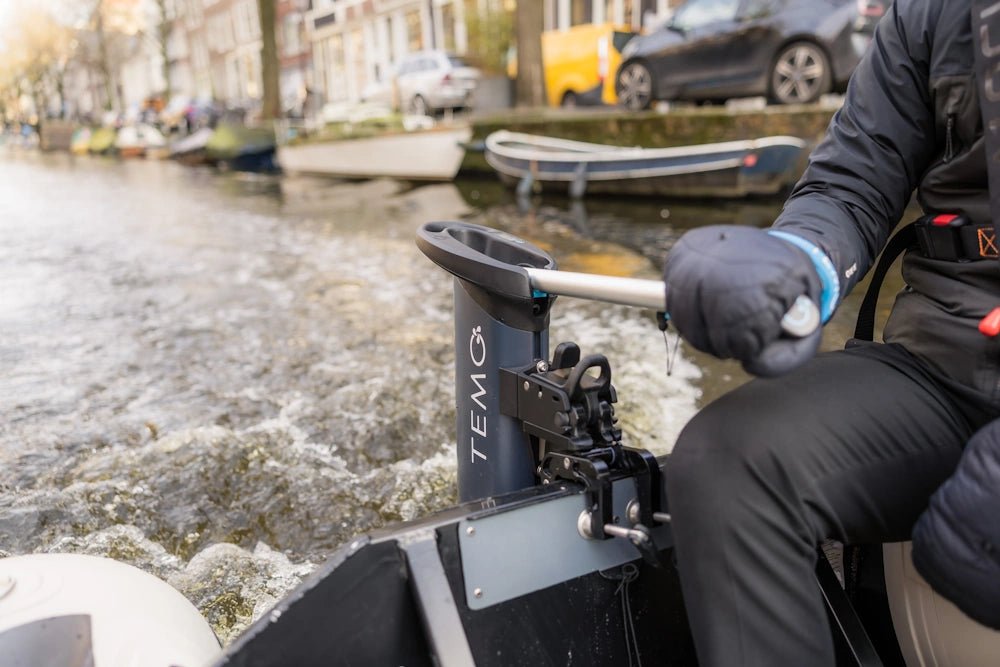
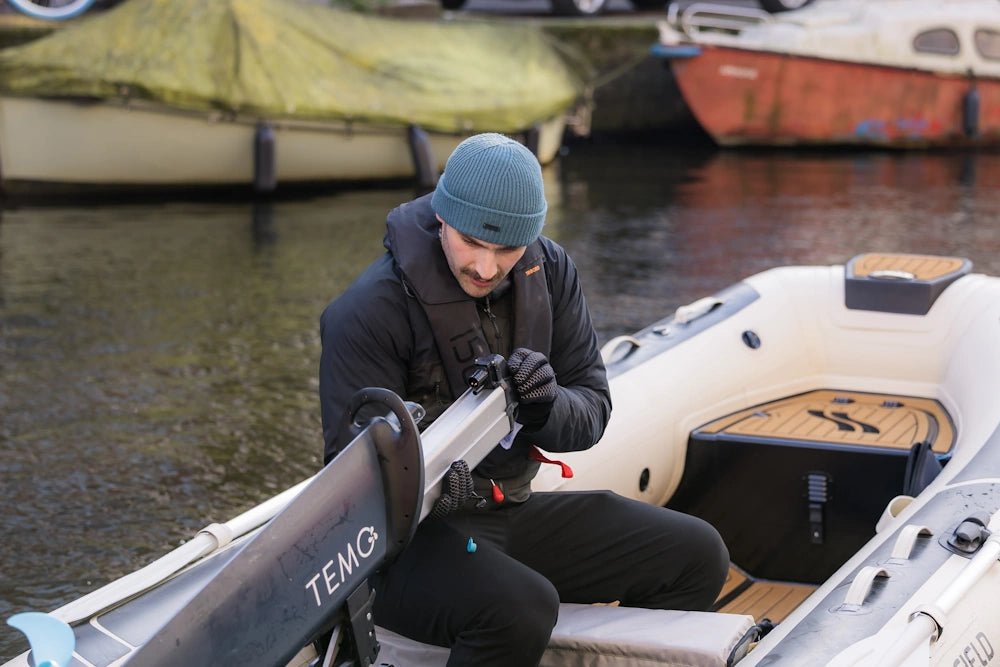
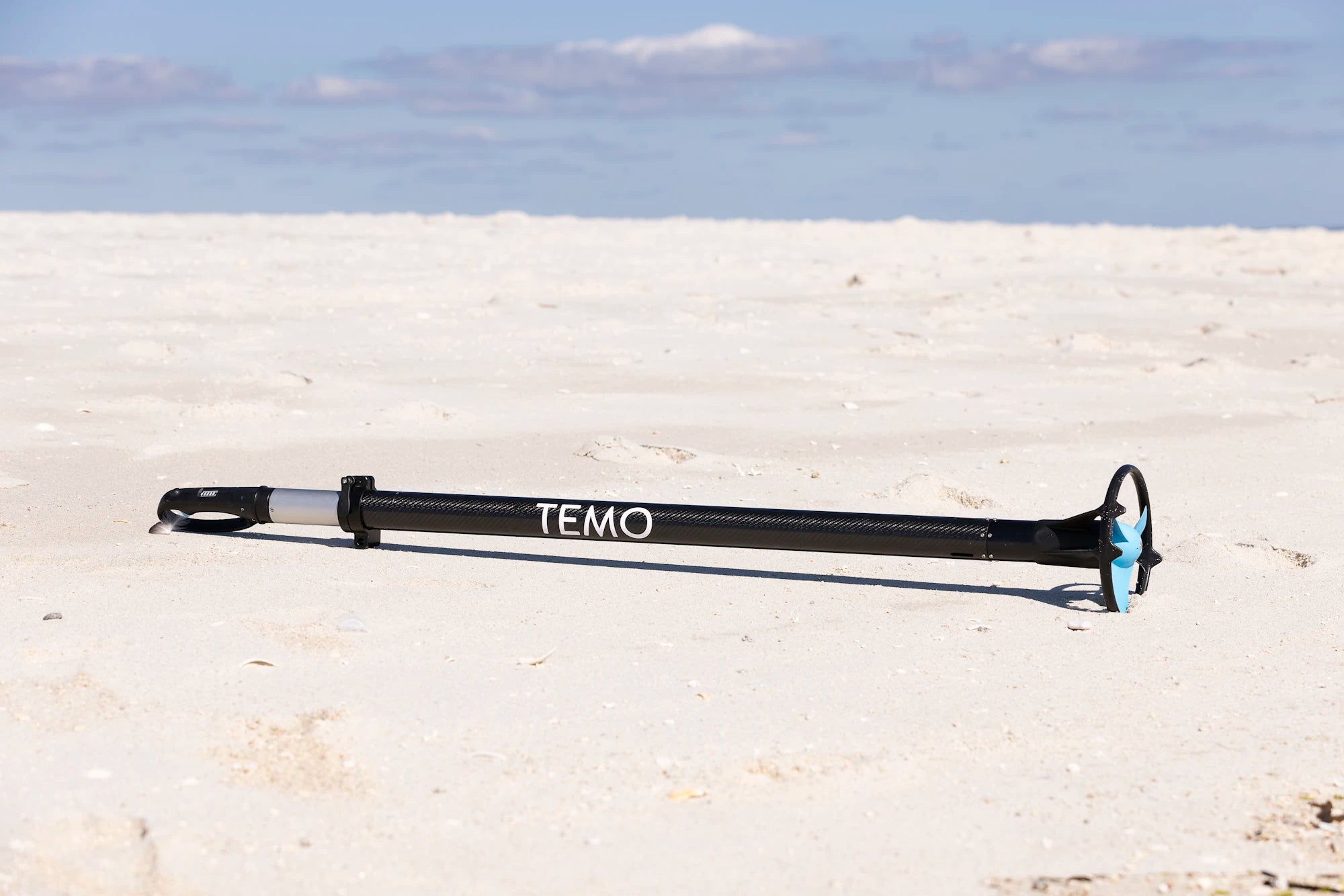
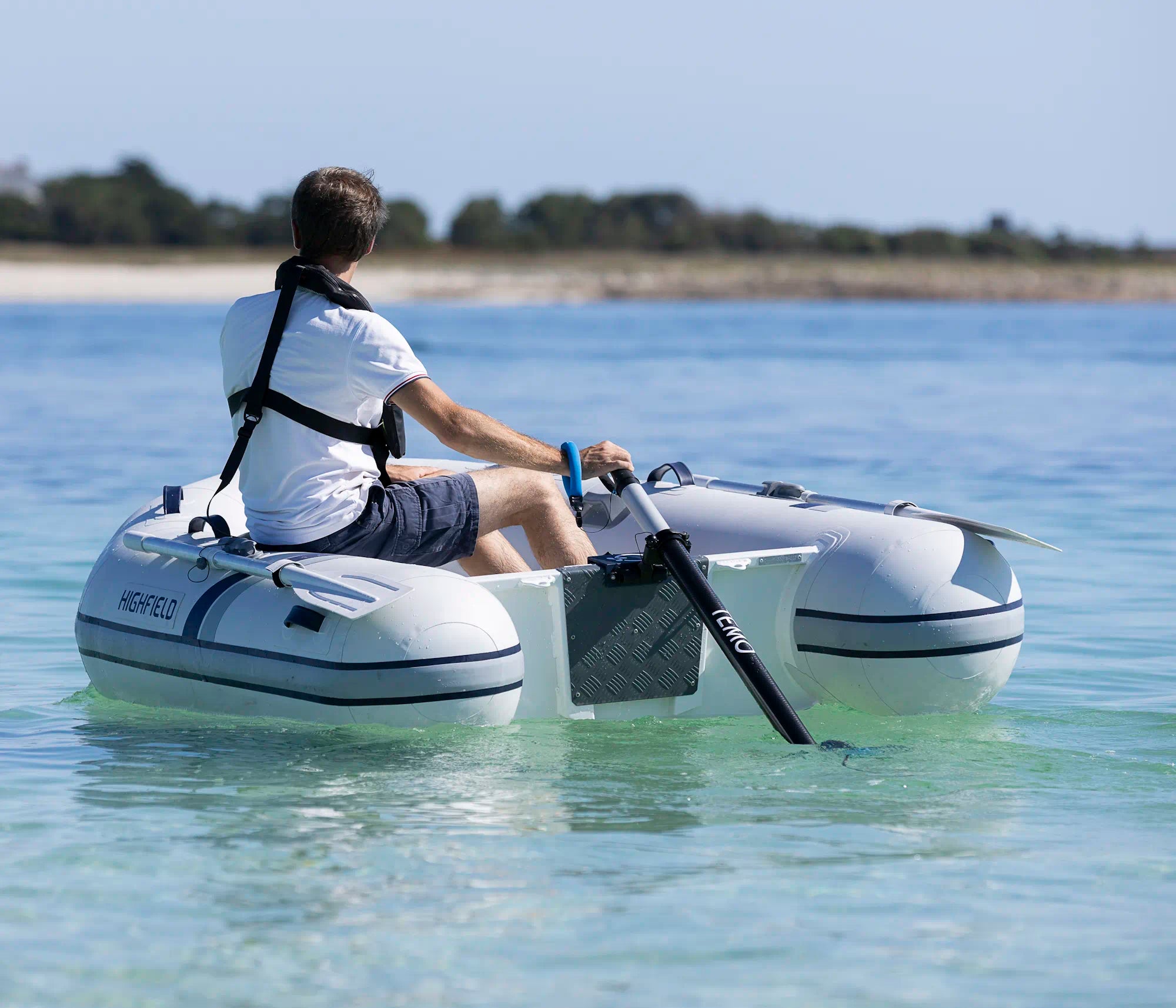
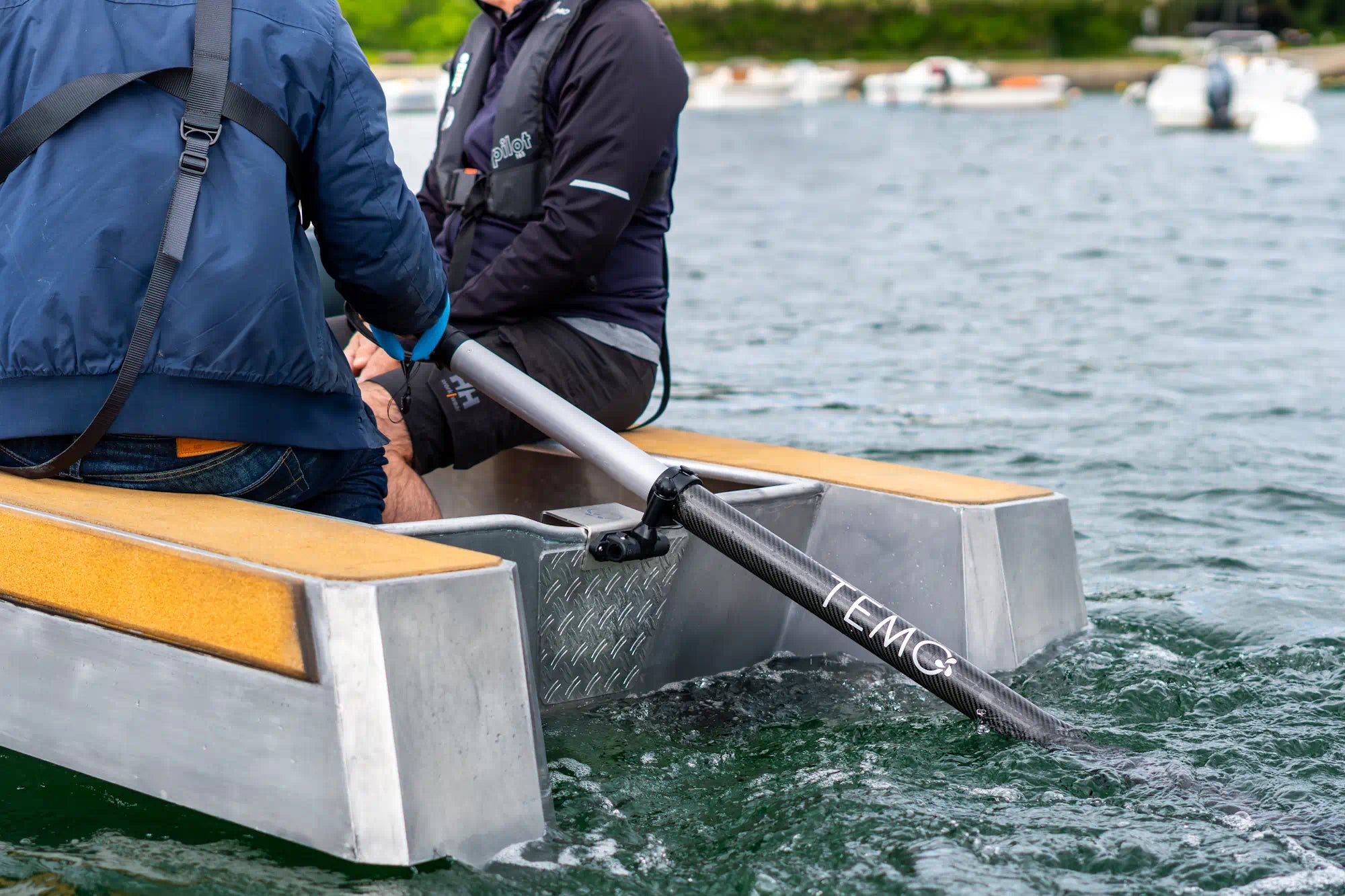
Inspired by urban mobility and electro-portability, TEMO·450 is a new electric propulsion solution for boats.
Designed in 2019, then developed in partnership with the CIMTECH design office in Rennes and then industrialized by the Axandus accelerator in Carquefou, Loire-Atlantique, the TEMO·450 quickly found its market and is preparing to deliver no less than 500 units in this first year of launch.
Among the attractive features of this new motor, we can mention its lightness, its unique design, and also its made in France manufacturing, with 70% of components sourced from the best experts within a 100km radius around Nantes, and with a focus on quality. TEMO chose local manufacturing solutions, at a production cost of +15% compared to Asian solutions. A deliberate choice by the startup that seems to resonate with boaters and fishermen, many of whom ordered a TEMO·450 even before the first deliveries.
"Obtain finished parts in a single operation" - Denis Luneau, Director.
Among the experts who supported the manufacturing of the thruster is the Vendée-based ASM protoplast.
Responsible for the manufacturing of all plastic parts that make up the TEMO·450, it was chosen for the quality of dialogue, the seriousness of its teams, the proximity of the workshop, its injection expertise, as well as its experience working with innovative startups.
Denis Luneau, the company's director, tells us about this project carried out in record time.
Hello Denis, what exactly is ASM?
ASM is a small group of 3 entities, created in 2007 and currently employing 48 people:
- ASM Concept is a design office
- ASM France is a workshop for technical mold manufacturing, primarily for mass production
- ASM Protoplast is an injection and prototyping workshop.
We are an integrated "mold maker" in plastic injection to be able to produce and qualify all the tools, processes, and products entrusted to us.
Once the tools are made and after validating the initial samples, we are able to manage production in its initial phase or for series life if it corresponds to volumes of 100 to 30,000 products per year.
Beyond these volumes, it's a different organization, "that of injectors or equipment manufacturers" who can also be ASM France's clients for mass production mold manufacturing.

What was your mission for TEMO?
We were put in touch via the company AXANDUS. TEMO was looking for a local company capable of manufacturing both the tooling and the production of plastic parts.
We integrated this project in the final product design phase; the CIMTECH design office was able to incorporate our manufacturing constraints without having to redo its concepts, and we validated with TEMO and AXANDUS the necessary adjustments to reduce tooling costs without degrading the quality of the product functions.
Integrating the product design phase allowed us to start designing the molds in hidden time (during the production and validation of prototypes made by TEMO using 3D printing). This then allowed us to start machining the day after the "Tooling Production" go-ahead.
5 molds were needed to create 7 products, including the nozzle, which is perhaps the most complex part to produce. This part is injected in 2 phases and with 2 materials; we inject the insert into a first mold, then this insert is placed in a second mold where it will be overmolded with a second material. This last operation will finalize the product's ergonomics, ensure flexibility and impact resistance to guarantee the primary function of protecting the propeller.
These molds were produced within 6 to 8 weeks, during the holiday period. Finally, after the very first parts called "IOD", we needed 4 to 6 weeks of product and process development to validate the initial samples "EI".

How does plastic injection work?
Thermoplastic injection allows for the creation of finished parts, with complex shapes and a wide range of finishes, in a single operation. 85% of injected materials can be reground, re-melted, and re-injected. This technology therefore fully aligns with circular economy principles. The materials chosen for the TEMO project were validated with this requirement.
The process uses several production methods: we need the right material, the right press, the right mold, and the right peripheral equipment (heater, robot, ovens). All these means must be adjusted and these adjustments have a direct impact on product quality. Once this process is validated and stable, all parameters must be recorded to be able to reproduce them and create the next parts identically.

What is the complexity of a project like this?
The most important thing is first to fully understand the needs and validate the constraint functions related to usage and the environment. Following this listening, we must analyze the risks and propose to the group different technical and economic solutions with their advantages and disadvantages.
This preliminary and collaborative work is essential, with project leaders who generally bear the responsibility for global design vis-à-vis users, so we must also listen to other partners who also have their own constraints and functions to guarantee. Without necessarily knowing all the details of each profession, the relationship of trust is therefore paramount; it must be exercised in all directions, and that is why, in my opinion, proximity makes perfect sense…
Short deadlines, tight budgets, difficult technical parts to inject, overmold, integrating magnets inside the products, the required resistance of the nozzle without being able to change the ergonomic design are some of the challenges that interested us.
ASM aims to be modern and agile. Innovation has always been at the heart of our solutions, and I think that allows us to learn, adapt, and simply stay motivated in our work. The expertise of Ronan, Stéphane, and Jean-Michel, Marie's work, and Anne Sophie's cross-functional perspective with the entire ASM PROTOPLAST team have contributed to the success of your project, and we are very proud of it!
Why do you often work with startups?
Collaboration with startups is often energy-intensive and sometimes a bit financially risky, but through their contact, we learn a lot about commercial strategy, the importance of communication, marketing, highlighting expertise... It helps us adapt, to change our perspective on our own ecosystem.
The TEMO product interested us because it is technical, aesthetic, innovative, and driven by Alexandre and his team with whom we share the same values, notably understanding the benefits of local production.

Plastic isn't very eco-friendly, Denis, what do you think about that?
I'm not sure the problem is plastic; the problem is single-use and overconsumption of materials, be it wood, cardboard, plastic, or any other material.
All the materials used in the TEMO·450 product can be reground and reinjected to create other products. Furthermore, despite the harsh marine environment, they have a lifespan of over 10 years. This has nothing to do with packaging plastics like "PET," which are indeed difficult to recycle and produced in excessively large volumes.
The Eco-design done with CIMTECH to make the product dismountable, repairable, and recyclable makes sense. And we continue to work with TEMO; we are currently testing materials to evolve certain plastic-injected parts using recycled plastic. However, the industry then needs to follow suit and organize itself. Demand is strong, and the prices of recycled materials are sometimes more expensive than the base material, and for inferior technical functions...
Thank you, Denis!

Denis Luneau, director of ASM protoplast


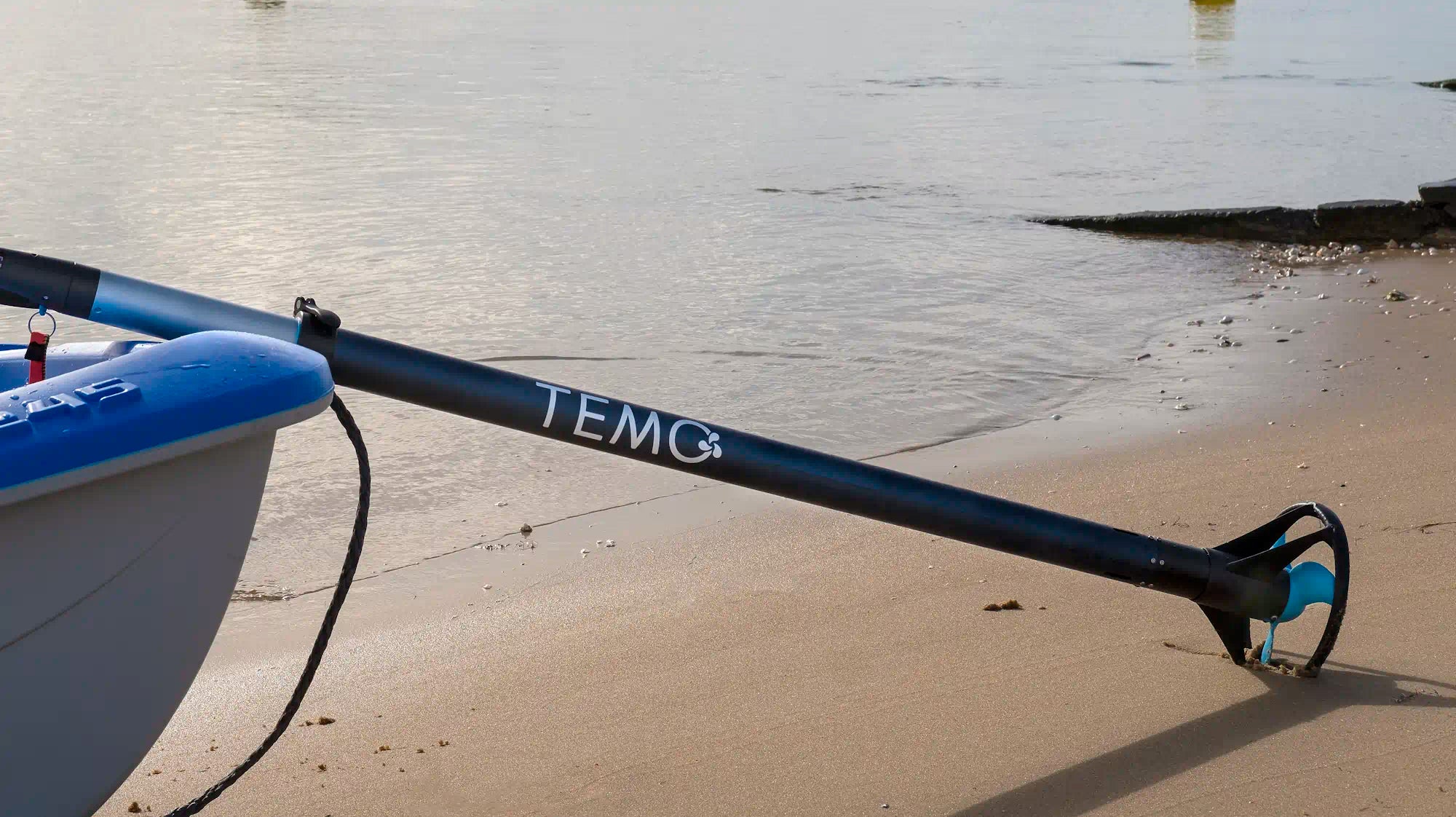


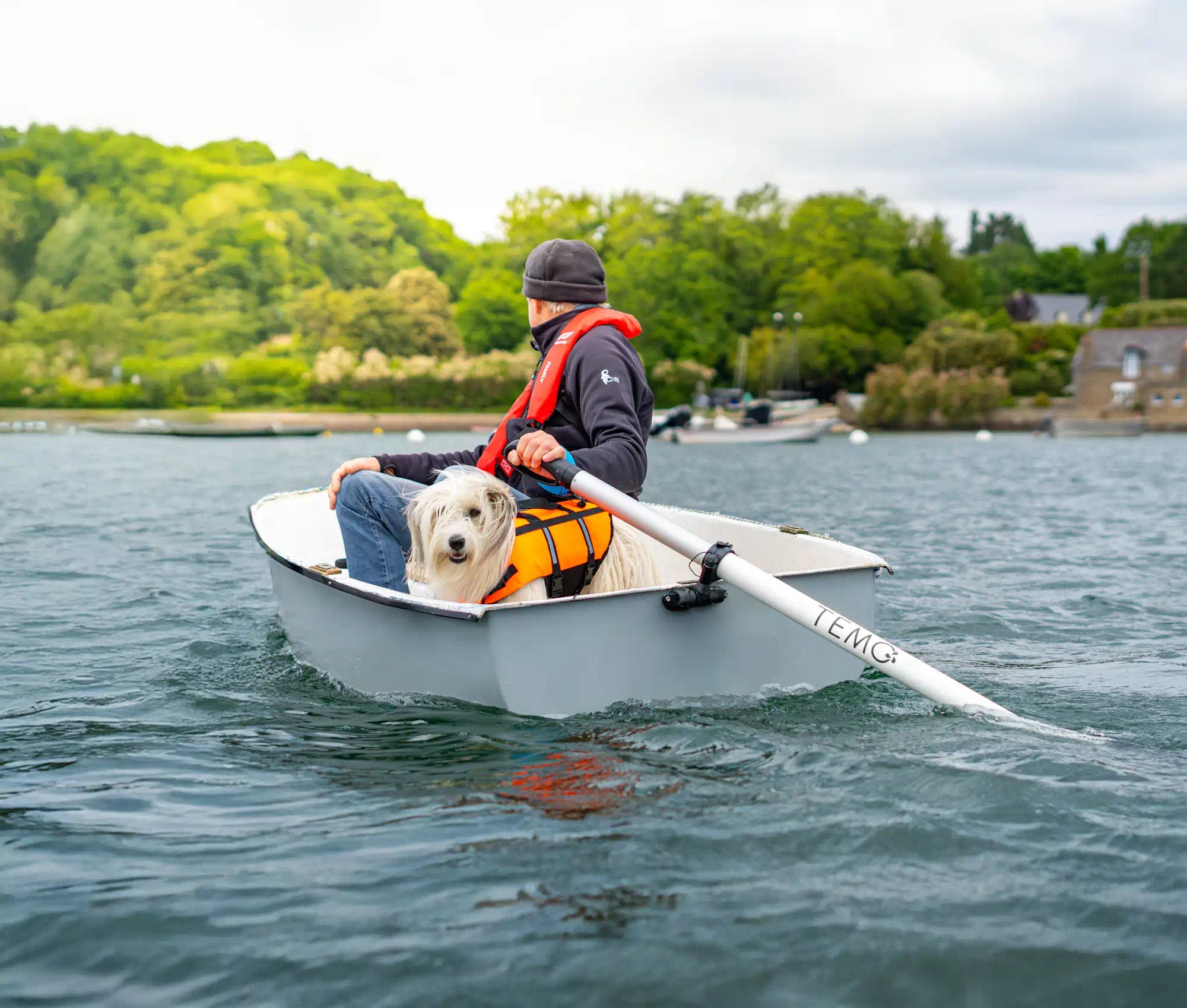
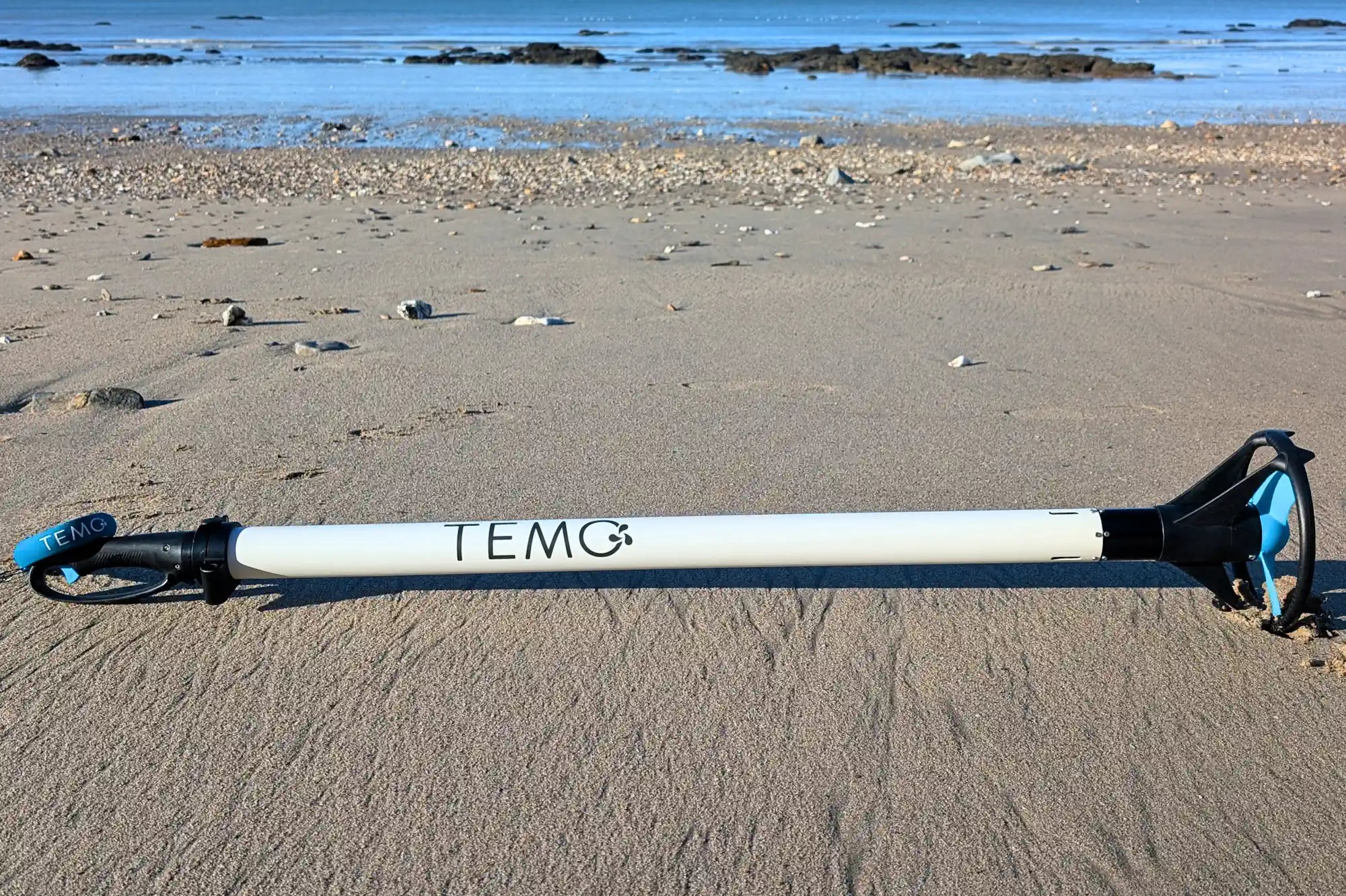
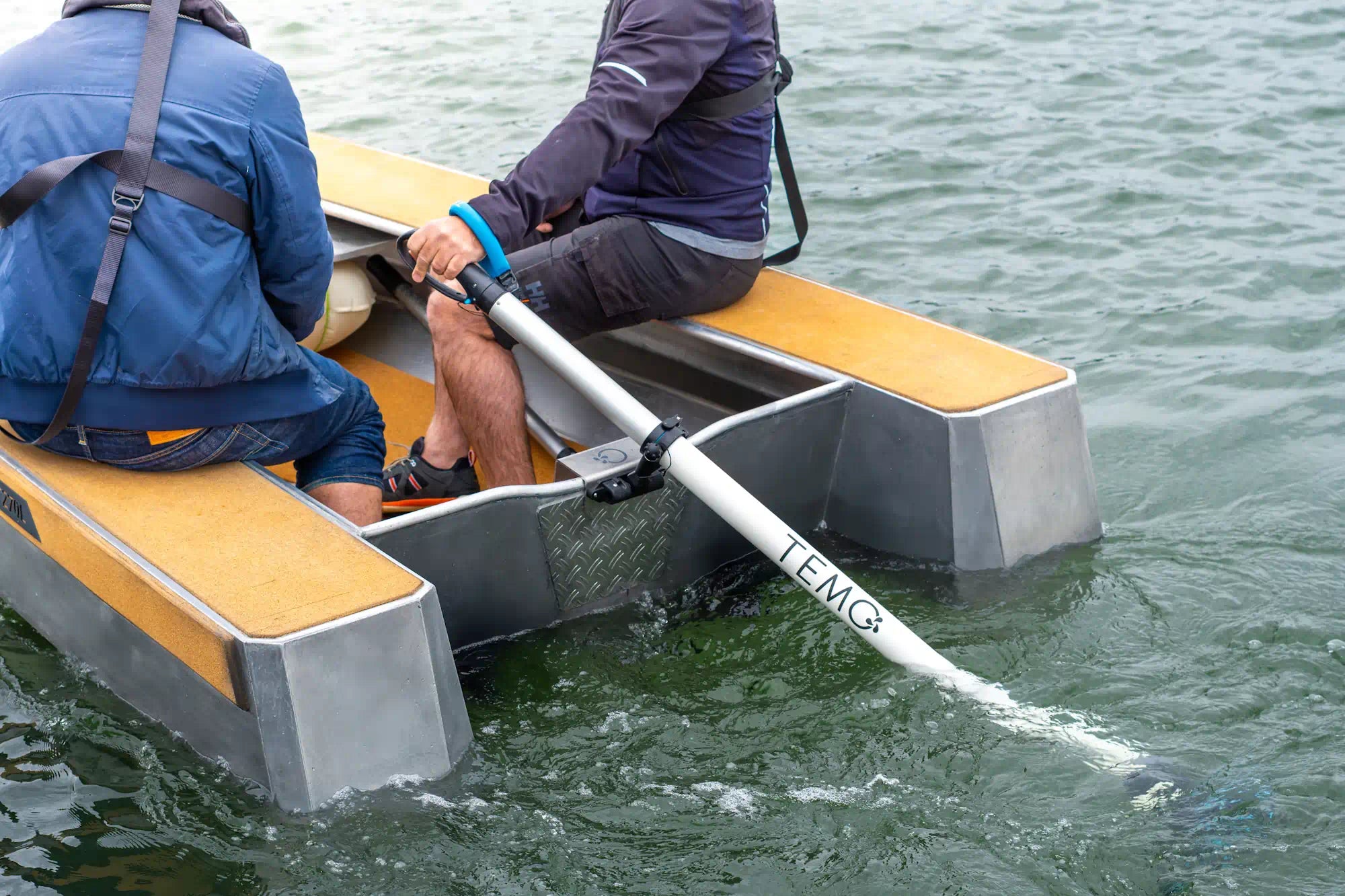
From idea to product: The industrial process of the TEMO·450
The rabbit, a subject that generates more ink than boats