Christophe Chedal Anglay is a designer. He has worked for major companies such as Rossignol and Tefal. He built a reputation thanks to iconic designs, notably the Petzl headlamp, for whom he now serves as an artistic consultant.
Drawing on his expertise in designing the most demanding objects dedicated to adventure and exploration, Christophe has specialized in the world of boating for several years. He designs and outfits the interiors and exteriors of all types of boats.
" Conceptualizing my clients' desires " - Christophe Chedal Anglay, Designer .

It was through this network that he met Alexandre SEUX, founder of TEMO - the new generation boat tender motor , and that the latter entrusted him, in May 2018, with the design of what would become the first portable electric propulsion system.
Hello Christophe, how would you define your profession?
As a designer, my role is to conceptualize my clients' desires . Some of them will give me free rein, while others have a very specific idea. It's up to me to adapt to the specifications and deliver a design that closely matches the project owner's wishes.
What were the specifications when Alexandre entrusted you with the design of TEMO?
When Alexandre came to see me, he had a fairly clear idea of the product, both in terms of its use and its ergonomics. But with many constraints:
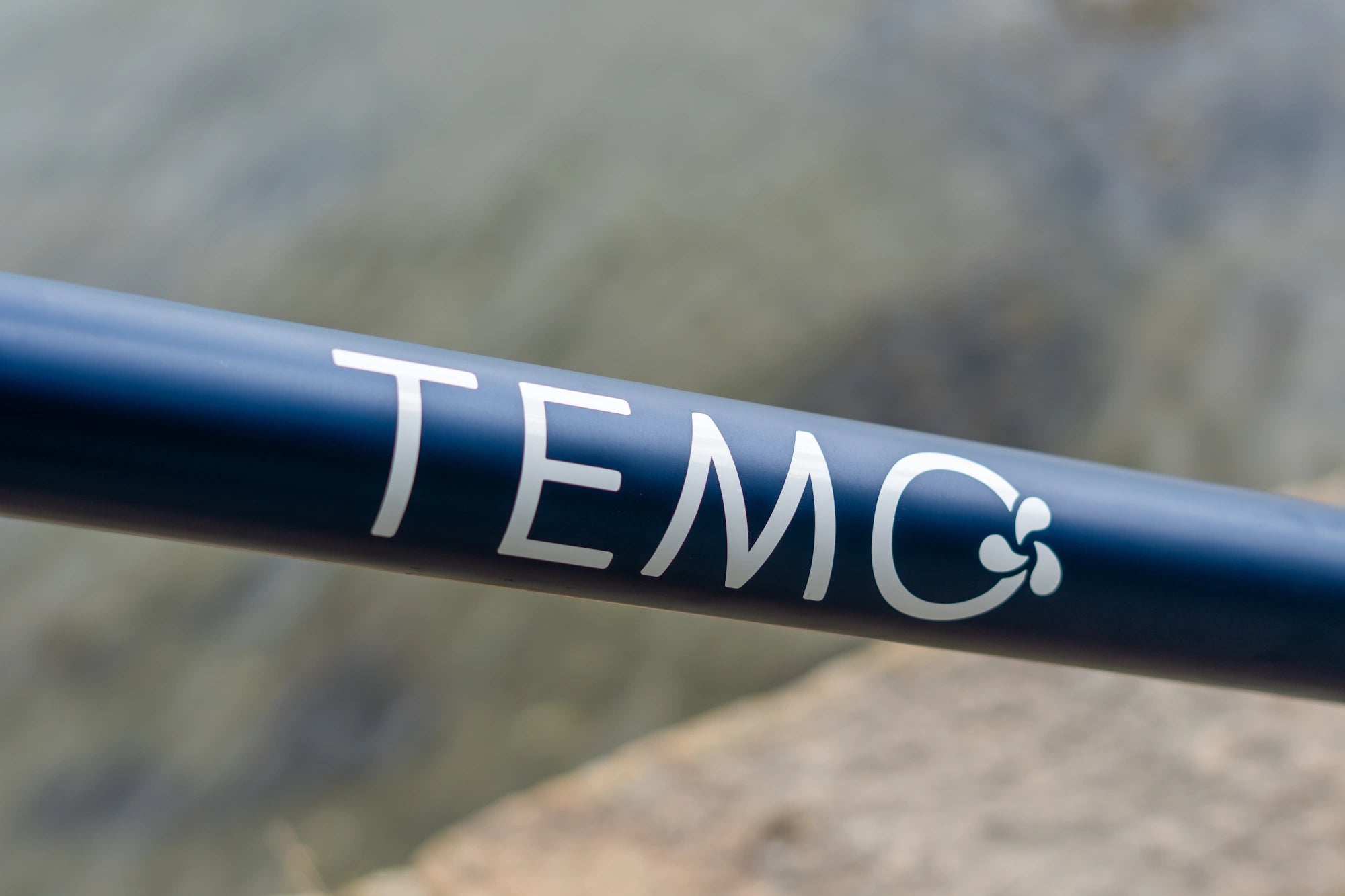
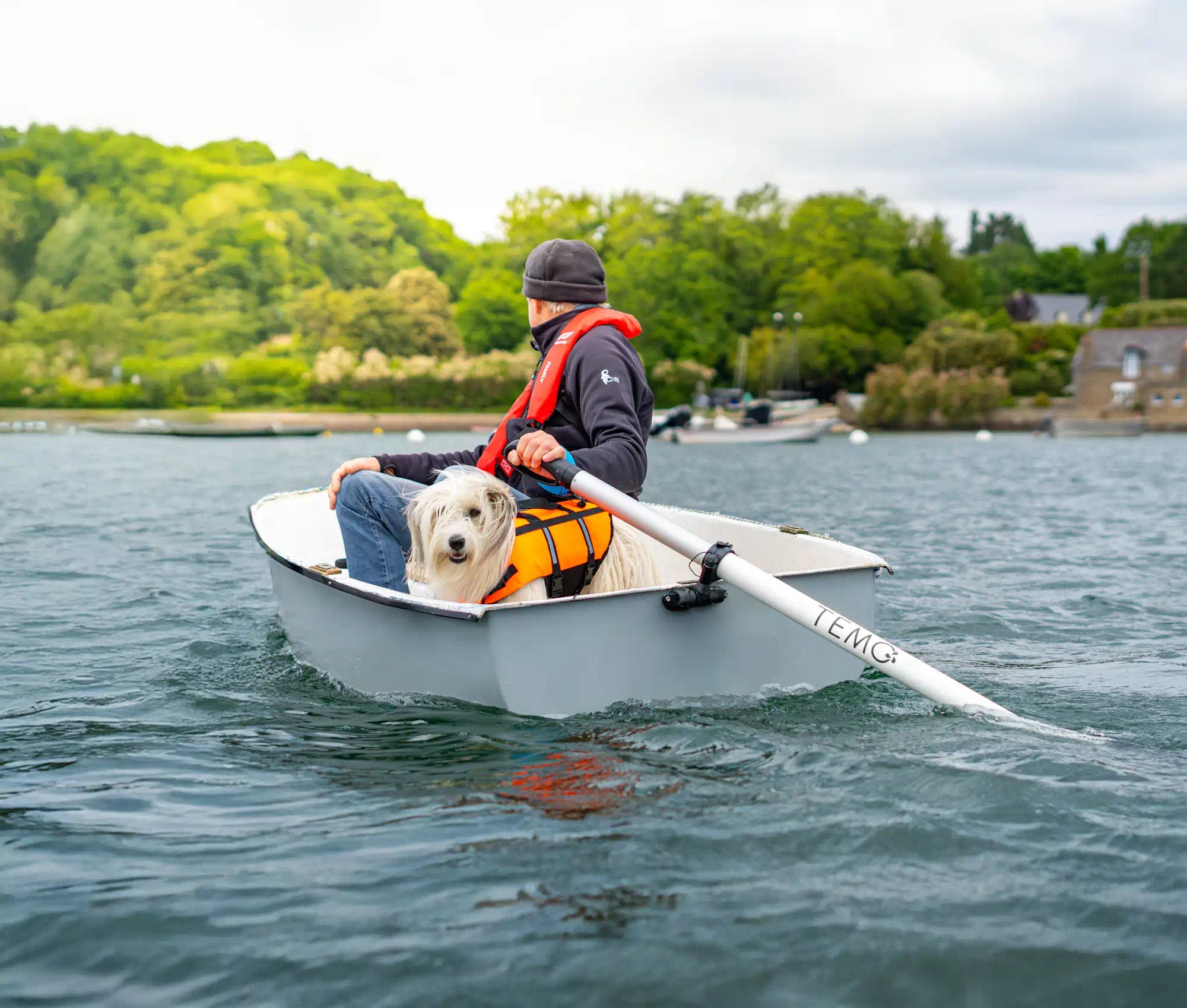
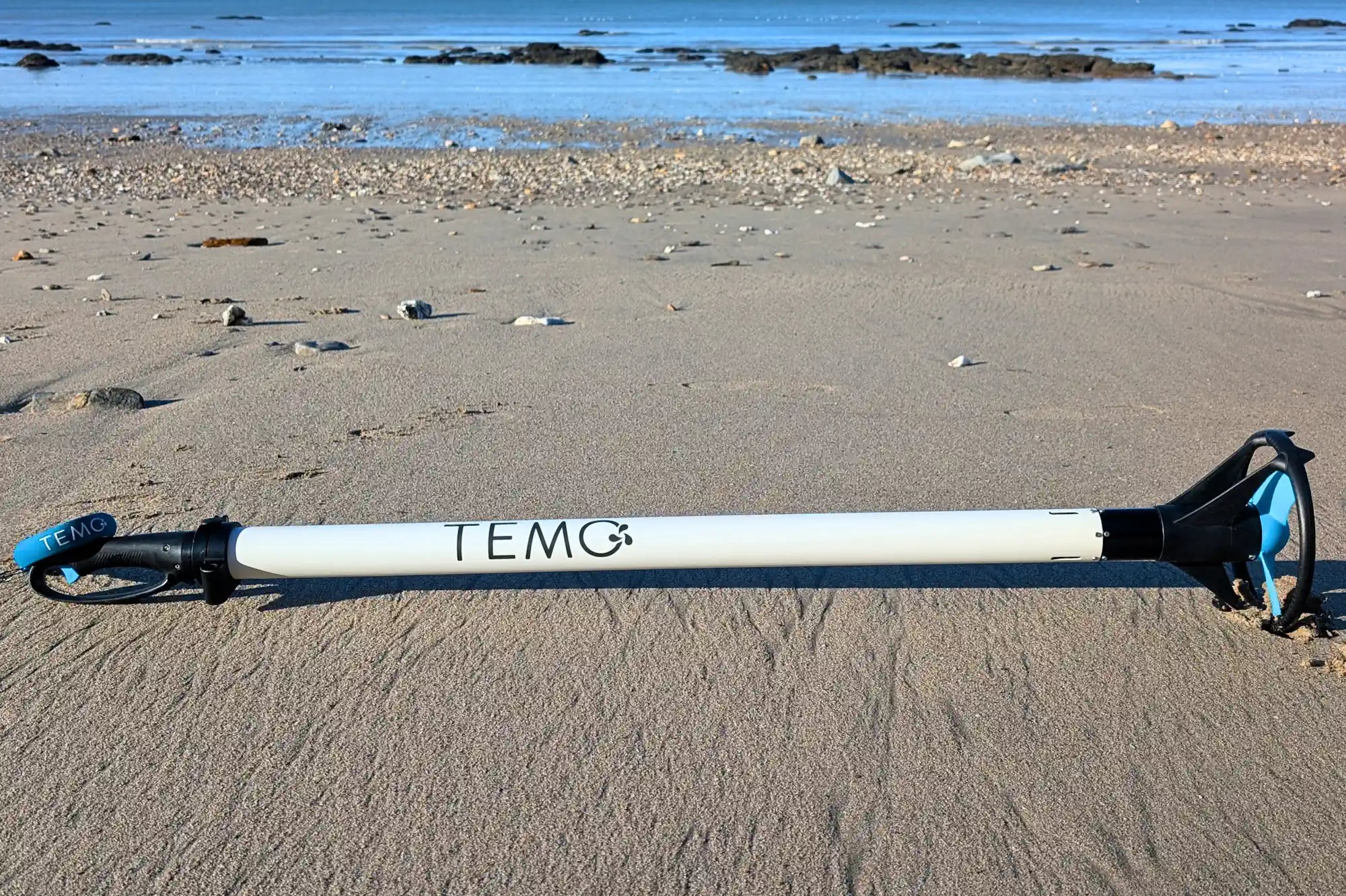
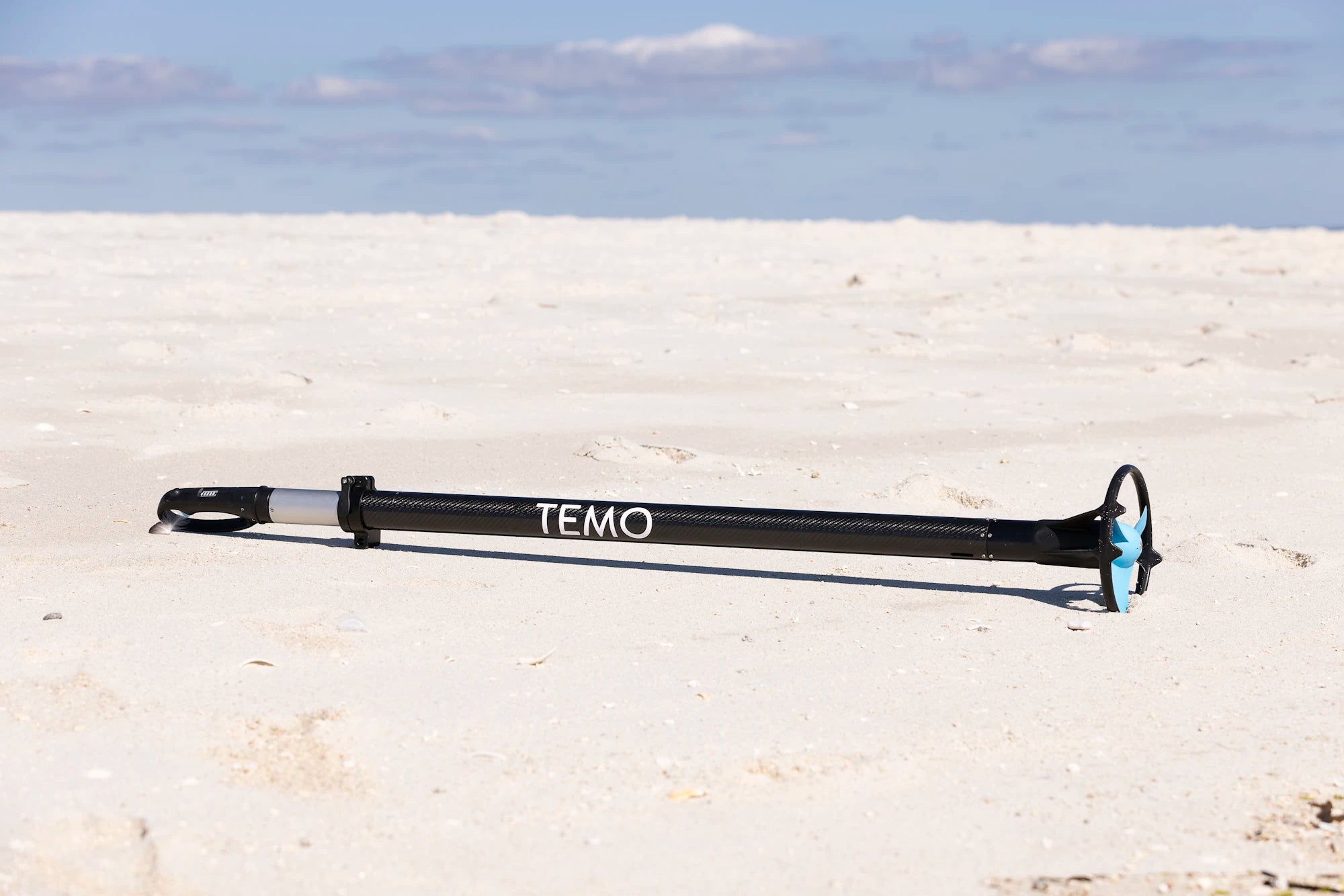
Alexandre wanted a truly disruptive design compared to existing outboard motors. He envisioned it as electric and tubular. He wanted the TEMO·450 to be lightweight, compact, and easily transportable, while still delivering significant power capable of propelling any small watercraft. Many technical constraints, therefore, had to be incorporated into a simple and lightweight product. Not so simple.
I had to respect Alexandre's aesthetic vision while ensuring that the dimensions and proportions of the product could accommodate all the technology and ergonomics required for its use.
From there, we drew inspiration from urban mobility, with a battery, power, and size similar to those of an electric scooter. Then, to validate its usability, we incorporated elements from the nautical world—like the linear shape characteristic of Asian longtail boats. Finally, we added other ergonomic considerations inspired by Dyson vacuum cleaners and cordless tools in general.
The result was the TEMO·450 with a very simple, very clean design that nevertheless hides a great deal of technical complexity.

How did this translate to the product?
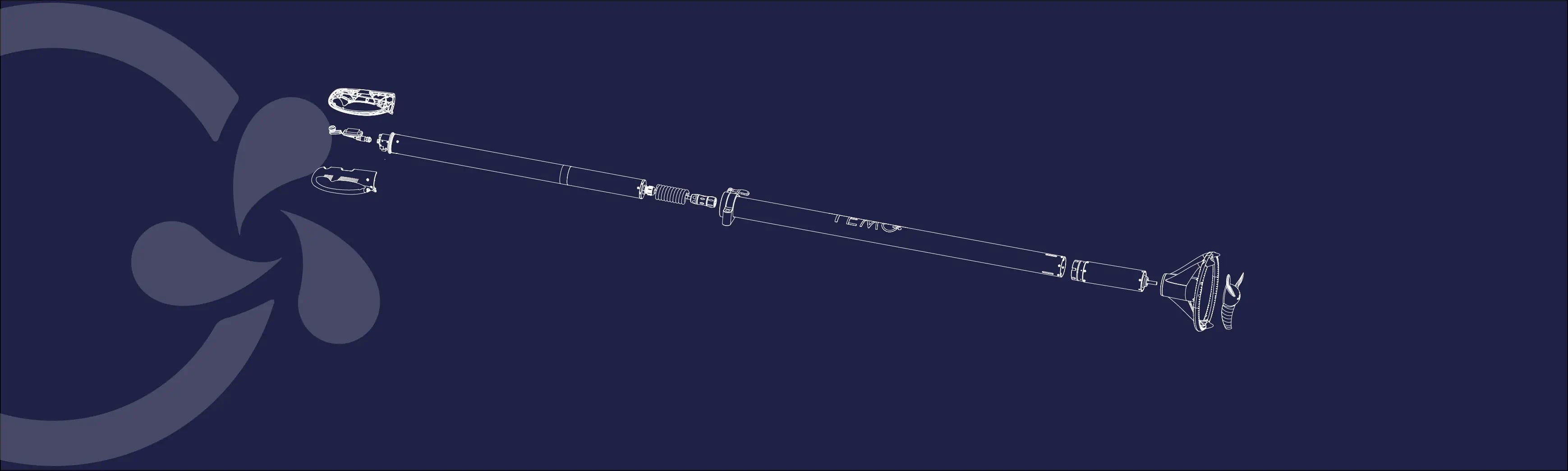
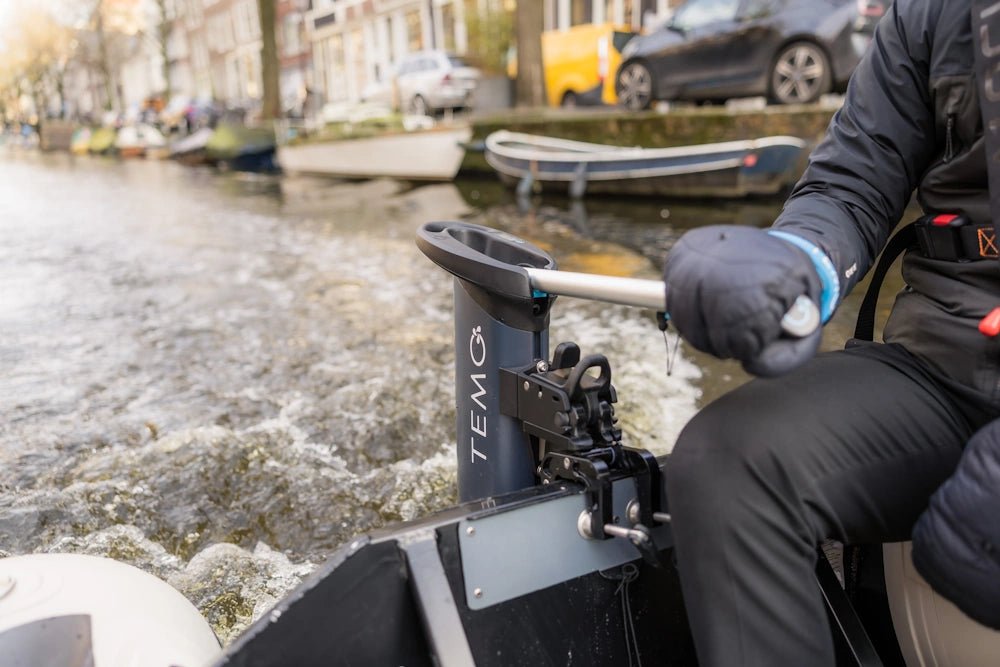
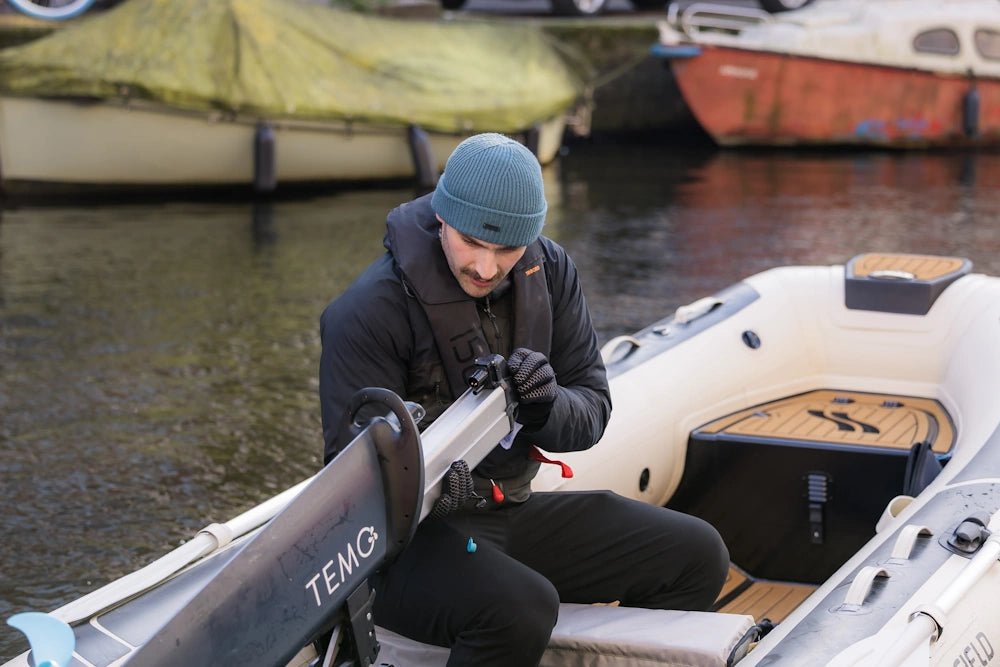
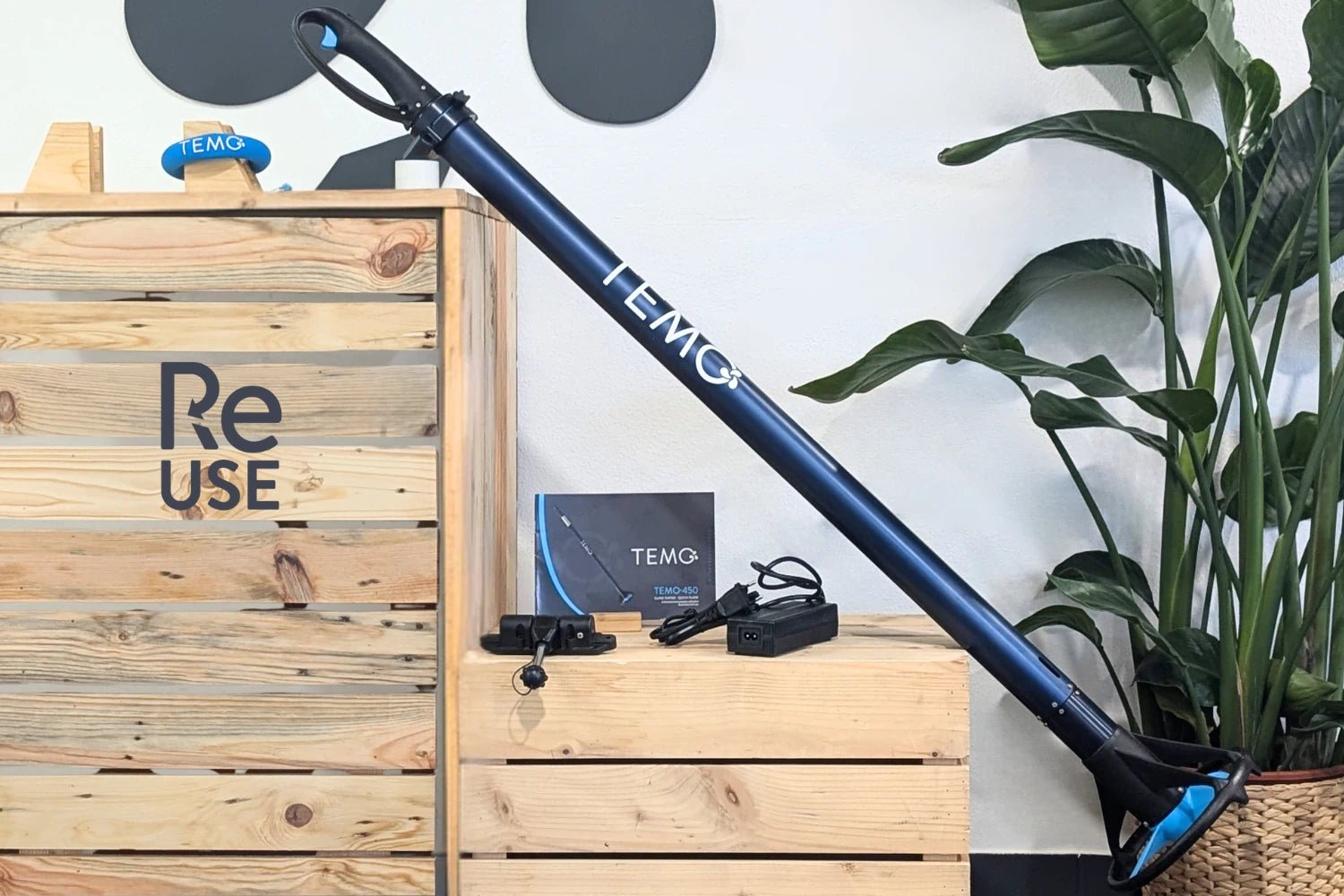
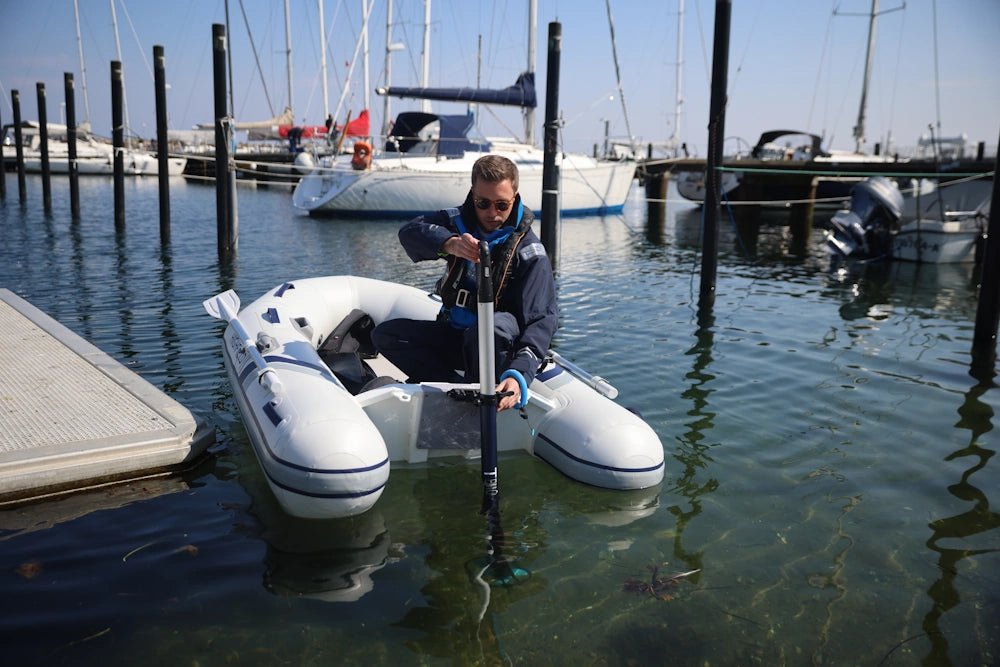
To maintain the compact design, we considered telescoping . The idea was to be able to fold the upper tube into the lower tube and thus easily go from a minimum size of 130cm to an unfolded size of 170cm in order to adapt to both the user and the boat.
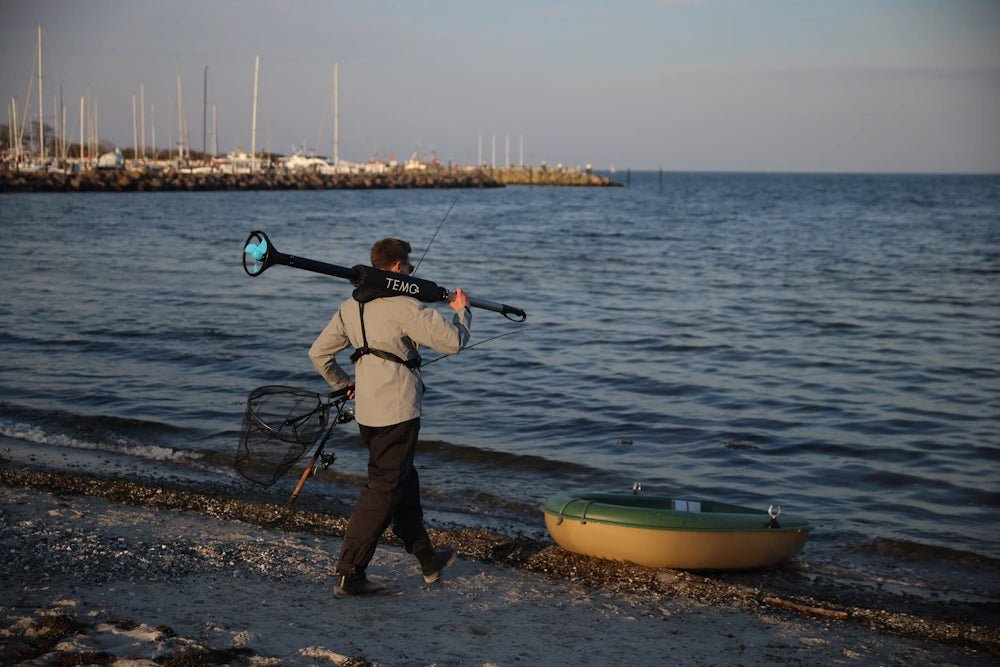
The device could have been foldable or disassembled into two parts, but the telescopic design optimizes storage and allows for near-instantaneous setup. The TEMO·450 takes up minimal space, slips easily into its carrying case, into the trunk of a car, or onto a boat without cluttering the deck.
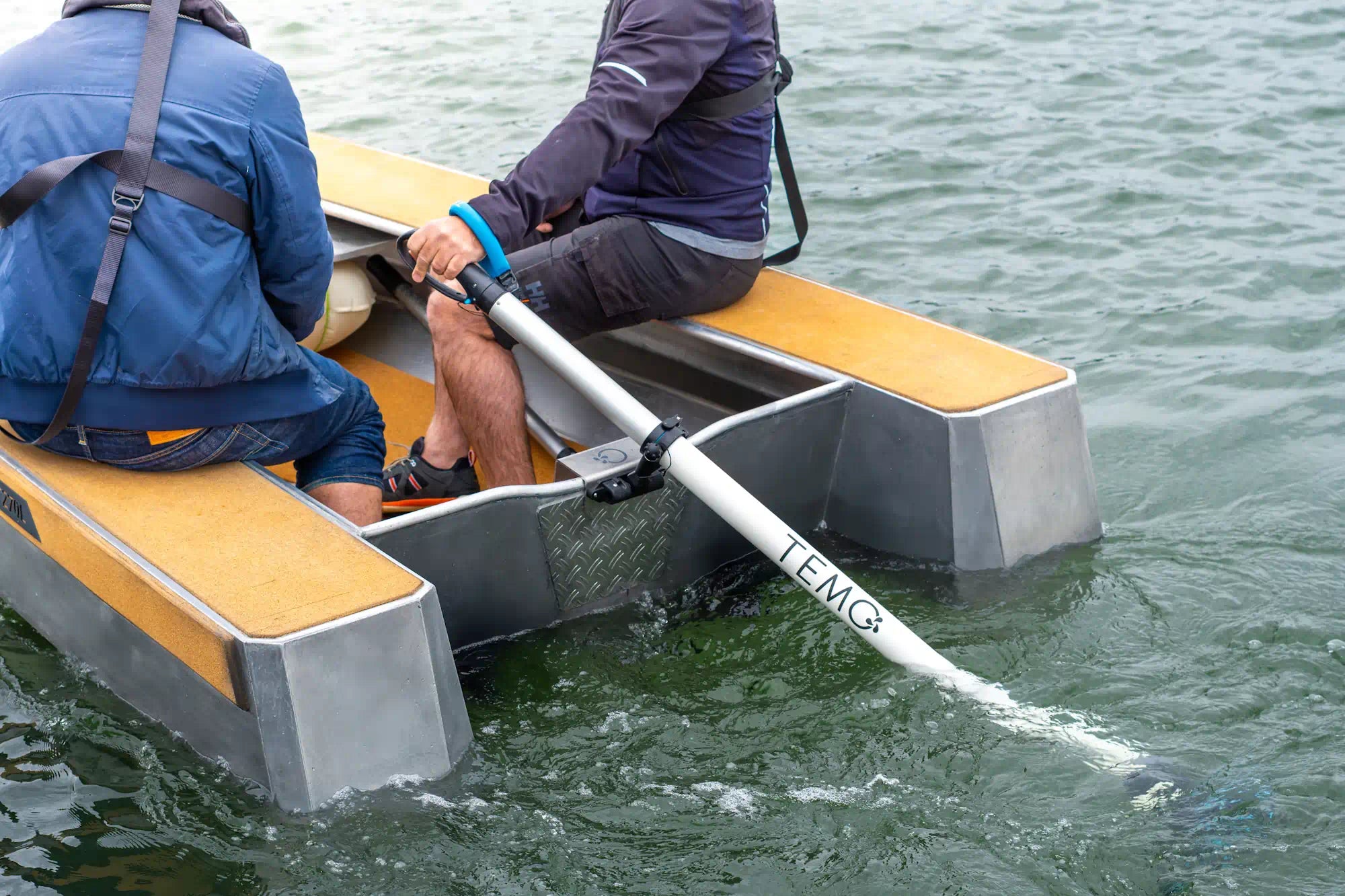
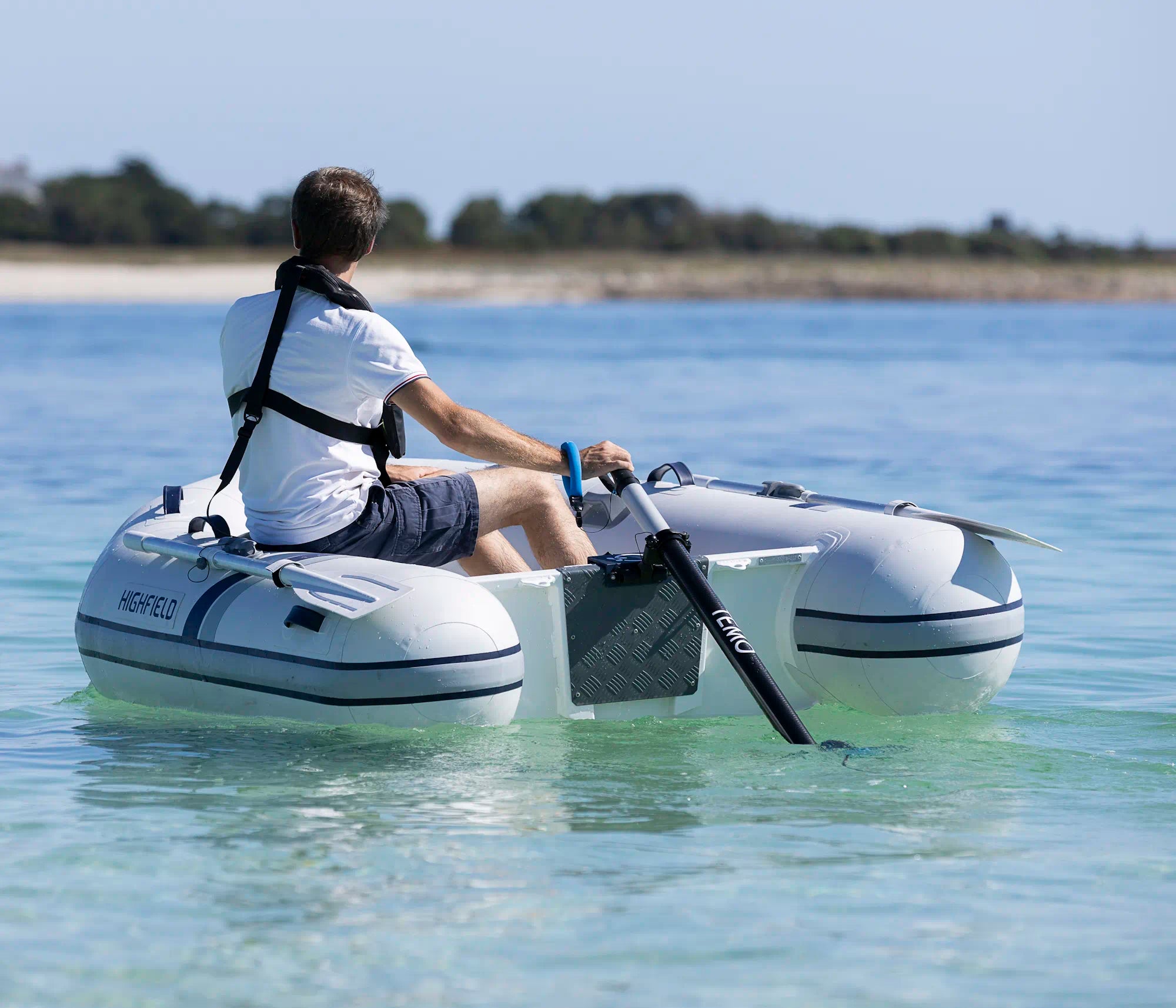
The tubes also make it easy to grab the device, and allow the handle to rotate so that you can choose the best grip angle wherever you are on your dinghy.
A lot of work went into the grip . Extremely ergonomic and comfortable, we designed it to be ambidextrous. The hand naturally positions itself in the controller, and both the trigger and the directional button remain easily accessible with the index finger and thumb.
Other elements were then added to complete the device: the clamp, the anti-theft base, the protective nozzle around the propeller, etc. Always keeping the objective of remaining very simple and streamlined.
This portable electric thruster is completely innovative and also a very attractive object. We are very satisfied with the result.
In what ways was the TEMO·450 a challenge?
From a design perspective, the TEMO·450 presented a real challenge in order to make the compact and lightweight aspect go hand in hand with the required performance .
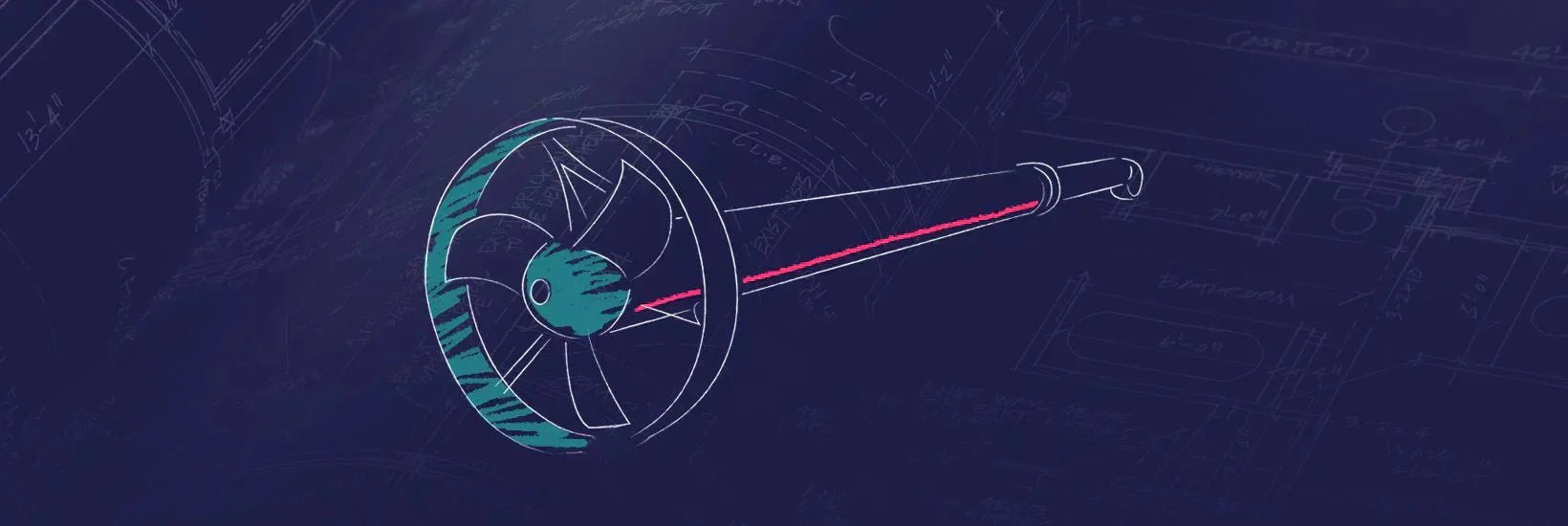
The idea of integrating the propeller, motor, battery, and control into a perfectly linear axis and making the whole thing easily manageable and transportable was not an easy task.
And yet, when you see the object today, it seems logical, expected. So, in that respect, my mission as a designer has been perfectly accomplished! With experience, I spend most of my time sketching so that it's not noticeable…
So, the collaboration with Alexandre, the project leader, was a success?
Absolutely. Because we knew each other well from work, we were able to break down the traditional agency/client process and work in shorter, more informal design loops where everyone takes responsibility and shares their expertise. A real joy for designers, and it's an environment I'm increasingly able to create with my clients, resulting in simple, clear, and easy-to-understand products.

![]() Are there still any TEMO topics you're working on?
Are there still any TEMO topics you're working on?
While the main design has now been approved, some minor adjustments may still be necessary. This new motor will continue to evolve based on feedback from boaters . We will make the necessary modifications.
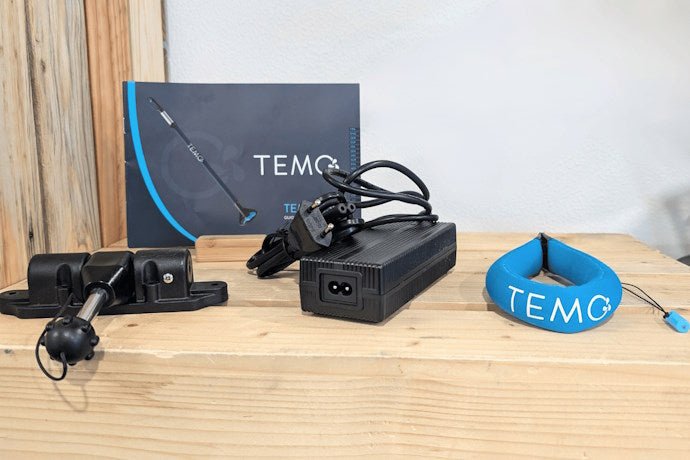
Alongside the TEMO·450, I also worked on the carrying bag, the powerpack or the oarlock support for example.
For this last feature, we wanted a very simple and quick-to-install interface. We explored several options until we found the best solution: a universal mount with a very discreet female part, perfectly integrated into the TEMO·450's clamp, and a minimalist male part that can be attached to any boat transom. Four screws are all that's needed.
|
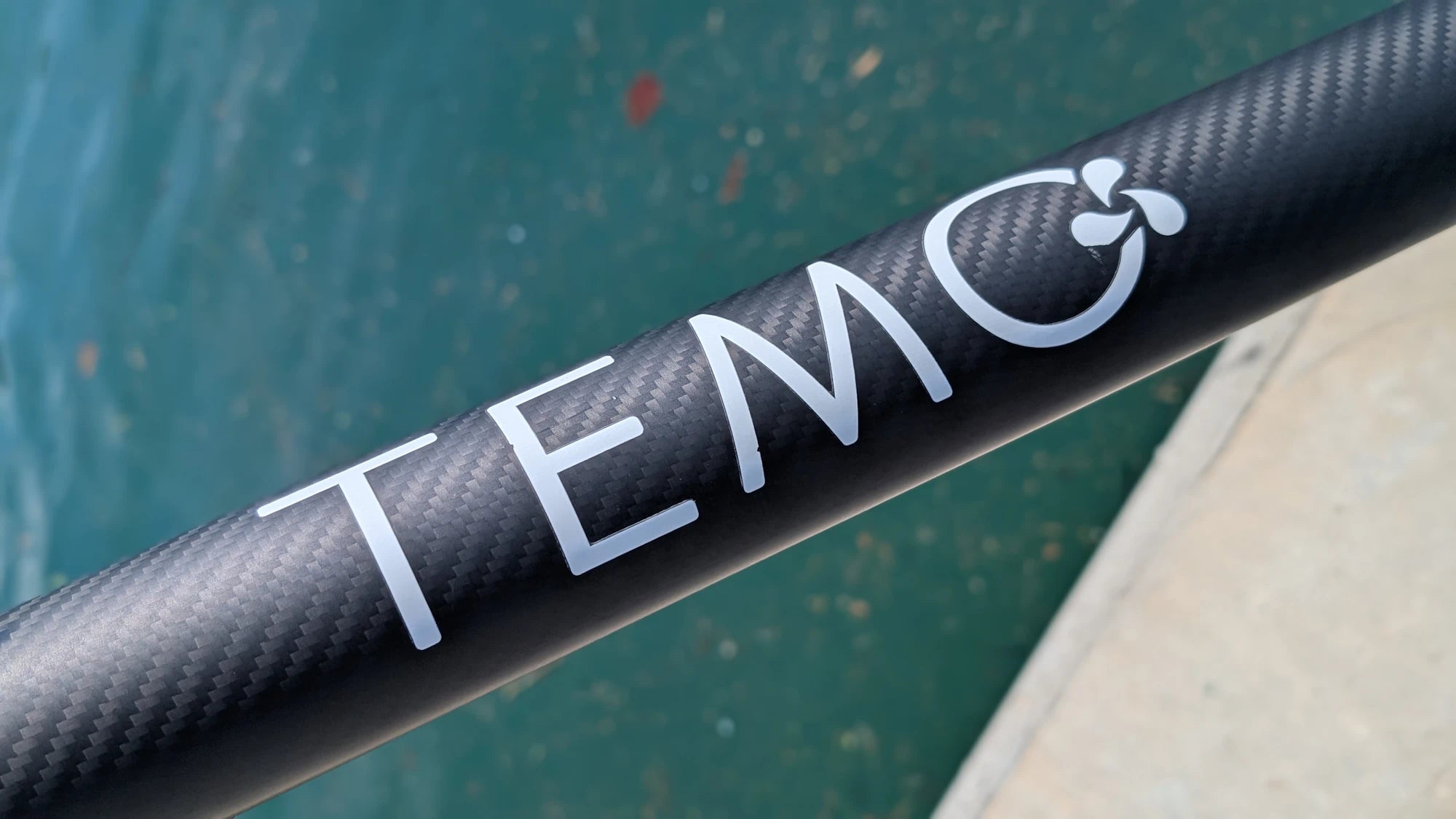
The designer's job is to imagine the product in its overall environment, its usage scenario, and all the accessories that complement it then play an important role. The idea is to create cohesion, sticking to simple yet robust materials so that the whole forms a unique family, specific to the brand's universe. Now the TEMO·450 is instantly recognizable with a strong identity that goes far beyond the logo. |
 |
As a designer, what are the industrial property rights of a product?
As a designer, I own the rights to my designs. Then, depending on the agreement between the different parties, it is possible to transfer the industrial property rights to the design to the company so that it can have full exploitation rights.
Generally speaking, if you want to bring an innovative product like the TEMO·450 to market, it is recommended to protect the design by registering the designs with the INPI (French National Institute of Industrial Property). This is a fairly quick process that allows you to patent the invention and prevent third parties from using the patented design.
Thank you, Christophe!