

Today, we're diving into the intricacies of watts, watt-hours, amperes, ampere-hours, and volts.
Hold tight, we'll explain everything in detail so you'll be an expert on these electrical concepts!
Instantaneous motor power: watts VS horsepower.
Let's start with instantaneous motor power (Watts vs Horsepower). The power of an electric motor is expressed in watts (W) and this is what determines its strength, its torque, and the propeller's rotation speed (in revolutions per minute or rpm). The more watts a motor has, the more powerful it is!
🚙 It's like comparing a car's power to its number of horsepower. A car with 100 horsepower performs better than one with 50 horsepower, because it can go faster or accelerate more quickly.
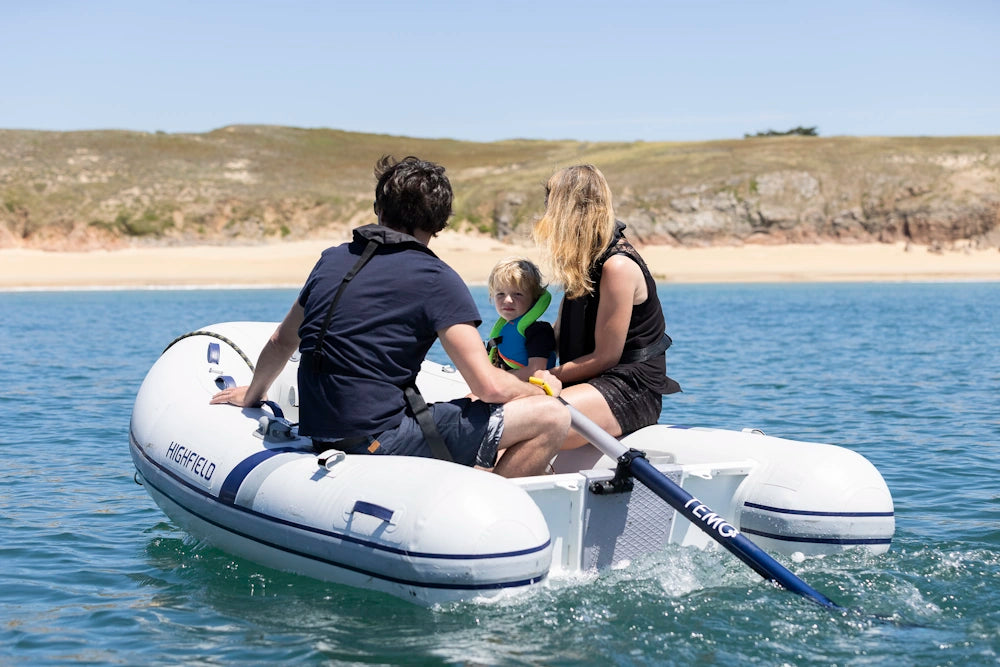
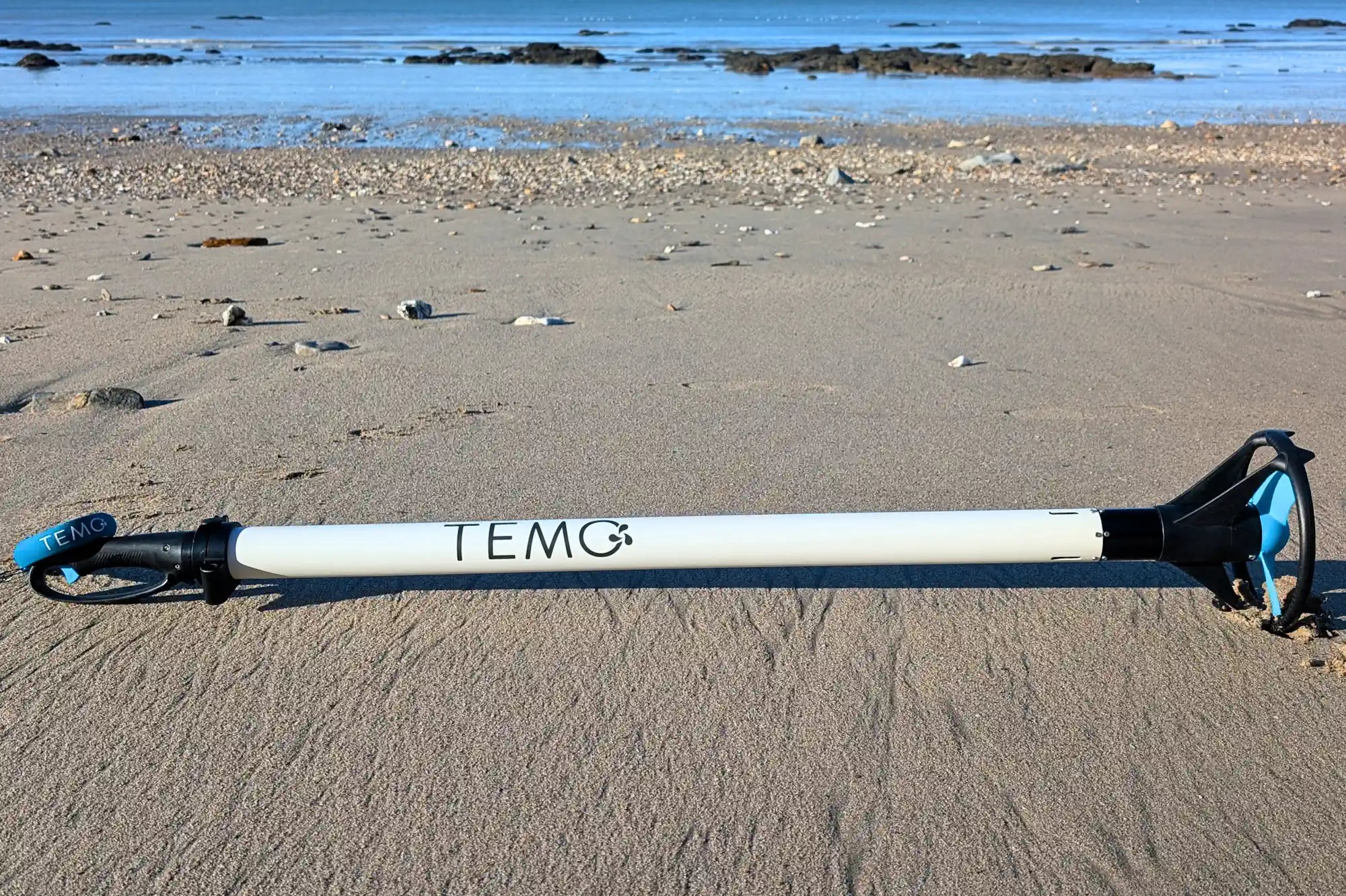
But be careful not to be misled by the Watts vs Horsepower comparison. We often say that our TEMO·450 is as efficient as a 1.5 HP combustion engine, whereas mathematically it calculates to 0.6 HP. But this isn't entirely accurate; it's a bit like comparing apples and oranges.
|
🚨 Electric motors have a high efficiency of 85 to 90%, meaning that almost all the electrical power supplied by the battery is converted into available mechanical power at the motor's output. In contrast, combustion engines lose a large part of their thermal power as heat, resulting in lower efficiency, generally around 40%. Furthermore, the power curve of electric motors differs from that of combustion engines. Our electric motors have their maximum torque from low speeds, allowing for better propeller optimization for propulsion. Discover our full article on the subject. |
Quantity consumed: watt-hours VS fuel.
Now let's move on to the amount of energy consumed (Watt-hour vs fuel consumed). Watt-hours (Wh) measure the amount of electrical energy consumed by the motor over a certain period of time. It's a bit like telling you how much "juice" you used by running your 100-watt motor for 2 hours: 200 Wh. See, it's simple, it's a measure of energy consumed.
🚙 And for combustion cars, we talk more about liters of gasoline to measure their consumption. It's like saying a car consumes 8 liters to travel 100 km. It's a way to quantify the amount of fuel needed to move the car over a certain distance.
| Our beautiful TEMO·450 is equipped with a battery with a capacity of 290 Wh. This means it can consume up to 290 watts for one hour, or 145 watts for 2 hours. |
Amperes and Volts: Current and Voltage.
Now, hold tight for amperes (A)! Amperes measure the intensity of the electric current flowing through our electric motor. To understand this, imagine a garden hose. The wider you open the tap, the stronger the water flows. It's a bit like amperes: the harder you press the trigger, the higher the current intensity.
But the problem is that this intensity also varies with the voltage. And that's where the famous Volts come in, that's where it gets complicated!
It's like propelling a boat with garden hoses.
Imagine two identical hoses. If you open tap A wider than B, the water will flow in a greater quantity in hose A. It will therefore go faster or accelerate faster:
Case 2: If you now send the same amount of water into two hoses of different diameters, the flow will be faster in the small hose than in the large hose.
To simplify all this:
- the hose cross-section (diameter) is the voltage (volts)
- the speed is the current (Amperes)
-
the flow rate is the power (Watts)
Let's apply this now to the TEMO·450.
To calculate the current of the TEMO·450 motor, we divide its power of 450 W by the average voltage of 25 V, thus obtaining an average of 18 amperes.
Average, average, why do we talk about average? 🤔 Well, yes, because the voltage varies a lot.
Take a deep breath and hold on, you're about to understand everything:
Influence of voltage on current.
Because yes, the voltage varies depending on the battery charge level!! This is the famous discharge curve specific to Lithium-ion batteries. Here is the one for the TEMO·450.
At its highest point, when it's fully charged, it reaches 29 V and drops to 20 V when it's discharged.
When the TEMO·450 is fully charged, it has a voltage of 29 V. To deliver 450 W of power, it will use a current of 15 A.
When the TEMO·450 is "nearly discharged," it only has a voltage of 20V. To maintain 450 W of power, we are forced to compensate by increasing the current up to an intensity of 22.5A. But this causes heating and puts more strain on the battery, so, in the final minutes, we limit the current and available power to offer a longer autonomy.
Below 20V, the electronic board shuts down to prevent any damage.
To conclude, in order to deliver 450 W from the beginning to the end of the cycle, more amperes are sent at the end of a cycle than at the beginning. Here is a diagram to illustrate this:
Let's draw one last parallel of this tension with our garden hoses.
Ultimately, it's as if the hose narrows while we're watering. To maintain the same flow rate in the hose, the speed in the hose will have to increase. In the end, the hose would be tiny, and to avoid damaging it by putting too much pressure, we cut off the water.
Energy storage capacity: Ah VS Wh.
💡 Let's take a quick look at the battery's energy storage capacity. It's measured in ampere-hours (Ah). The TEMO·450 battery has a capacity of approximately 10Ah, which means it can provide 10 amperes for one hour. But comparing Ah between different devices is tricky, precisely because of the voltage variations explained above.
We prefer to compare Wh (watt-hours), a more reliable unit for consumed energy. This is also how you calculate and compare your electricity bills.
The TEMO·450 consumes 290 Wh, and its recharging cost can therefore be estimated at about 6 euro cents (at a rate of 0.20€/kWh): (290 Wh x 0.2062€ / 1000 Wh = 0.059€)
While we're on the subject of recharging, let's talk about TEMO·450 chargers.
They operate at different voltages:
The domestic charger at 220 V requires a low current of about 0.5 A.
The converter charger with a voltage between 12 V and 24 V requires about 8 A.
Despite this, both recharge your TEMO·450 in about 3h30.
And there you have it, you know everything, using the following 2 formulas:
Power = voltage x current (W = V x A)
Energy consumed = voltage x storage capacity (Wh = V x Ah)
You can twist the numbers any way you like to check a product's specifications.
|
Here is a summary of the TEMO·450 data: 450 W, maximum voltage of 29.5 V, average current of 18 A, consumption of 290 Wh, and storage capacity of 10 Ah (with a voltage of 29 V). It's like a colorful puzzle where each piece fits perfectly! |
Ah, don't leave yet, we have one more piece of information from our engineers for you!
We often say that our motor "develops" 450 W, but that's not entirely accurate. When we go shopping to source the best parts to build a TEMO·450, we don't buy "watts" from the motor supplier, we buy "Revolutions per minute" AND "Motor torque"!
It's ultimately the propeller that does most of the work; it's what provides efficiency and determines power (ours is designed by Naval Group, recognized experts, so it's very high-performance!). And, fun fact, a good motor will consume fewer watts than a bad motor to achieve the same torque! It's not magic; it's just engineering genius!
Ah, but I see you coming with your question: "So why can't we go faster if the engine isn't working at full capacity?" Well, it's quite simple and again because of the propeller! It's a bit like choosing a bicycle gear. A large gear allows you to accelerate quickly, to climb steep hills, but once you're moving or going downhill, you can never pedal fast enough to improve top speed.
| At TEMO, we chose the gear that makes us move at 3 knots all the time. It's a choice between thrust and speed. |
Now, let's stop racking our brains and head out onto the water to experience the reality of the TEMO·450.
Here's the context:
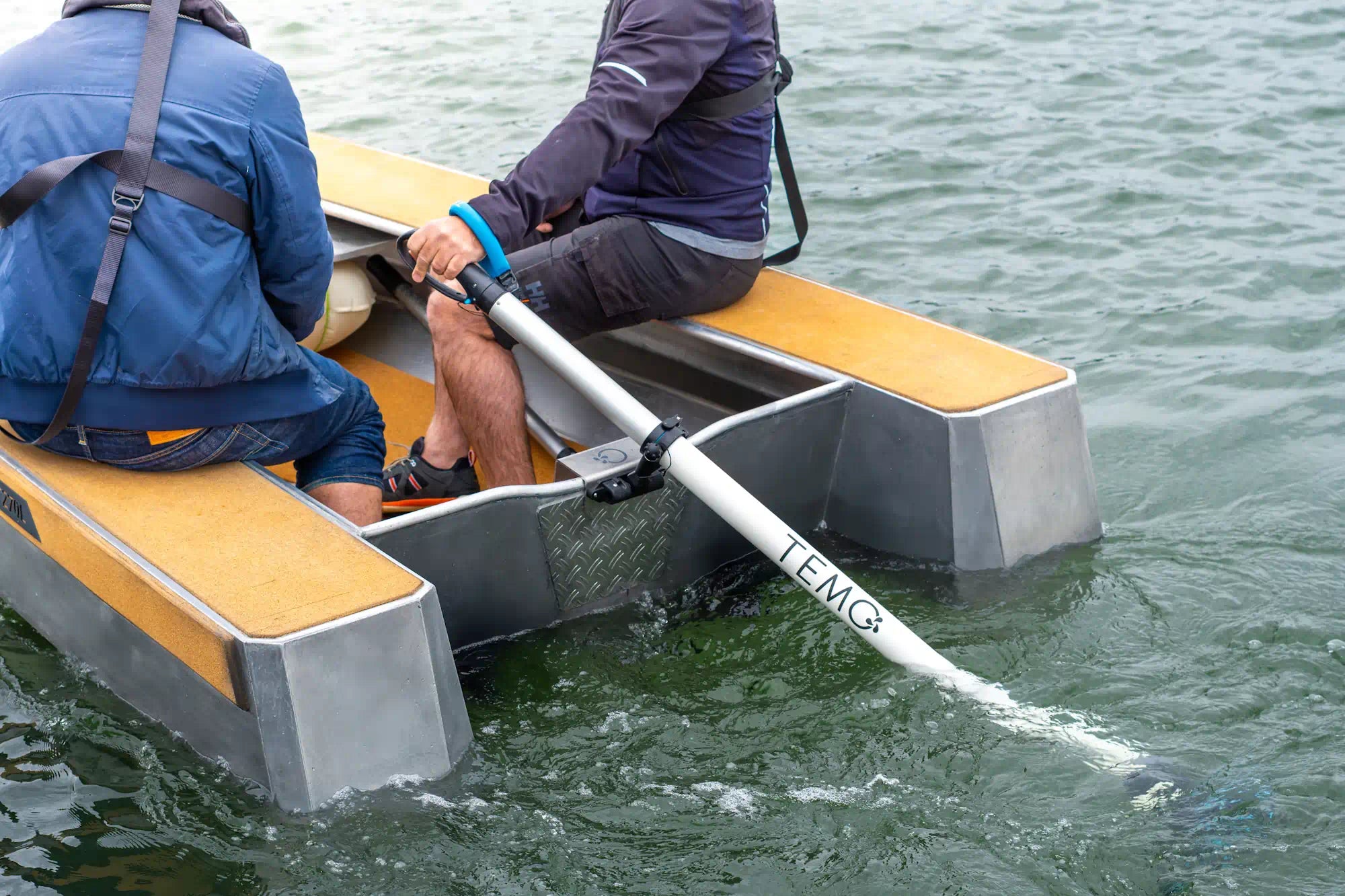
- 2 tenders
- 2 speeds
| How long do you think a charge will last? If we tell you between 53 minutes and 1h45, do you believe us? |
Proof in video! 👇
You are now marine electricity experts; you can shine in society with all this electrifying knowledge!
Go ahead, run off with your TEMO·450 and embark on an adventure, keeping an eye on those watts and amperes!





Interview with our LIFE
TEMO, the manufacturer of electric outboard motors, is setting up shop in Vannes