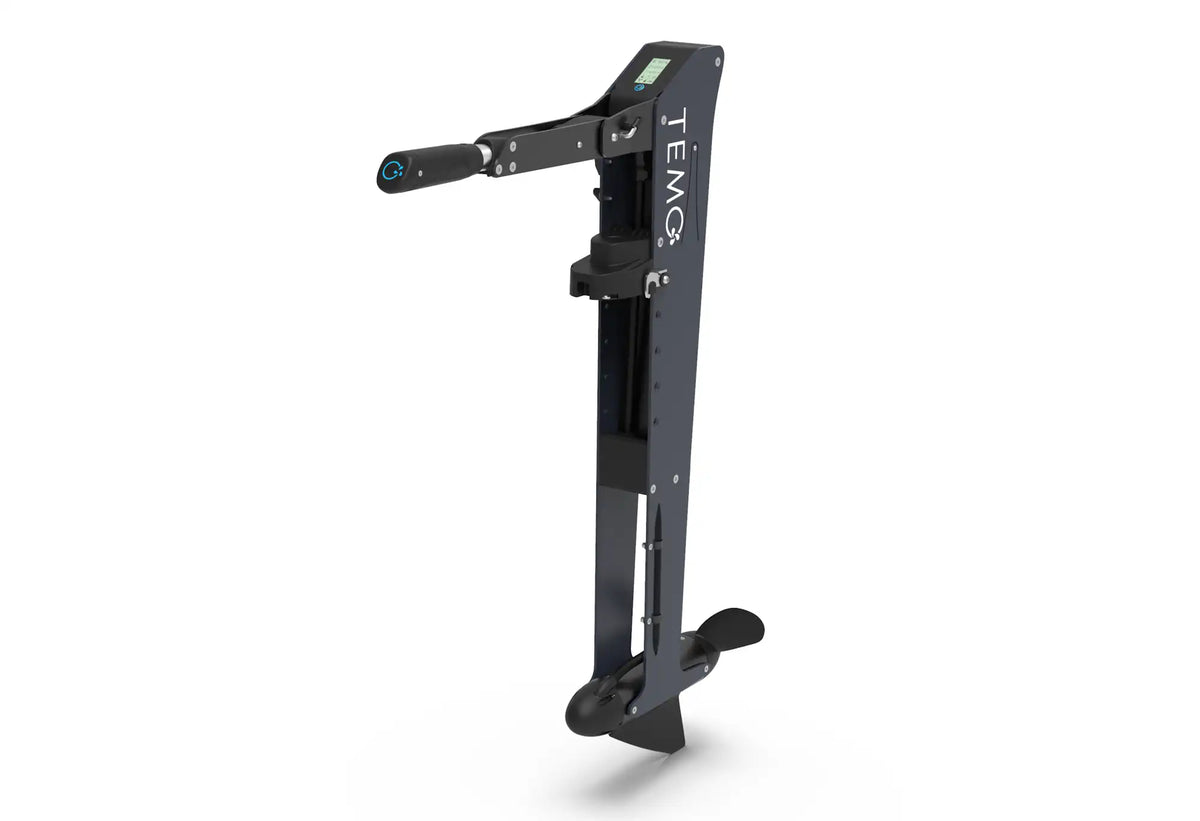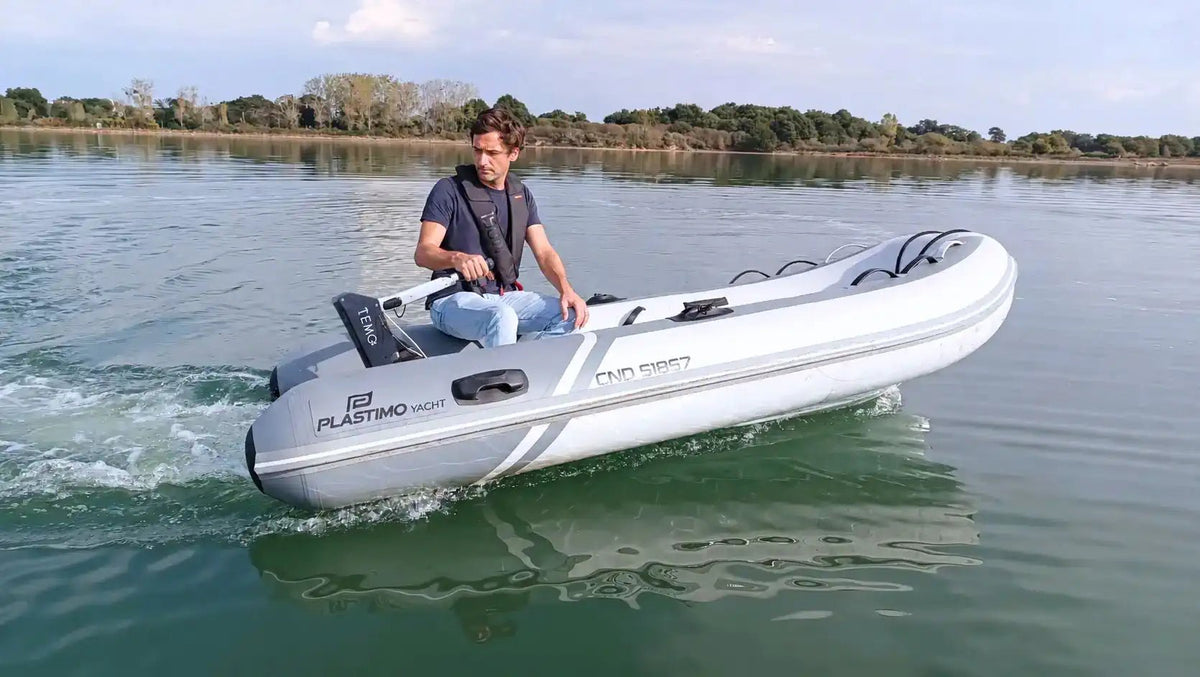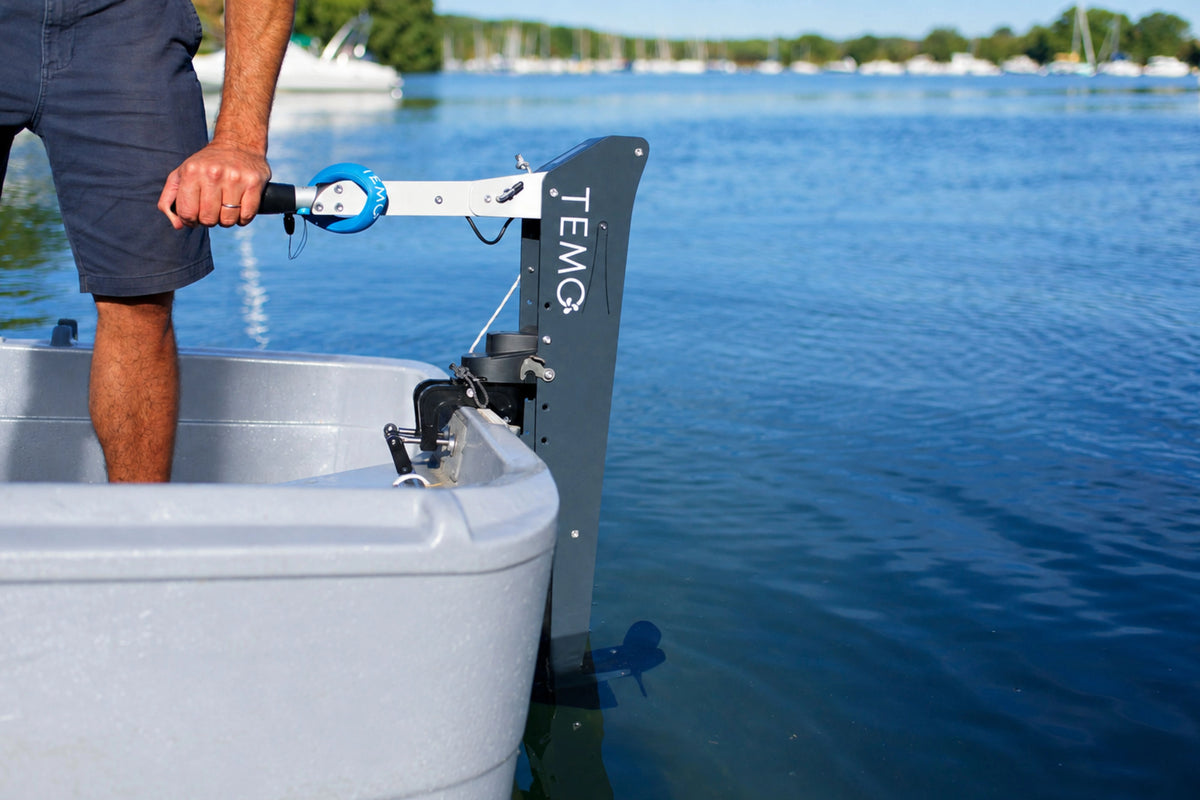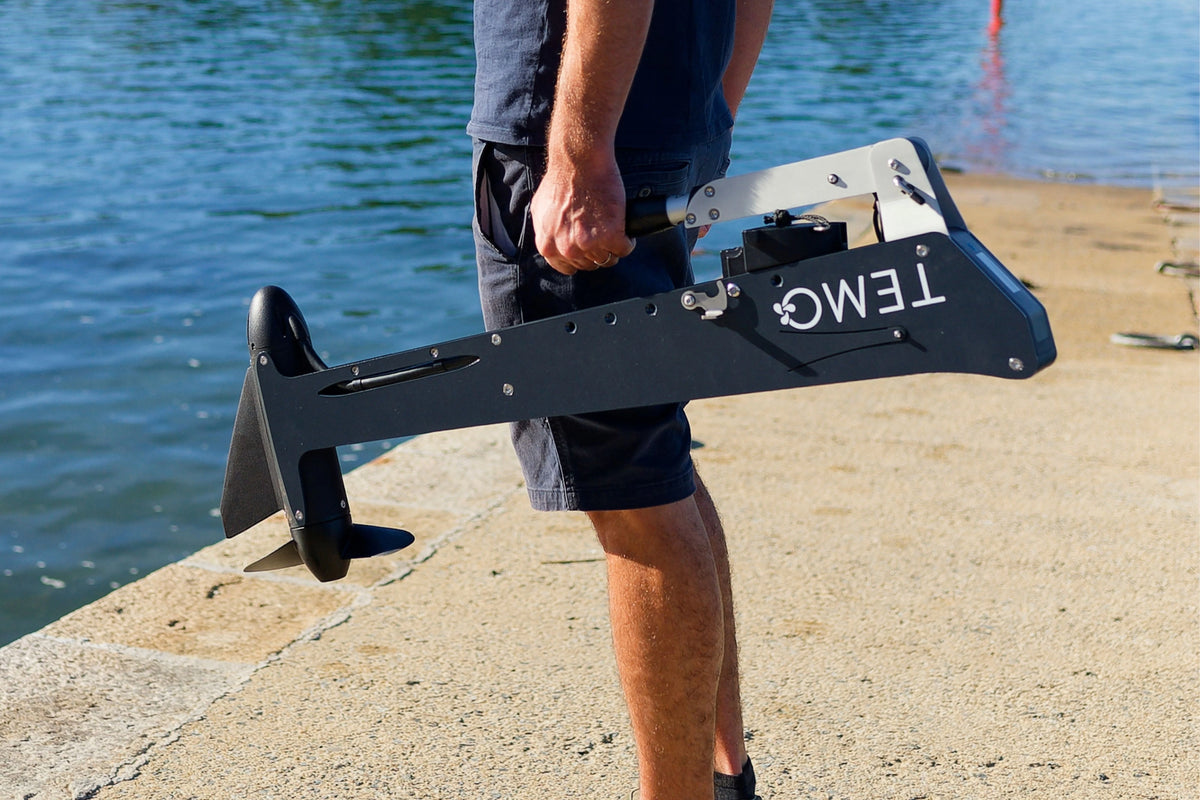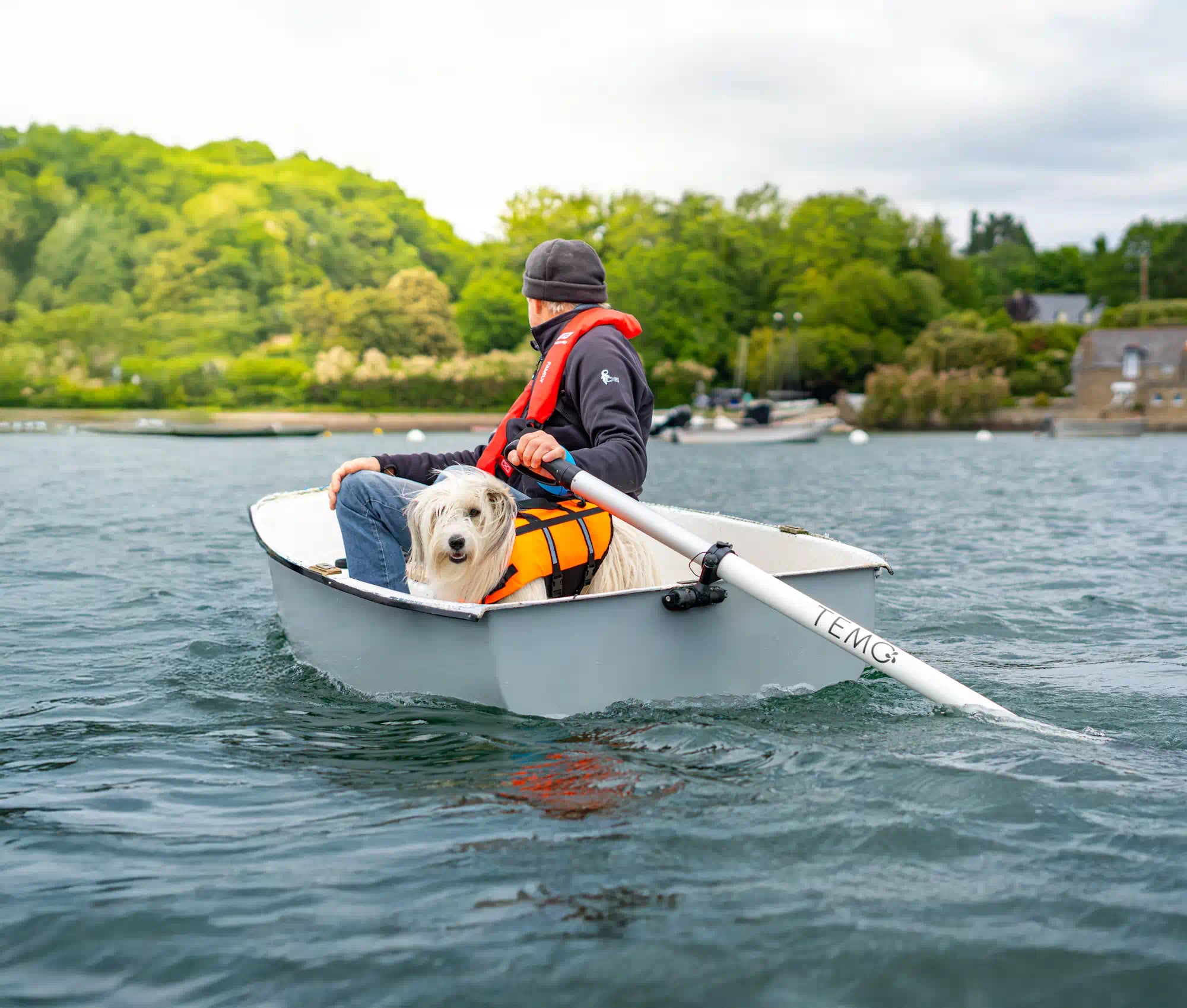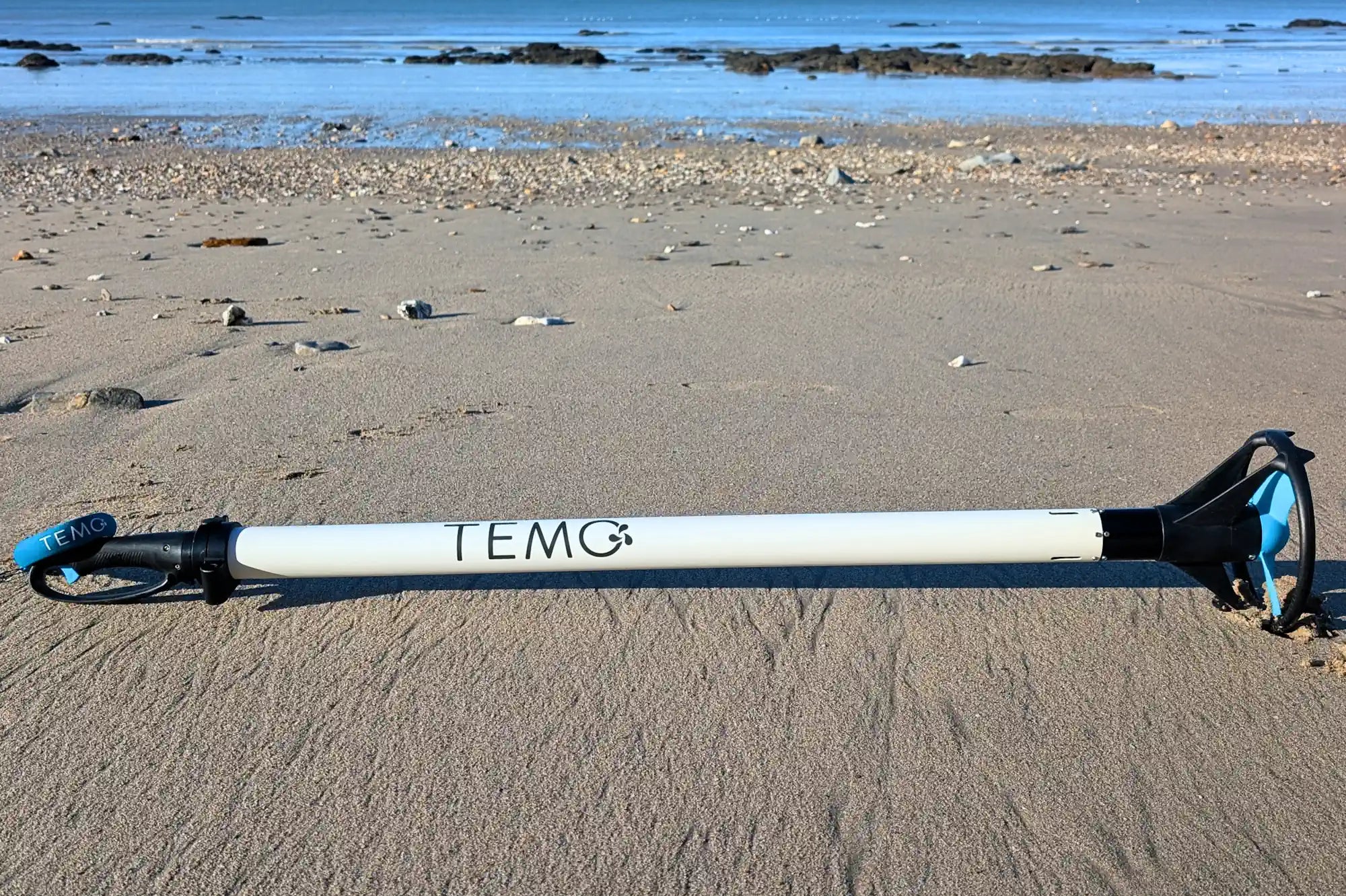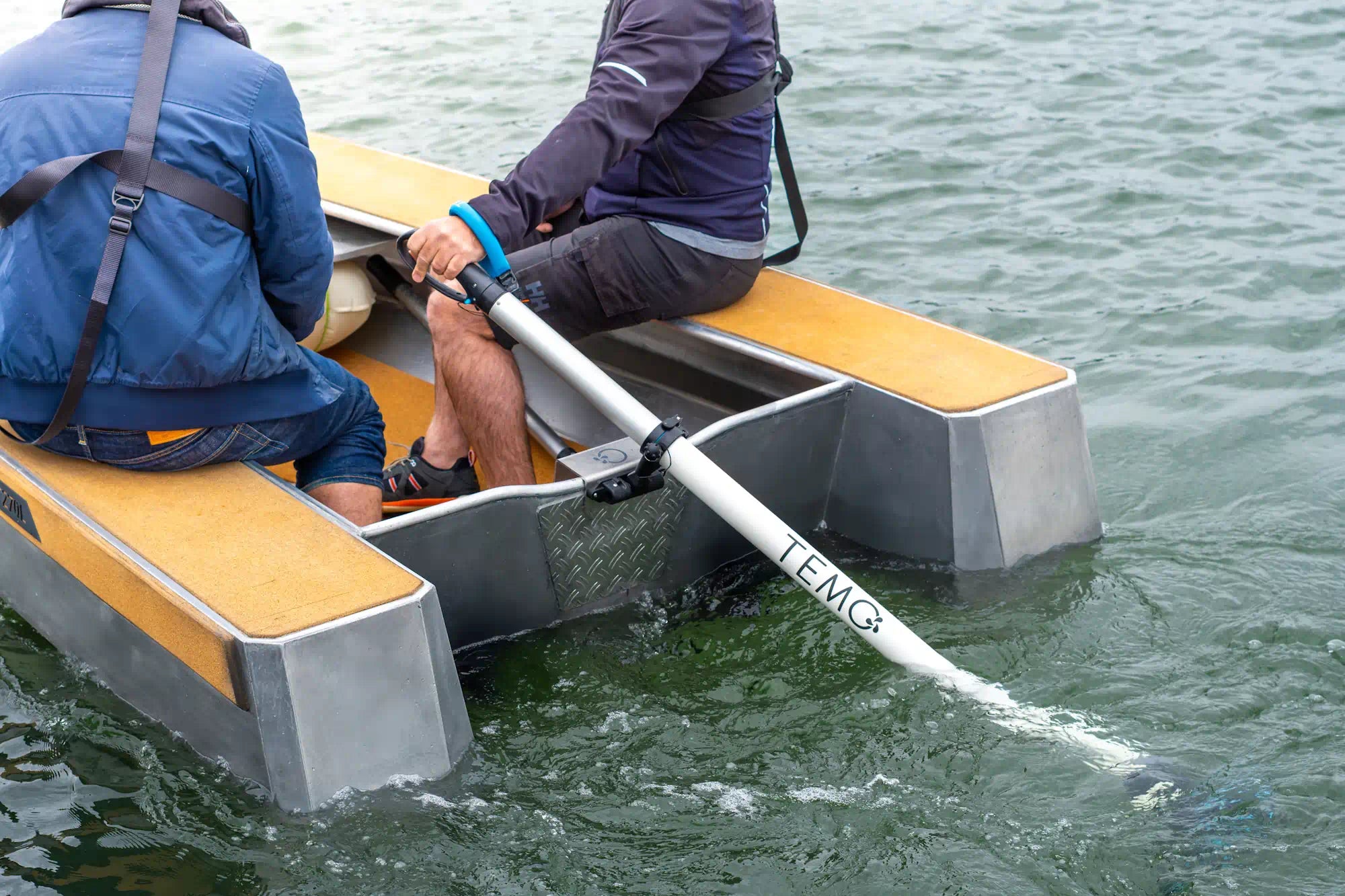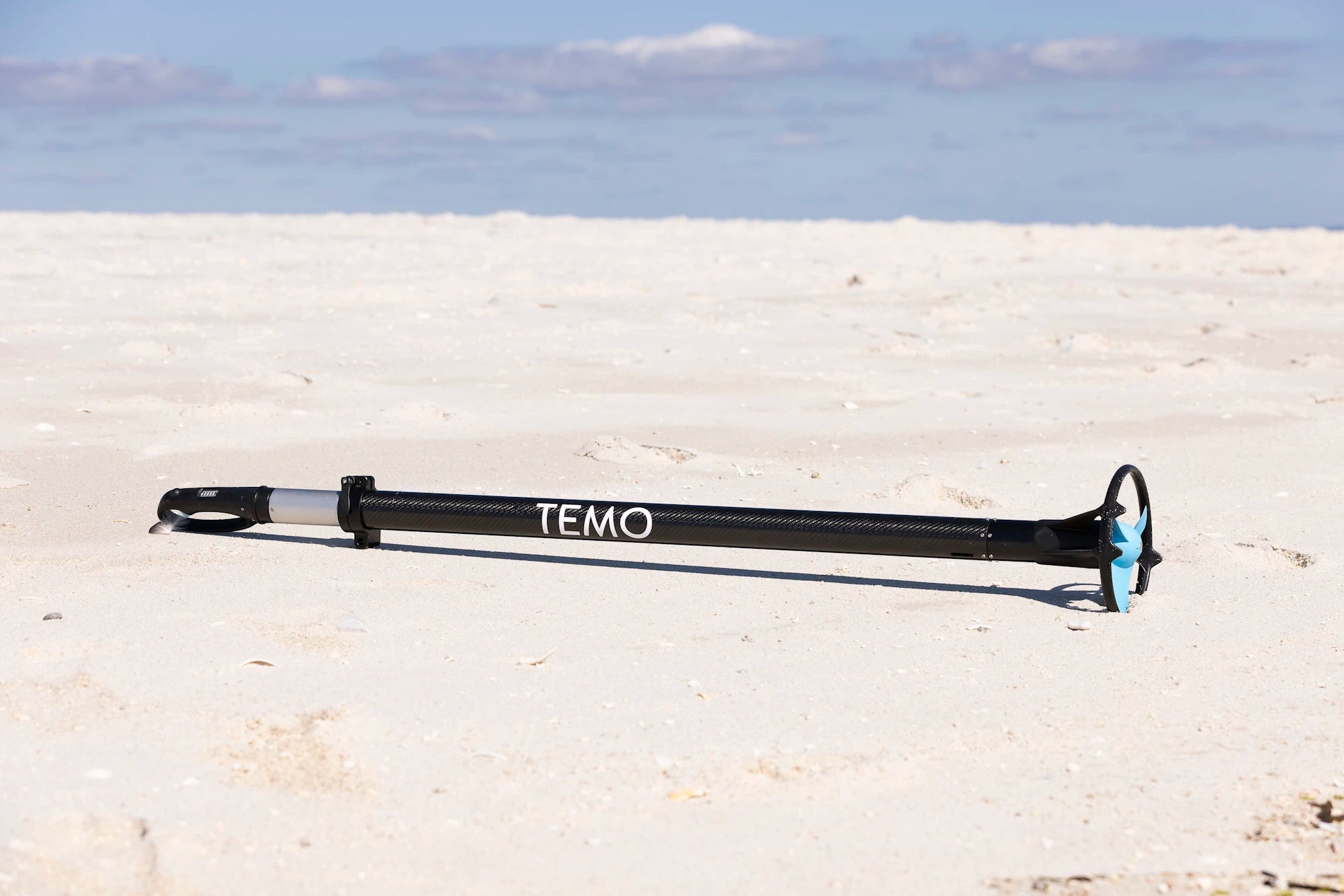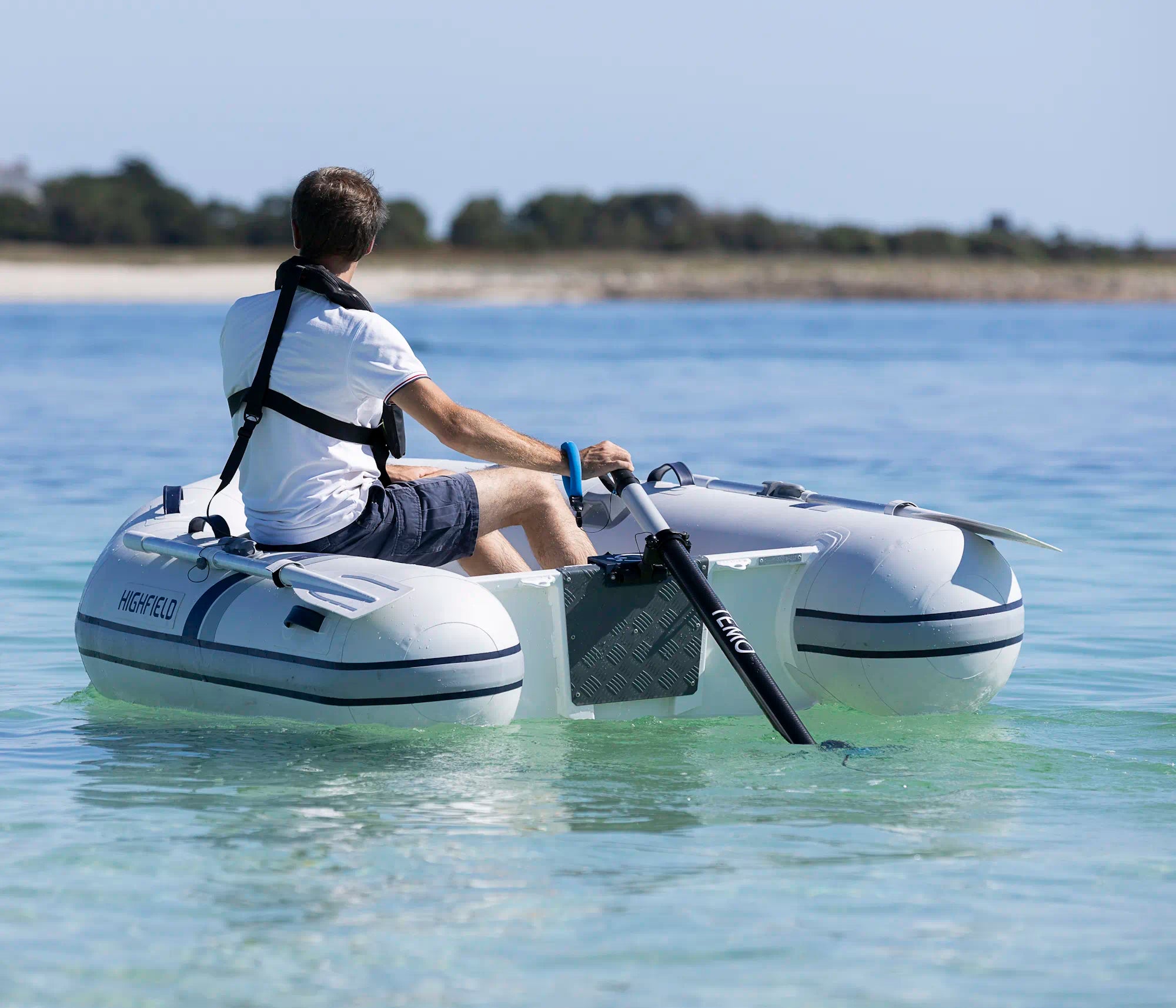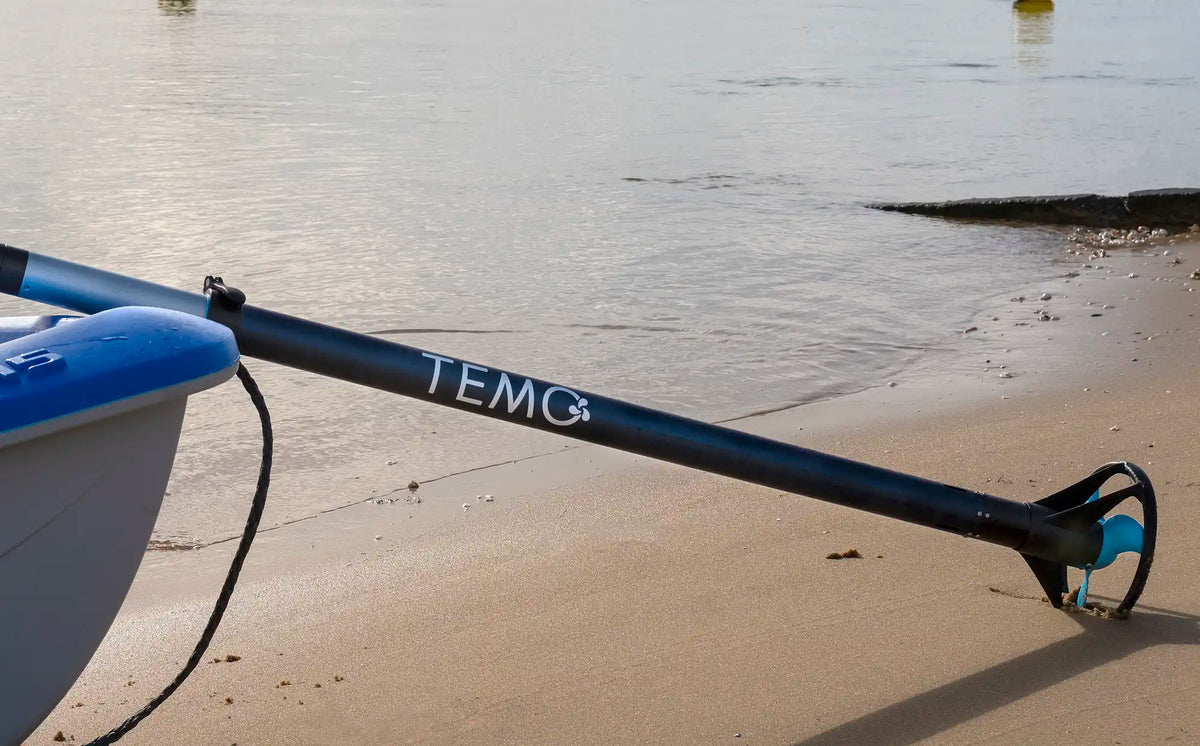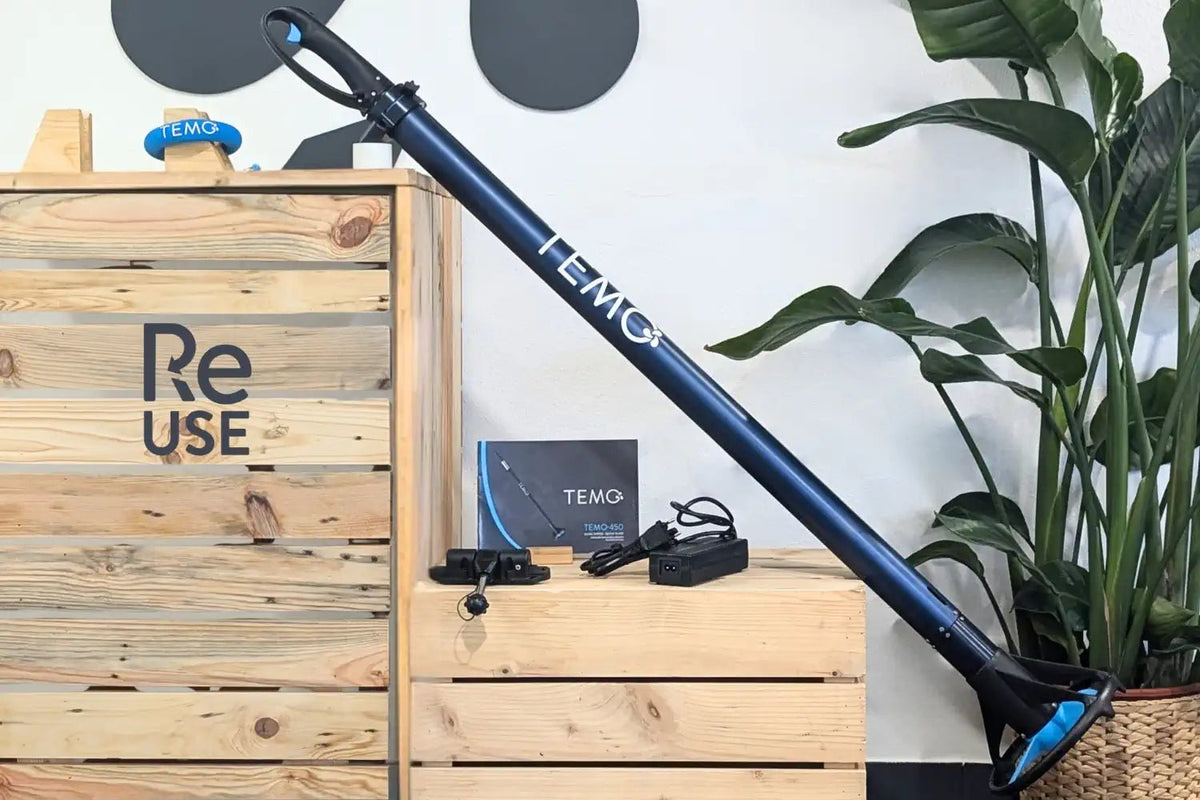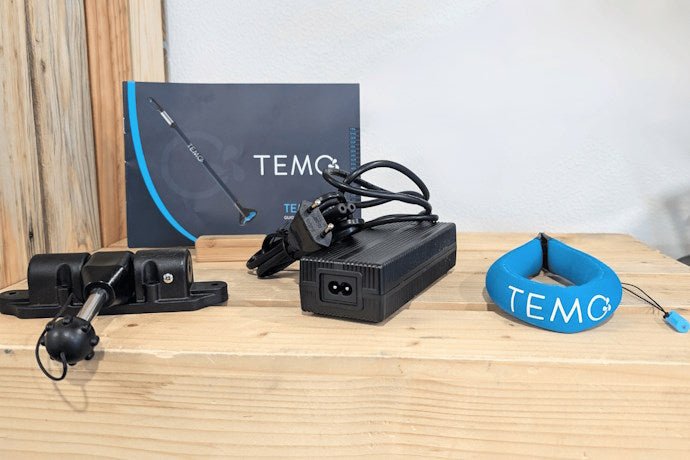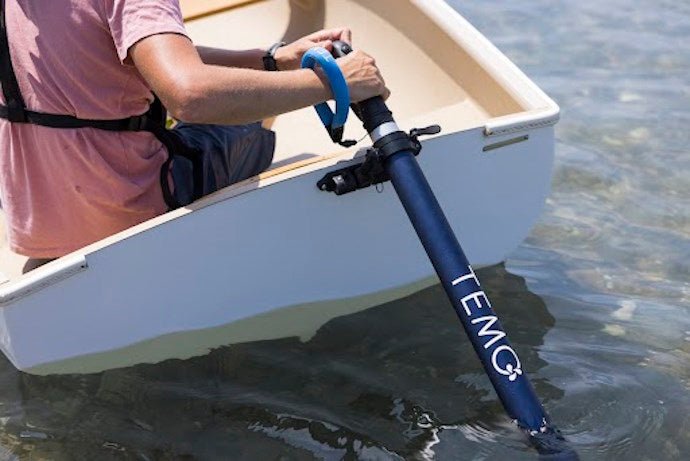
The modern boater seeks more than just a means to an end; they crave an experience that's both exhilarating and responsible. They demand peak performance without compromise to our delicate marine environment. They envision precision, silence, and a motor that's as unobtrusive as it is dependable. For those who refuse to settle, the TEMO·1000 electric outboard motor is the ultimate solution.
Imagine: no more frustrating engine startups, no more wrestling with messy gas and oil, and no more excessive noise pollution drowning out the sounds of the water and nature.
Effortlessly recharged from a standard 110 V or 12 V outlet – and with a quick charging time of just 5.5 hours from empty to full – the TEMO·1000 redefines how you experience the water. But the most common question we hear is: "What is the real-world range?" To answer this, we've conducted a series of practical tests under conditions that mirror the recommended use of the TEMO·1000.
Real-World Figures.
We believe in transparency. While it might be simpler to present idealized figures or theoretical calculations, that's not the TEMO way. The data you'll see here was measured under actual sailing conditions, giving you a true understanding of the TEMO·1000's capabilities.
It's important to remember that these figures are not absolute. Range and speed will vary based on numerous factors, including your boat type, the number of passengers, sea state, wind, and current.
TEMO·1000 range test details.
Our goal with this test was to provide you with a clear, practical understanding of the TEMO·1000's battery usage: how long can you navigate? At what speed? For what distance?
- Location: Vannes, France
- Date: Thursday, March 27, 2025
- Conditions: calm seas, moderate wind, rising current.
- Crew: four
- Boat: Highfield 290 aluminum RIB

|
Did you know? An electric motor operates differently from a combustion engine. The maximum torque of an electric motor is almost instantaneous. This means that with the TEMO·1000, you don't need to push to its maximum 1100W power to experience significant performance and responsiveness. The innovative design of the TEMO·1000's propeller plays a crucial role in delivering this efficient power. |
Three modes, three uses, three range tests.
In this test, we evaluated the TEMO·1000's performance across three distinct levels of power. Each configuration is tailored to a specific application, offering concrete results in terms of time, speed, and distance.
Results analysis.
MAX POWER |
MEDIUM POWER |
LOW POWER |
100% throttle: 1100 W |
50% throttle: 550 W |
30% throttle: 330 W |
|
Results
|
Results
|
Results
|
|
Best practice This mode is preferable for occasional use requiring greater thrust: cruising against the current or wind, or moving a more heavily-laden boat.
|
Best practice This power level represents a good compromise between speed and range. It's ideal for commutes, longer crossings or situations where more responsiveness is required, without sacrificing too much range.
|
Best practice This mode is ideally suited to calm winds and seas or harbor approaches. This is the most energy-efficient configuration, offering excellent range for users who are prioritizing range over speed. |
*SAFE MODE - At TEMO, we've developed an intelligent battery that automatically reduces its speed once the critical battery threshold is reached, known as safe mode. Similarly, if the battery detects an anomaly, it can activate a safe mode. This is the case, for example, if a seaweed gets caught in the propeller. The motor will stop to prevent overheating. All that's left to do is unfoul the propeller, and you'll be able to set off again with your TEMO·1000.
**In the present case, the average speed at full power is calculated as follows: the battery can provide 45 minutes of autonomy at full power, therefore D1 = Vmax × 45 min.
Then, 15 minutes in Safe Mode, during which the battery delivers 50% of the maximum speed, so D2 = 0.5 × Vmax × 15 min. The total distance covered is therefore: D = D1 + D2.
The alternative.85% of throttle - 825 W
This setting allows you to cruise further than at full power, without any real loss of average speed. Ideal for those who want a little more range without putting much strain on the battery. Remember: the difference in speed between 825 W and 1100 W is minimal, but range increases. |