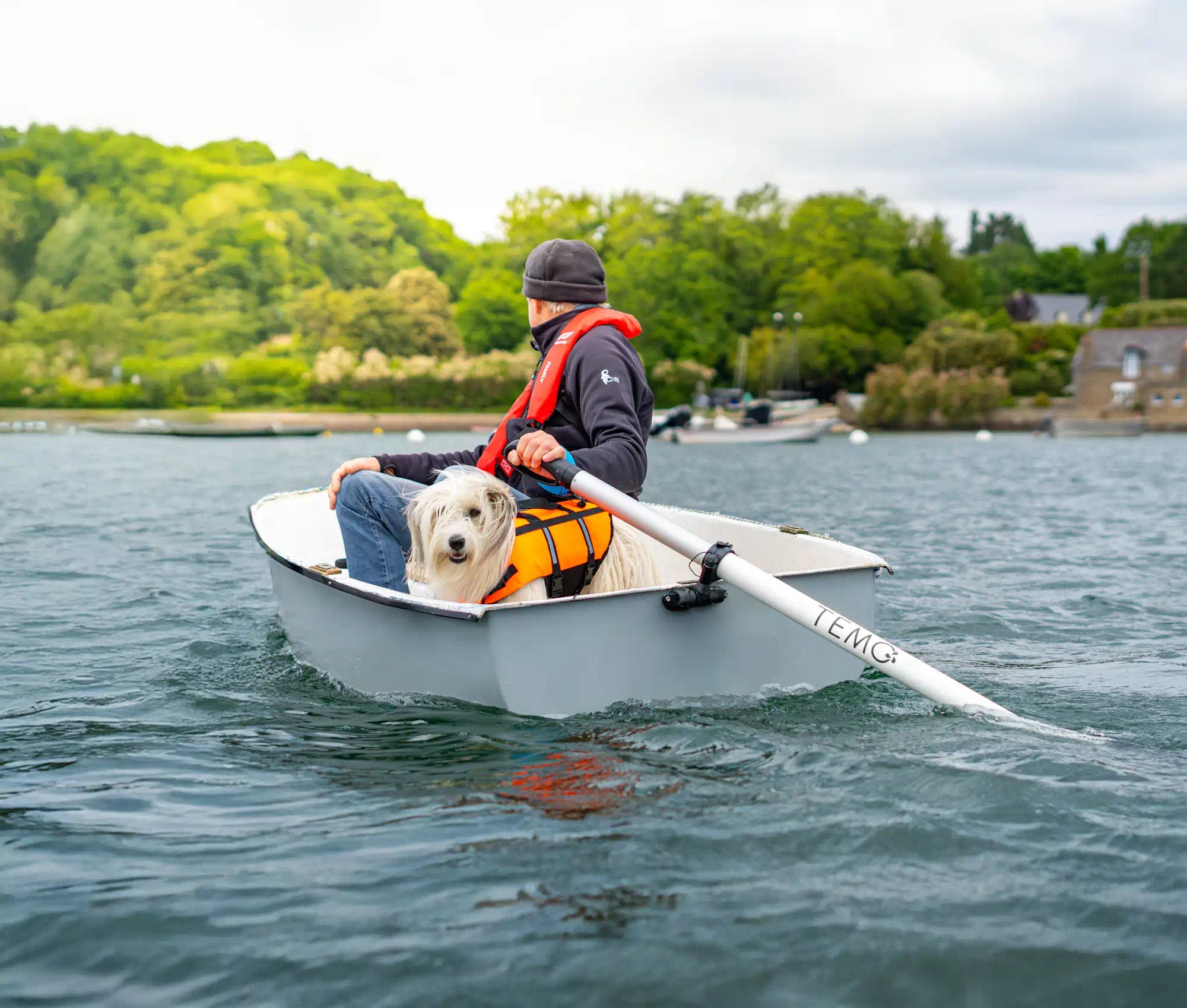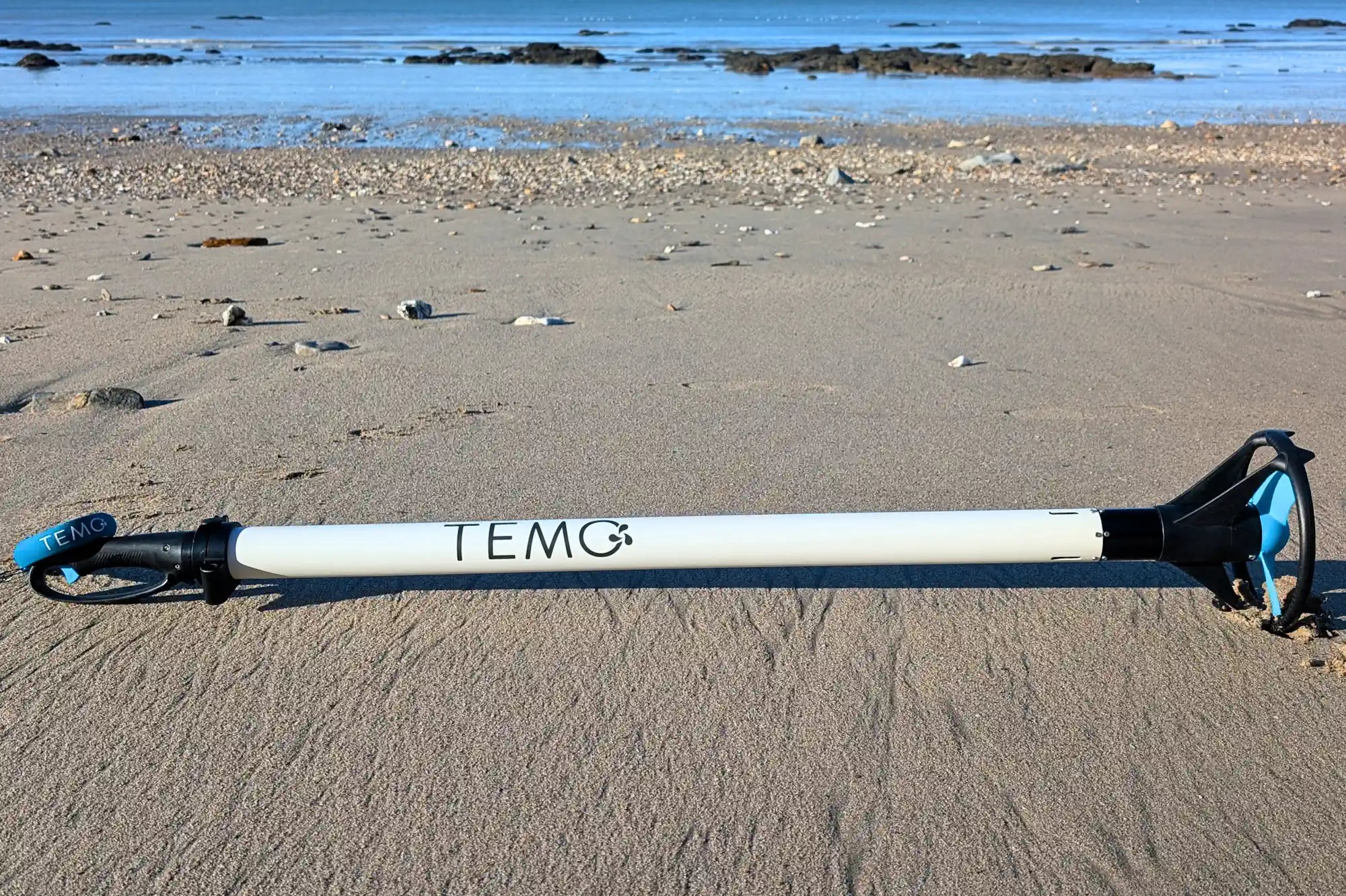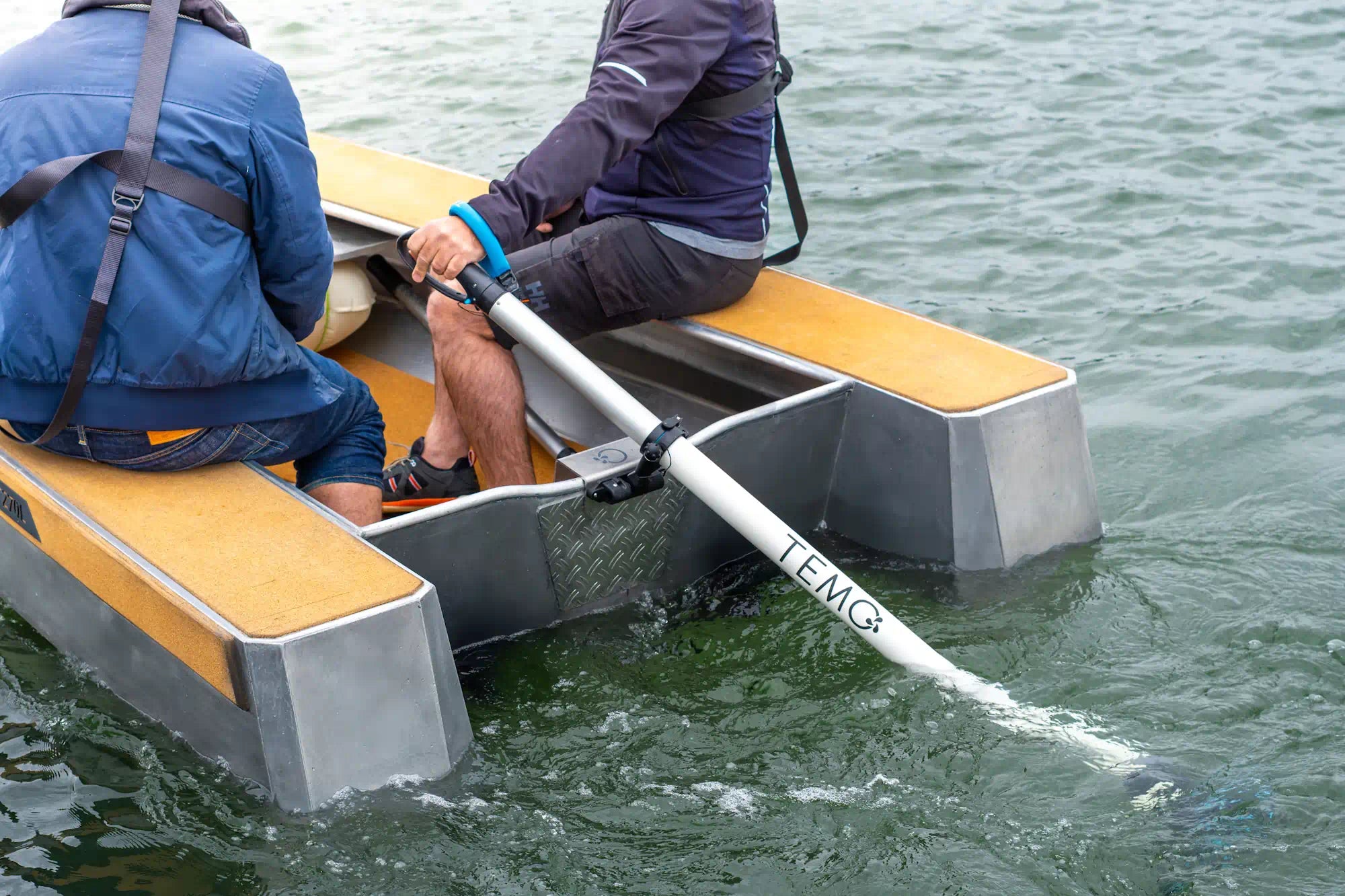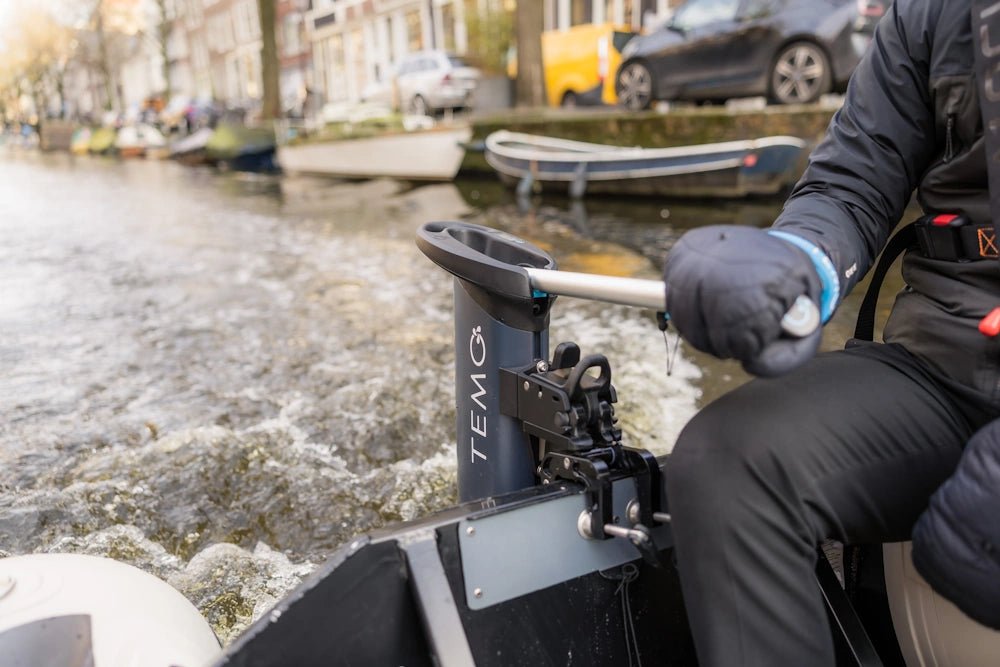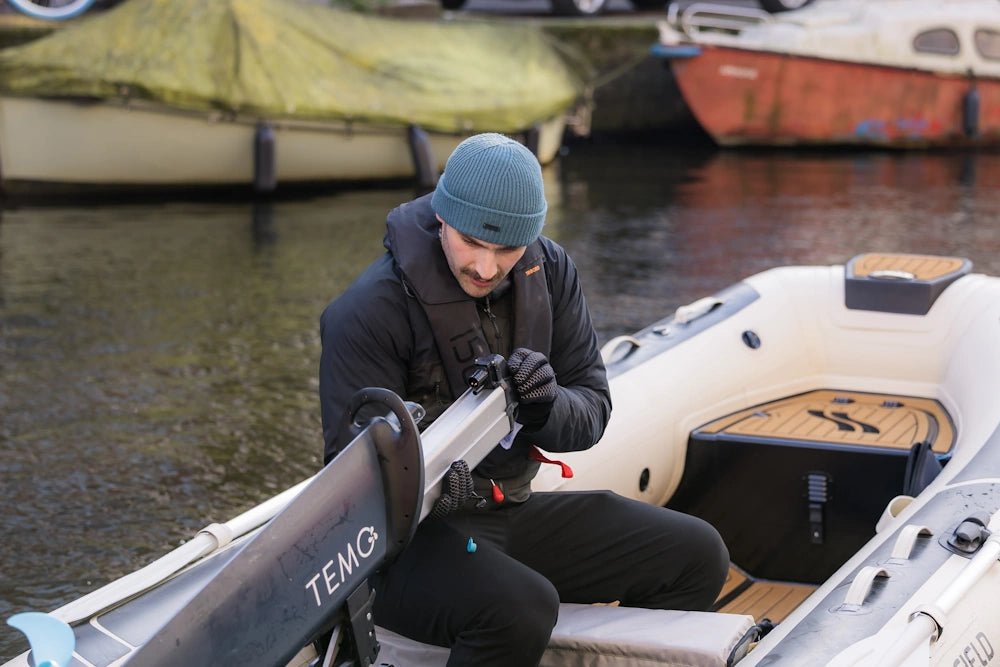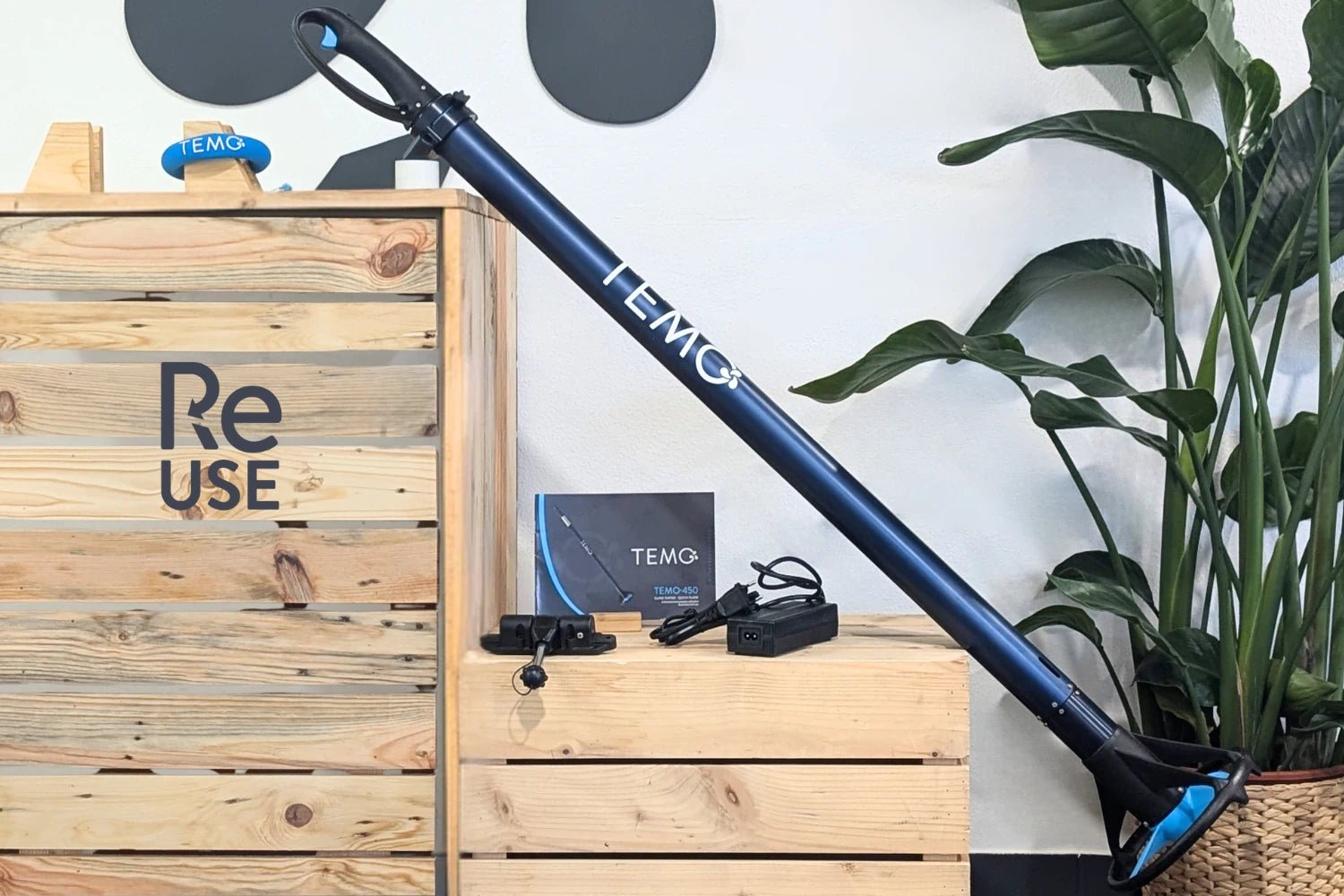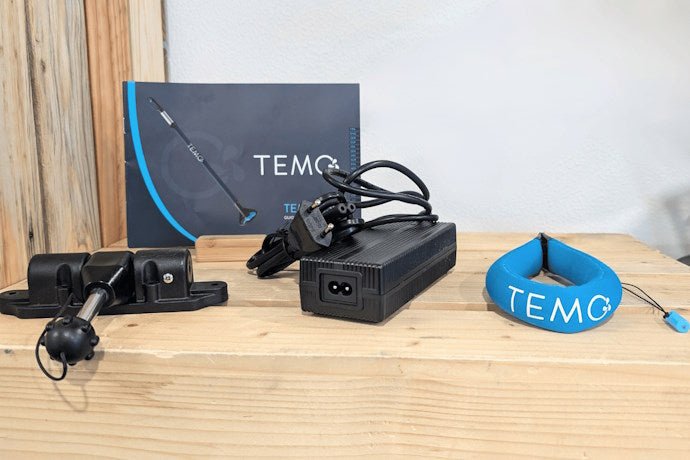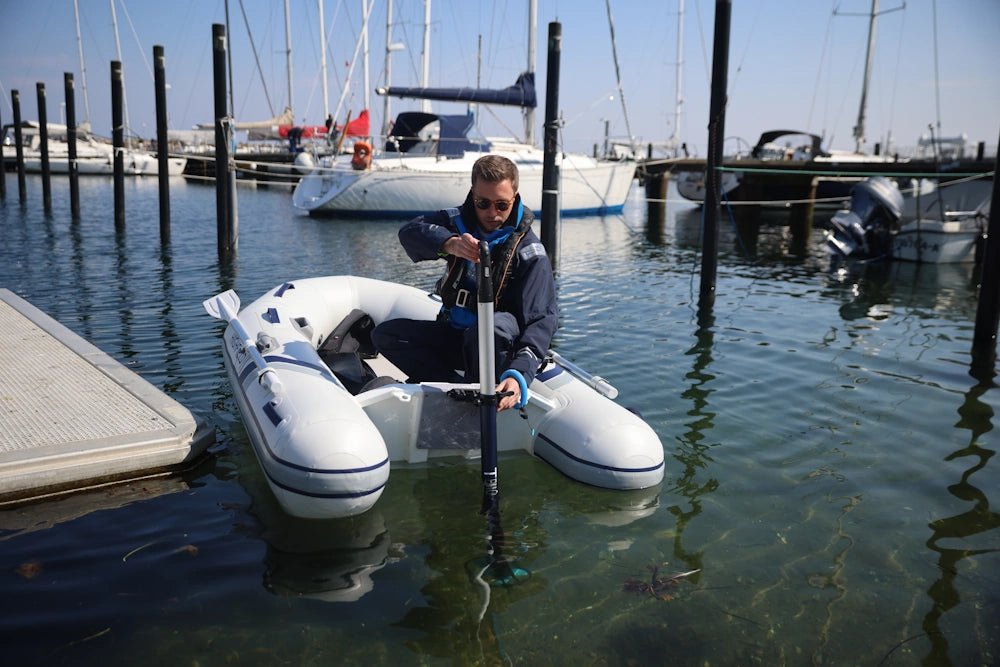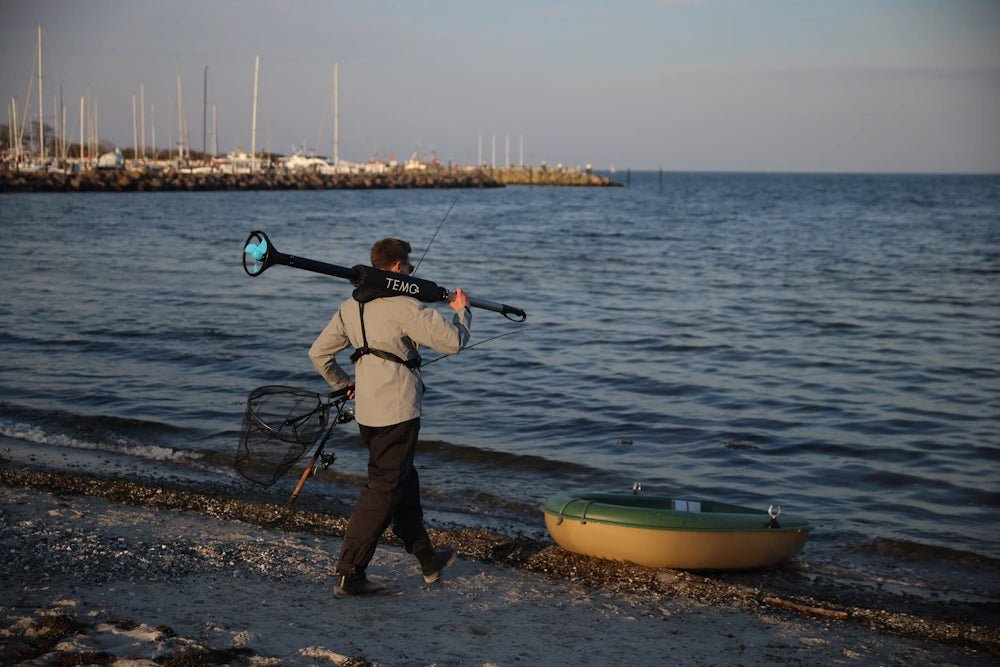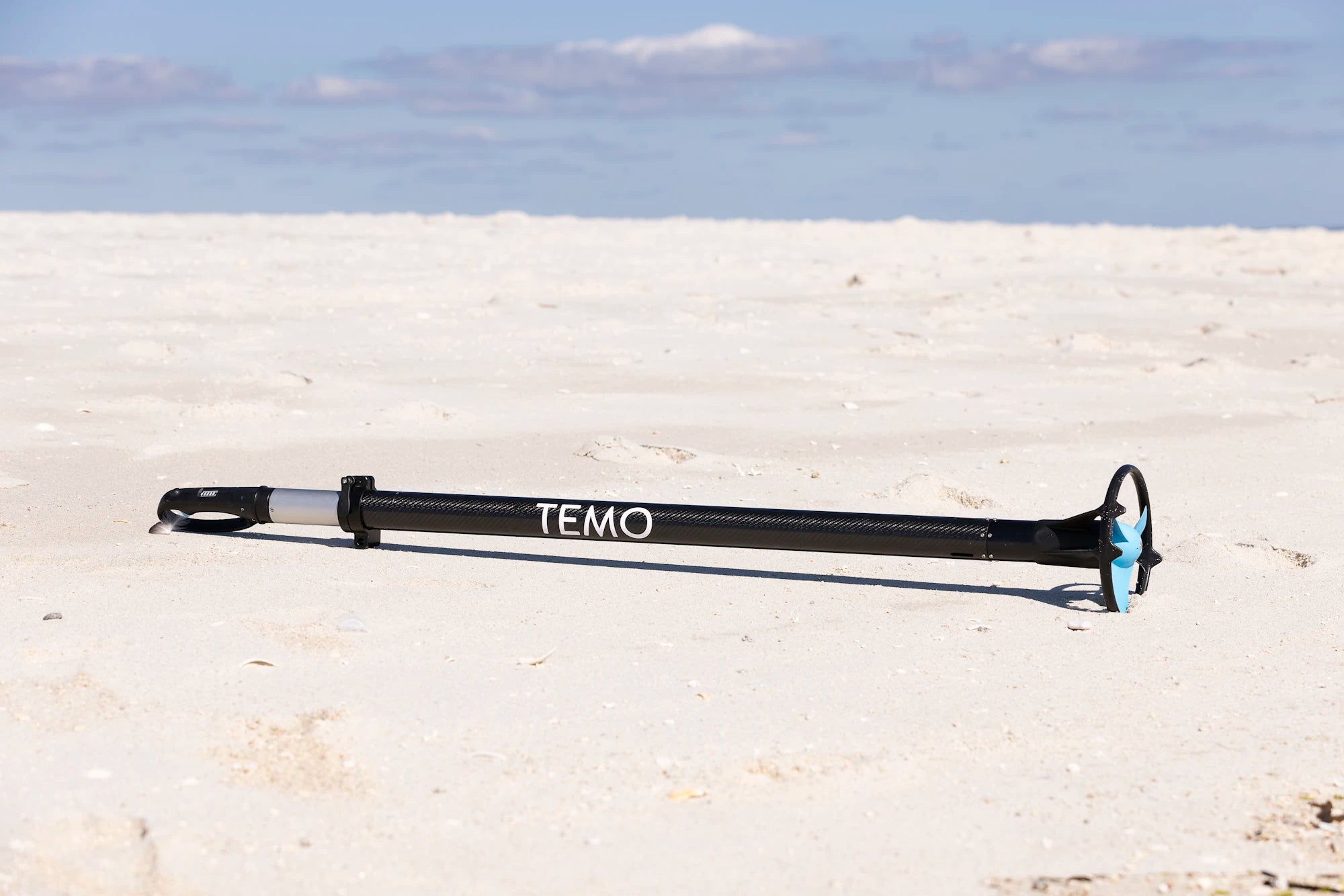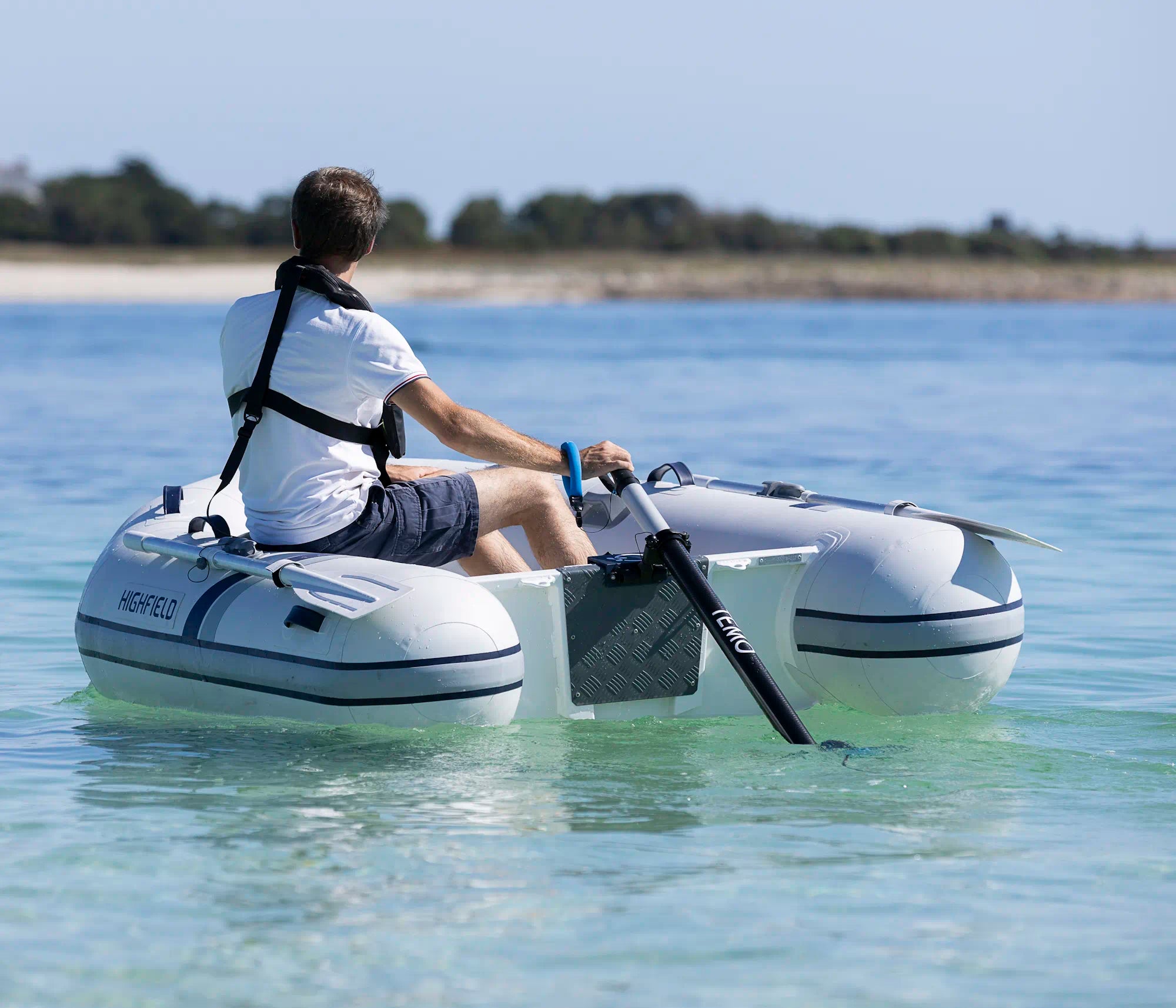
The modern boater no longer wants compromises. They demand performance without harming the environment. They want precision, silence, and an engine that is both discreet and reliable . To meet these expectations, the TEMO·1000 electric motor presents itself as an ideal solution . No more dreaded starting engines, no more handling fuel tanks, no more noise drowning out conversations.
Easily recharged from a standard 220V outlet or a 12V auxiliary circuit, the TEMO·1000 embodies a new way to navigate. But one question often arises: what is its actual battery life? To answer this, we conducted real-world tests under conditions similar to your everyday use.
Real figures, for real situations.
We could have simplified our presentation, rounded the figures, or even opted to rely on theoretical calculations often far removed from real-world sailing conditions. Instead, we chose transparency . The data we present was measured during actual sailing.
These data are not absolute values: they naturally vary depending on many parameters such as the type of vessel, the number of people on board, the state of the sea, the wind or the current.
Context of the TEMO·1000 autonomy test.
The aim of this test is to give you clear benchmarks regarding the use of the TEMO·1000 battery: how long can you navigate? at what speed? for what distance?
- Location : Vannes lock
- Date : Thursday, March 27, 2025
- Conditions : calm sea, moderate wind, rising current
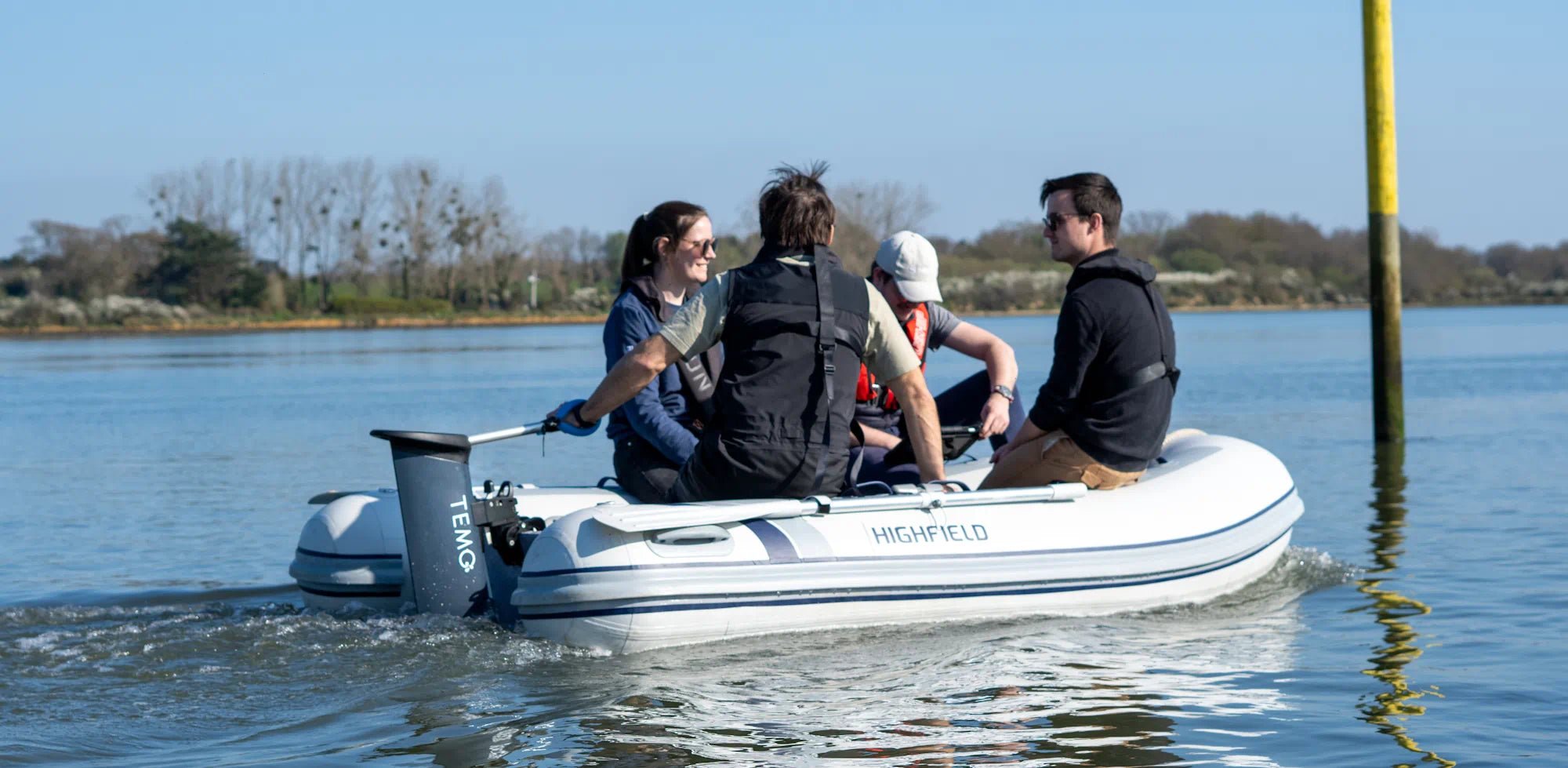
- Crew : four people
- Boat : Highfield 290 aluminum hull

|
Did you know that? An electric motor isn't controlled like a combustion engine: the maximum torque of an electric motor is almost instantaneous. As a result, with the TEMO·1000, it's not necessary to reach the maximum power of 1100W to benefit from significant performance. It goes without saying that the propeller design of the TEMO·1000 plays a significant role in this! |
Three regimes, three uses, three autonomies.
During this test, we evaluated the performance of the TEMO·1000 with three levels of acceleration, and therefore power . Each configuration is designed for a specific use, with very concrete results in terms of duration, speed and distance.

Analysis of the results.
HIGH REGIMEN |
MEDIUM REGIMEN |
LOW RPM |
100% throttle grip: 1100 W |
50% throttle grip: 550 W |
30% of the throttle grip: 330 W |
|
Results
|
Results
|
Results
|
|
Good practice This system is best suited for occasional uses requiring more thrust: navigating against the current, facing the wind, or moving a more heavily loaded boat. |
Good practice This power level represents a good compromise between speed and range . It is suitable for daily commutes, slightly longer journeys, or situations where a little more responsiveness is desired, without sacrificing too much range. |
Good practice This mode is perfectly suited to calm sailing or approaching port . It is the most energy-efficient configuration, offering excellent range for users who prioritize duration over speed. |
* SAFE MODE At TEMO, we have developed an intelligent battery that automatically reduces its speed once the critical battery threshold is reached; this is what we call safe mode.
Similarly, if the battery detects a fault, it can activate a safety mode. This is the case, for example, if seaweed gets caught in the propeller. The motor will stop to prevent overheating. All you have to do is remove the foreign object from the propeller, and you can continue using your TEMO·1000.
**In this case, the average speed at full power is calculated as follows: The battery can provide 45 minutes of autonomy at full power, therefore D1 = Vmax * 45 min.
Then, 15 minutes in Safe Mode where the battery produces 50% of the maximum speed, i.e. D2=0.5*Vmax*15min, i.e. a total distance of D1+D2.
The cunning alternative.85% of the throttle grip – 825 W.
This setting allows you to cruise for longer than at full power, without any real loss of average speed. Ideal for those who want a responsive motor without putting too much strain on the battery. Key takeaway: the speed difference between 825W and 1100W is minimal, but battery life benefits. An excellent compromise for pragmatic sailors. |
To go further.
Distance in nautical miles estimated according to power and number of people on board.
| Number of people on board |
At 1100 W |
At 825 W |
At 550 W |
At 330 W |
| 1 person | 3.78 NM | 4.21 NM | 5.66 NM | 8.31 NM |
| 2 people | 3.72 NM | 4.15 NM | 5.56 NM | 8.20 NM |
| 3 people | 3.67 NM | 4.10 NM | 5.50 NM | 8.00 NM |
| 4 people | 3.61 NM | 4.04 NM | 5.45 NM | 8.00 NM |
Navigation speed in knots depending on power and number of people on board.
| Number of people on board |
At 1100 W |
At 825 W |
At 550 W |
At 330 W |
| 1 person | 4.32 knots | 4.01 knots | 3.57 knots | 3.15 knots |
| 2 people | 4.26 knots | 3.96 knots | 3.53 knots | 3.12 knots |
| 3 people | 4.21 knots | 3.91 knots | 3.48 knots | 3.07 knots |
| 4 people | 4.16 knots | 3.83 knots | 3.46 knots | 3.02 knots |
TEMO·1000: controlled autonomy, liberated use.
Ultimately, the TEMO·1000 embodies a new way of thinking about electric propulsion . Versatile, discreet and supremely efficient, this electric outboard confidently accompanies every port maneuver and crossing, whether it is a short trip in a tender or a more ambitious voyage aboard a 1.5 tonne sailboat.
Prioritizing autonomy over speed is a clean, responsible choice, perfectly suited to a new way of enjoying the sea. Ready to join the silent revolution? The TEMO·1000 awaits you, ready to reinvent every outing at sea.