How to properly prepare for a sea trip with beginners?
A week ago, the TEMO team held its team day. The famous “team building” event to get together, reflect on the past few hectic months, and have a good time together before a busy end of the year.
Nothing better than a boat trip! Firstly, because it fits the TEMO theme…( The Call of the Sea is our slogan, let's not forget! ) And secondly, because a sailboat ticks all the boxes for a team activity: we get fresh air, we share the maneuvers, and we spend time together in a confined space - which promotes interaction.
Off we go, setting sail for the island of Houat from the port of Crouesty aboard a lovely 32-foot sailboat. A day trip with a stopover ashore to take advantage of our TEMO·450 electric outboard motor for the dinghy. Let's combine business with pleasure!

We are fortunate to have Alexandre, the founder of TEMO and an accomplished sailor, with us. It's only natural, then, that he's taking on the role of captain, allowing us to set sail on our own, without a skipper. This gives us the opportunity to fully enjoy our team's intimacy... and to put our skipper's managerial and teaching skills to the test. ;-)
It must be said that in our small team of 4 we do not all have the same “ sea legs ”! We are taking on board Louise, the latest arrival of Team TEMO and who is about to board a sailboat for the very first time (the suspense is at its peak..!).
So what are the best practices to adopt when setting off on an adventure with novice sailors? One of the first pieces of advice to follow is obviously to:
1- Check the weather conditions.
The captain is a gambler... but not reckless! He is responsible for the safety of his crew and must therefore "keep a close eye on things": studying the tides, the wind and checking the navigation route .
We're in luck, the weather forecast is good with just enough wind to have fun and sail the whole way across (between 12 and 15 knots) . It's perfect!
Louise's first questions came quickly: " What do we take on the boat? What do I need to leave? "
2- Pack your bag properly.
The essentials for a day are quickly prepared:
- A soft backpack : avoid the need for a large suitcase in a confined space!
- Sunscreen and sunglasses : although it's October, the sun reflects particularly well on the water, so always remember to protect yourself.
- A good windbreaker, a thick sweater, a scarf and a hat : sailing means wind, or at least we hope so !
- Comfortable clothes to perform all maneuvers... at ease, Blaise!
- good shoes that grip the ground
- Spare clothes : you never know when you might get splashed by sea spray… ( or even a wave or two )
- and a first-aid kit with a few essentials. We're thinking in particular of the famous "Calm Sea" medication as a "guest star". (Indeed, it's impossible to know before departure if you're prone to seasickness, so it's best to take all precautions, otherwise the day can become very long!)
|
And where does this darn seasickness come from, anyway? Did you know? Seasickness arises from a conflict between our senses, due to the opposing movements of the body and the sea. The brain is unable to process the information transmitted to the inner ear and eyes, hence the sensations of dizziness and nausea. |
To counteract this, it is particularly recommended to eat and drink well on a boat.
So, a quick stop for supplies is in order. We're going to the bakery and the supermarket to buy some snacks for onboard. A coffee thermostat will also be coming along, and we all have enough water in our bottles to set sail with peace of mind.
Here we are on the pontoon, eager to take possession of the ship.
The crew boards and after the technical presentation of the boat by the renter ( radio test and review of all equipment ), our captain immediately presents us with the detailed program of the day - with a special point on safety on board .
3- Conduct the navigation briefing.
If you've never been on a boat before, a few basics are essential:
- What will the navigation route be? Let's get out the map and study it together.
- Where to sit safely and what are the dangerous areas . A blow to the head can happen so quickly…
- Where are the life jackets?
- And what can or shouldn't we do on board?
That's it, we're finally ready to cast off! Louise is "on fire"... but what is a mooring line ?

4- Speak the same language.
When sailing with novices, it's recommended to go over some basic vocabulary to use on board . (Take in the downhaul and tighten the mainsail, please!) What does that mean? It's a lexicon that might seem daunting to a beginner, but one they'll enjoy discovering. Here are a few examples:
- A bit = a rope
- A fender = a protective buoy
- The bar = which allows the skipper to steer the boat (like a steering wheel!)
In short... the basis for understanding each other.
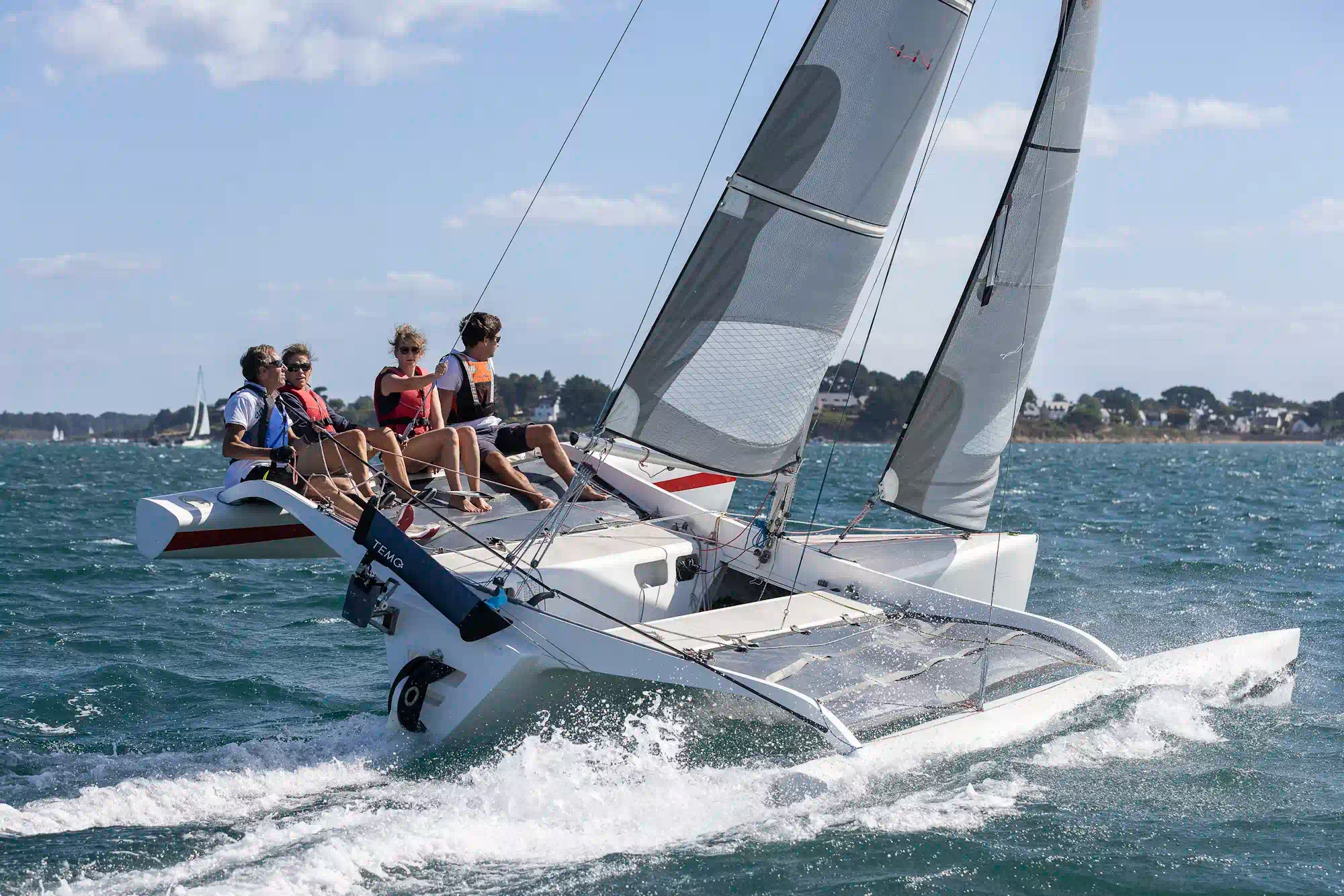
Now that we're clear, let's get hauling in the mainsails ! Everyone to their station: Henri on the port side, Justine on the starboard, Louise at the bow, and Alexandre at the helm. A friendly team effort that makes everyone feel useful on the boat .
5- Explain to your guests how they can help with the maneuver.
The important thing is to warn the crew of the dangers : hands, feet, legs never replace a fender and you must always be careful to move around keeping one hand for yourself and one hand for the boat .
We leave the port of Crouesty without incident. Alexandre, like a true conductor, expertly directs the crew, always (yes, really!) with diplomacy. Let's not forget... Pleasure above all!
A few bits slipped out here and there, but overall the young sailors are doing wonderfully.
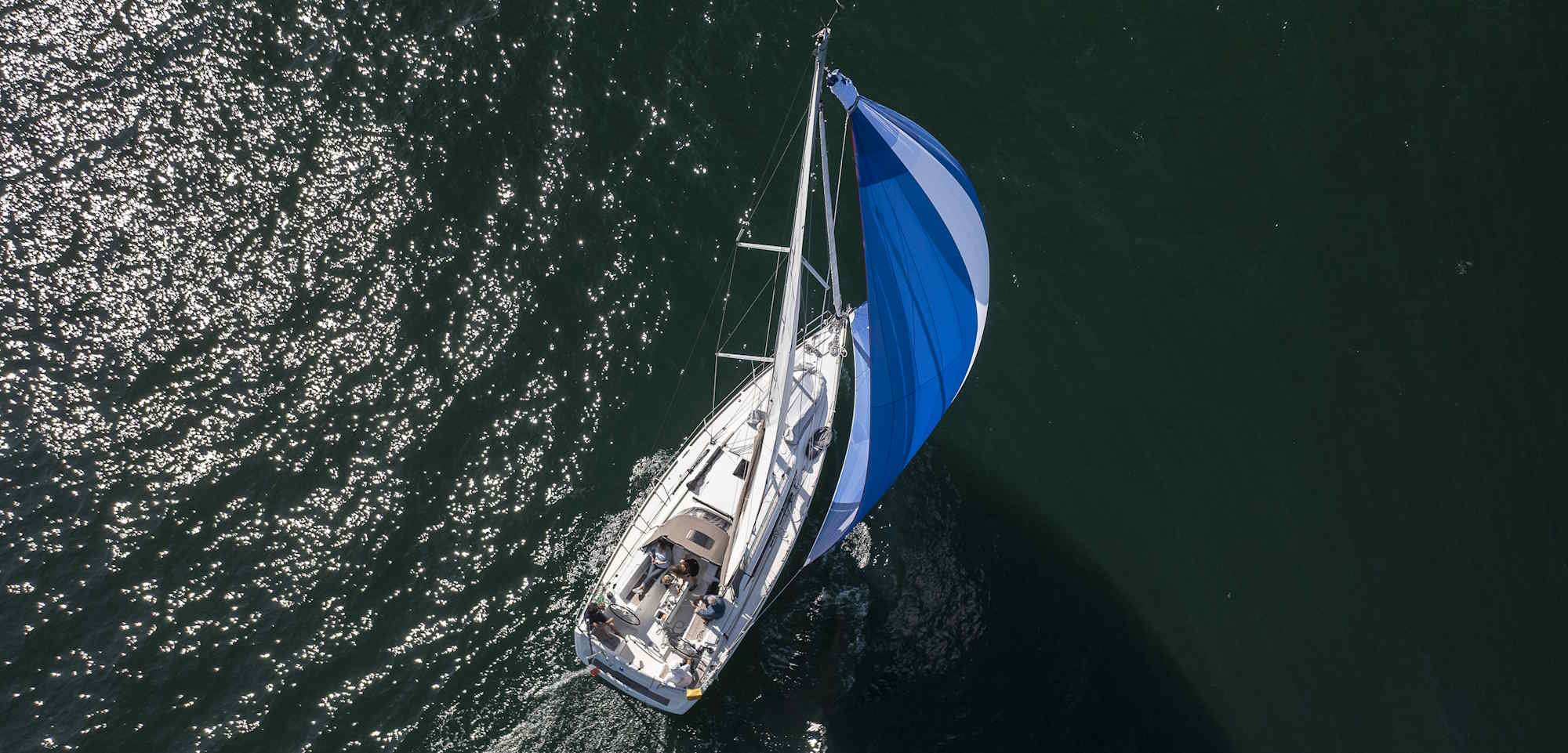
Very quickly, we even put out the SPI (the what? The spinnaker of course! That sail hoisted at the front of a sailboat when the wind blows from the rear of the ship.)
Here we are, speeding along in the calm waters of the Gulf of Morbihan. We feel like we're alone in the world at this time of year.
We set our course for the island of Houat and have time to have our coffee, chat, and even play several rounds of dice. (The loser is warned: they'll end up in the water!)
After an hour and a half of sailing, land is in sight! We plan to anchor off the main beach of Houat and have lunch on the island. A few more maneuvers to practice together to properly prepare for our stopover : some take care of the anchor, others prepare the dinghy.
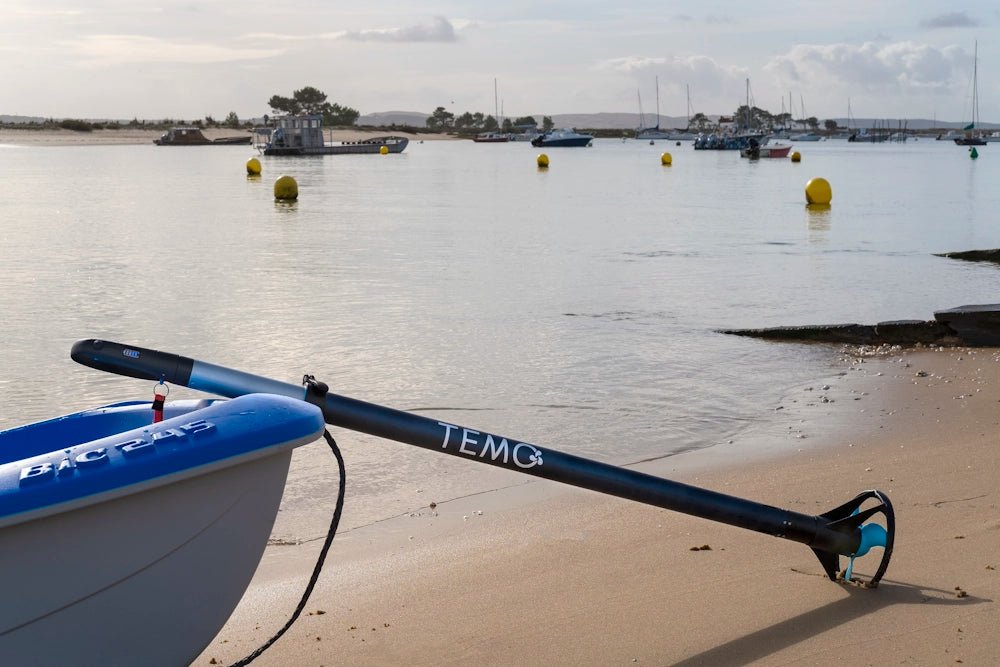
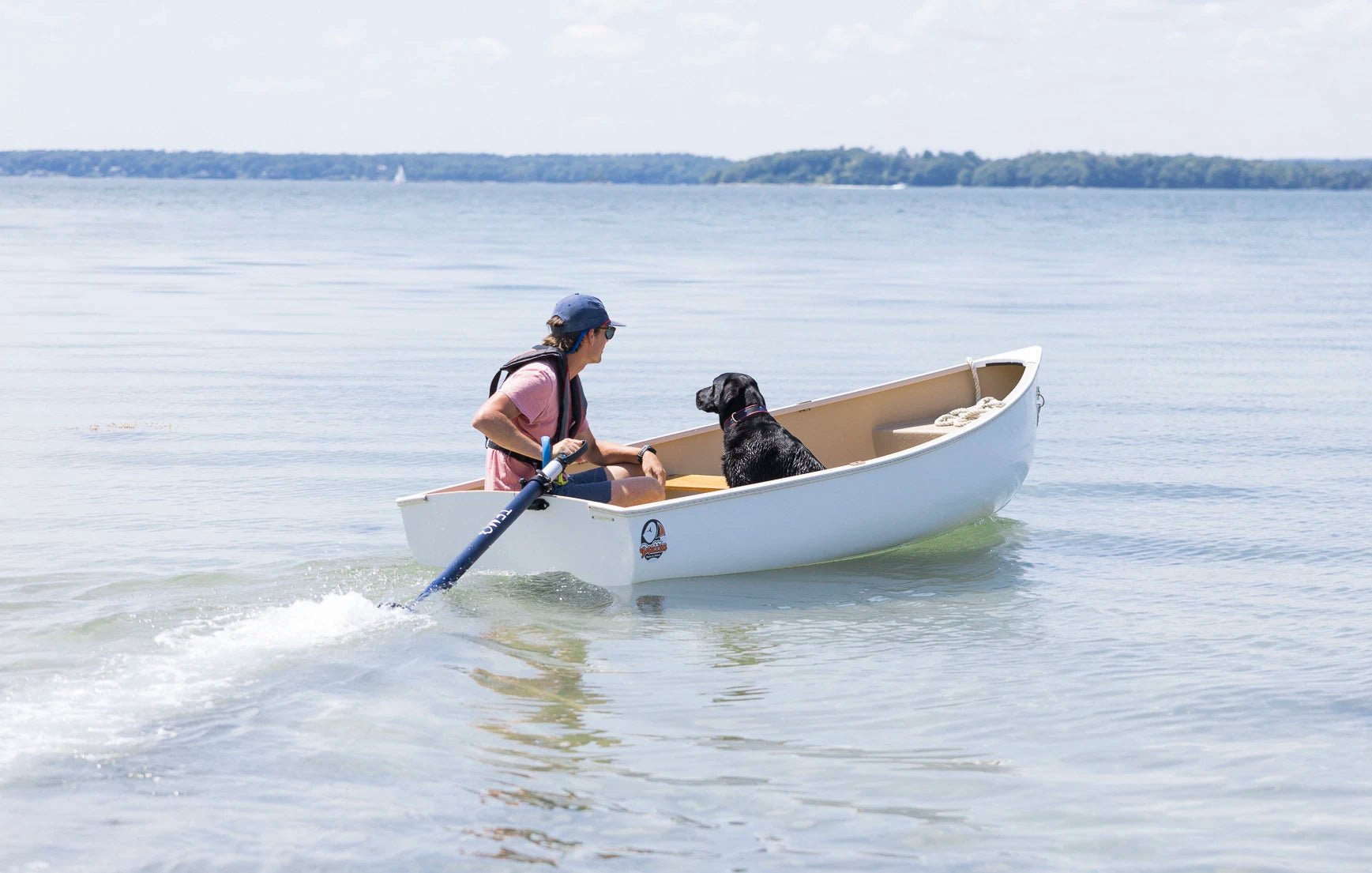
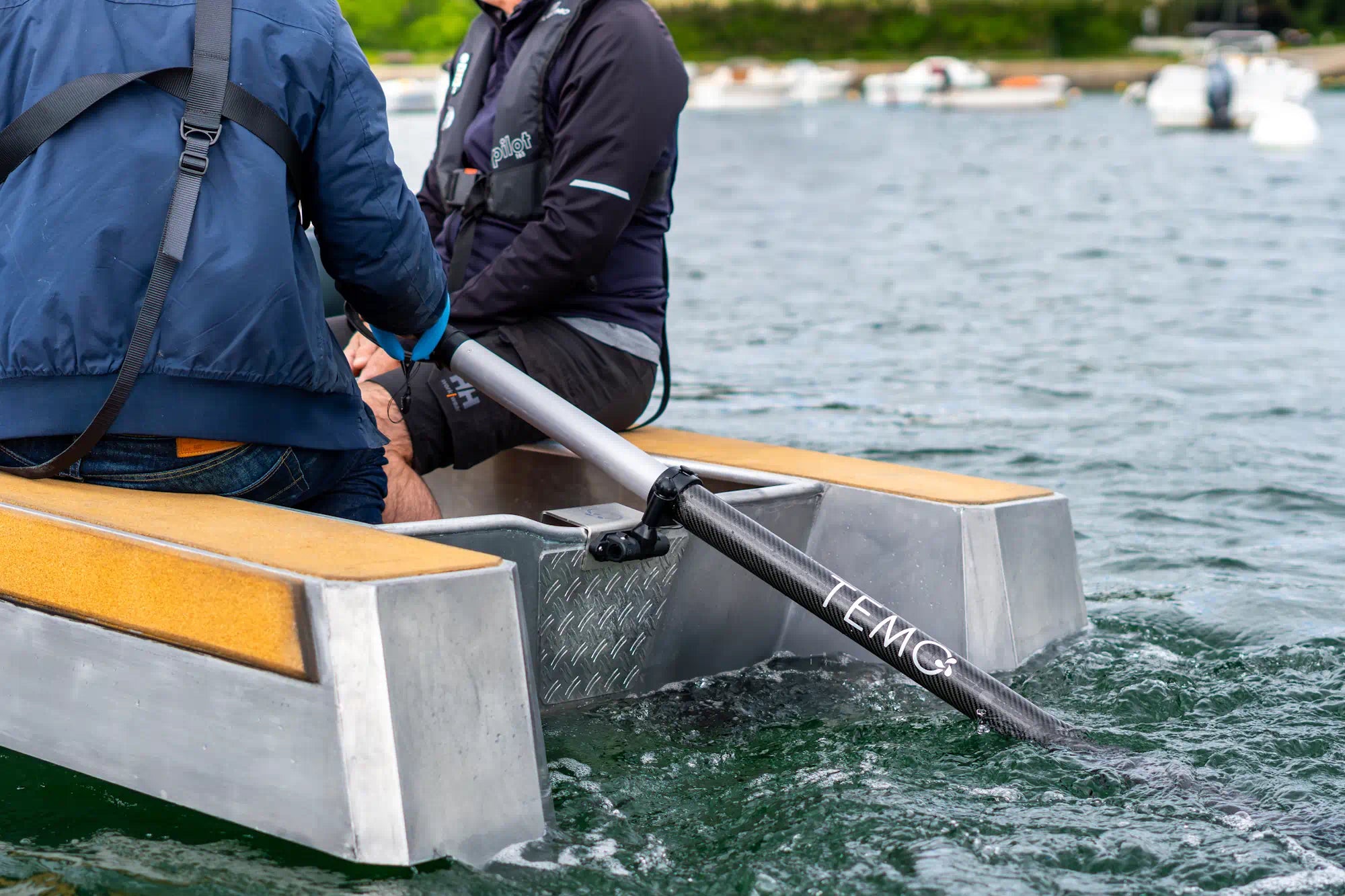
The dinghy is that small, lightweight boat, useful on board a vessel because it allows you to reach the shore when at anchor. The distance between the boat and the shore is considerable, but that's without taking into account the help of the TEMO·450, our portable electric motor .
Compact and lightweight, it doesn't take up much space between us, and its hour of battery life is more than enough to reach the shore. And to ensure a safe return at the end of our walk.
We put on our life jackets, essential even on the shortest journeys, and in just a few minutes we reach the large beach of Houat.


2:30 PM: Time to head back. The dinghy is waiting patiently for us on the beach. Here we are back on board, efficiently propelled by our TEMO.
What did we say about the loser of the game again? Oh yeah... time for the plunge for the bravest among us... We make sure to thoroughly wet our necks and bodies before the big jump ( beware of thermal shock! ) and enjoy the last swim of the year. Luckily, the sun will be with us for the rest of the crossing.


We put the fenders back out for a smooth mooring . We empty the boat and rinse it for the lucky ones who will be leaving the next day.
We've just disembarked after a day expertly managed by a top-notch crew (according to the captain) . Louise is thrilled with her first sailing experience , and we all leave feeling refreshed by the salty sea air of this beautiful trip.
Ultimately, that's also what sailing with novices is all about:
6- To pass on the pleasure of navigation and the passion for sailing.
Well... now all that's left is to deal with this darn seasickness …!
On to a new week and see you soon.
The TEMO Team (from left to right: Alexandre, Louise, Justine and Henri).