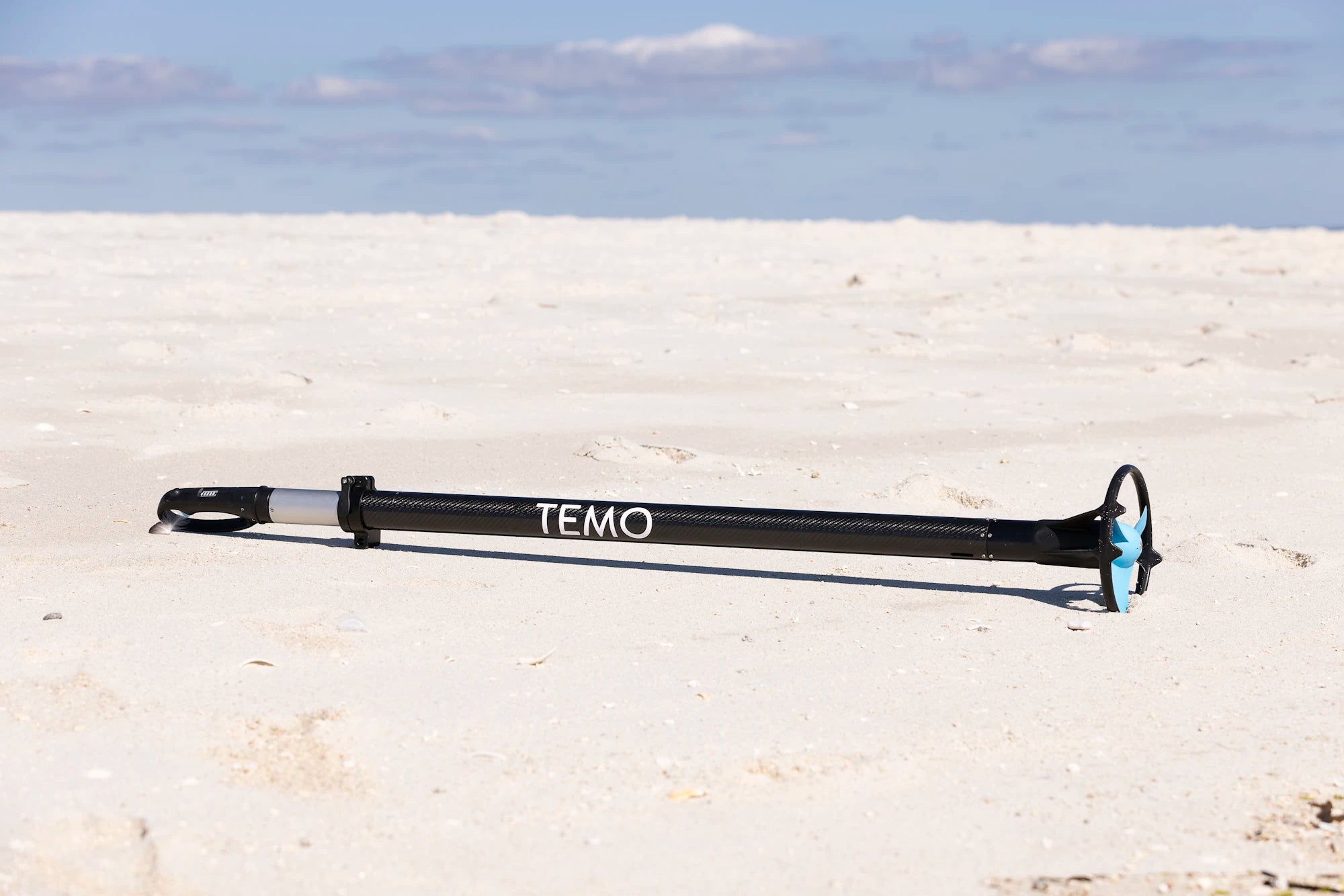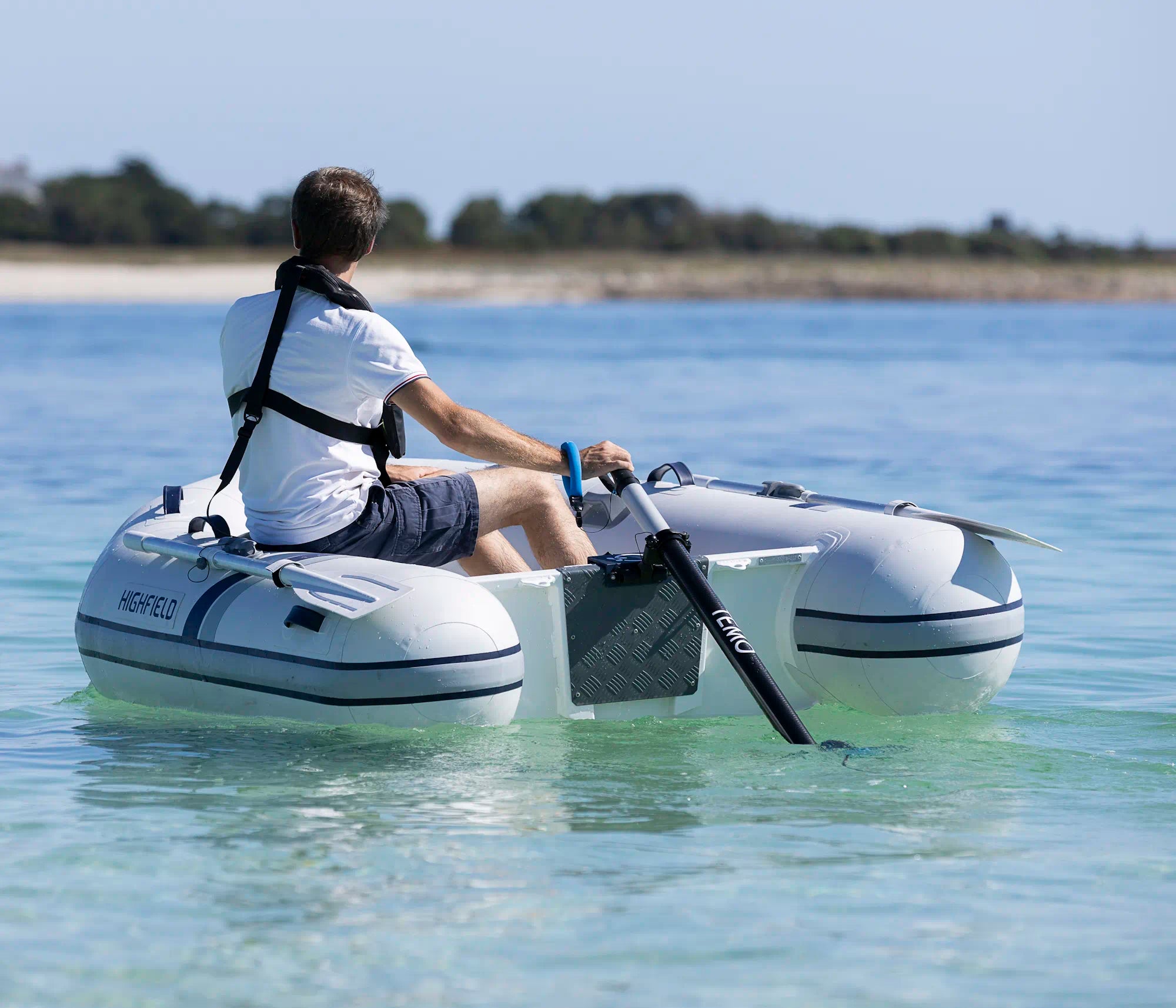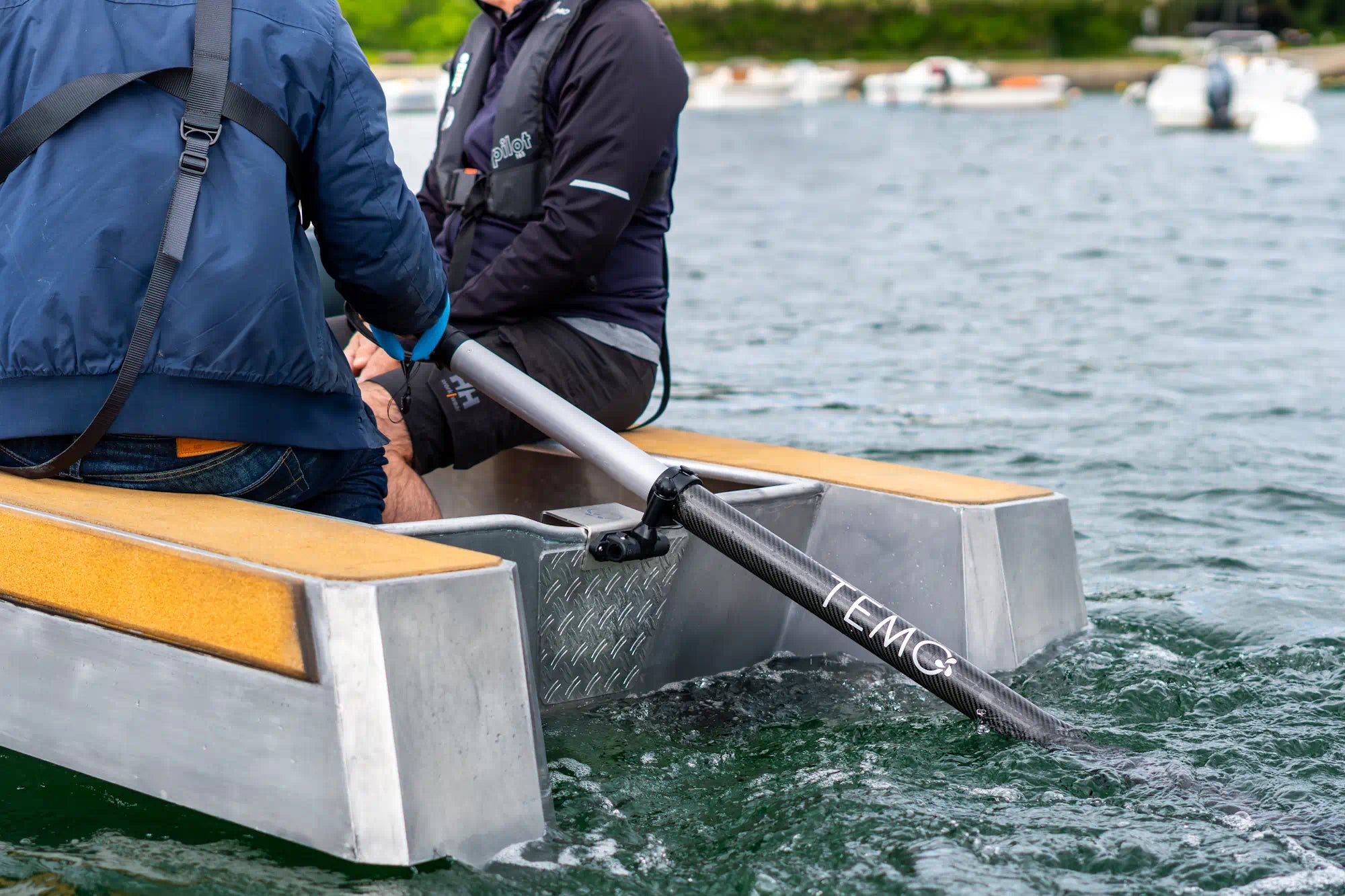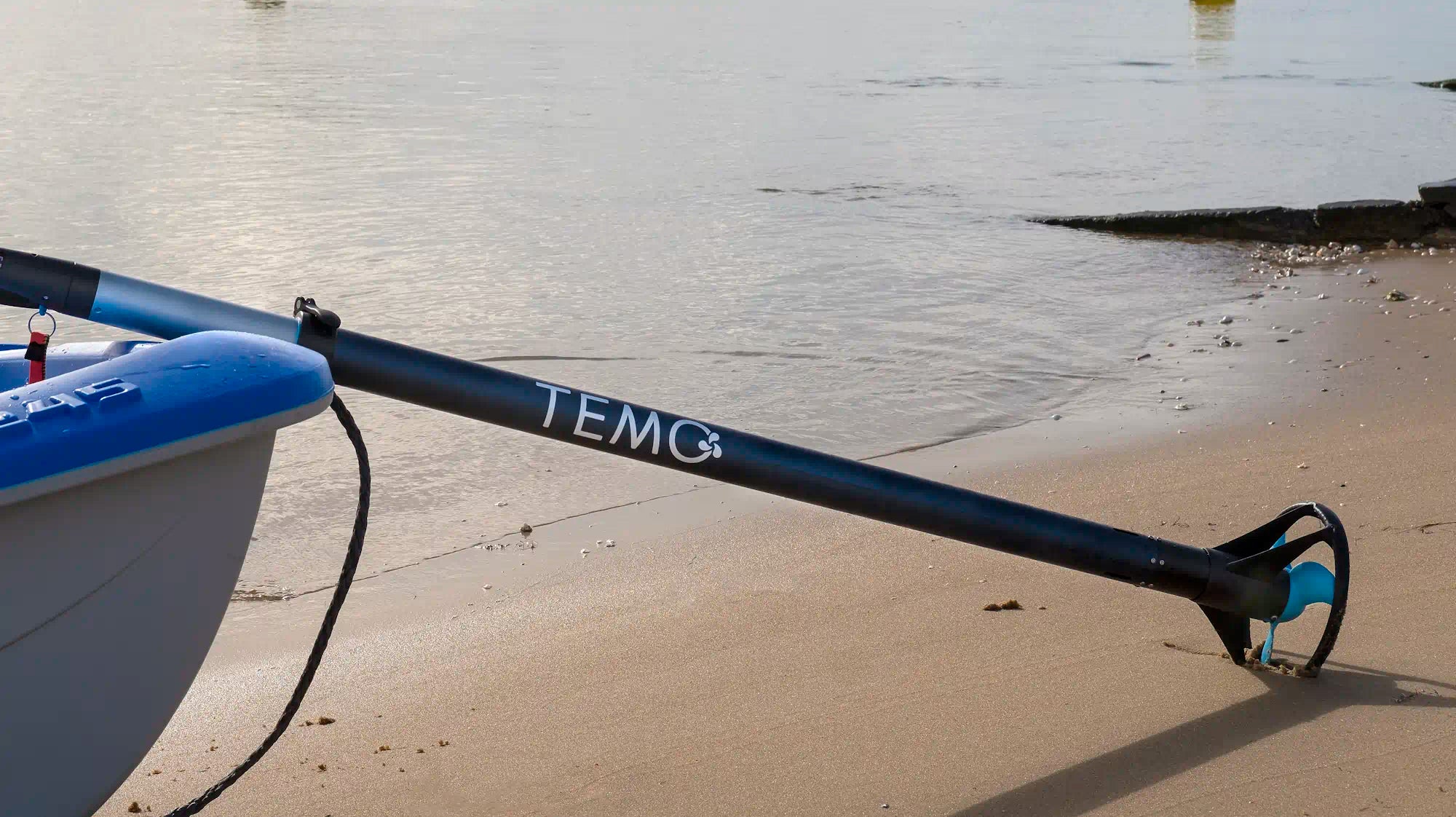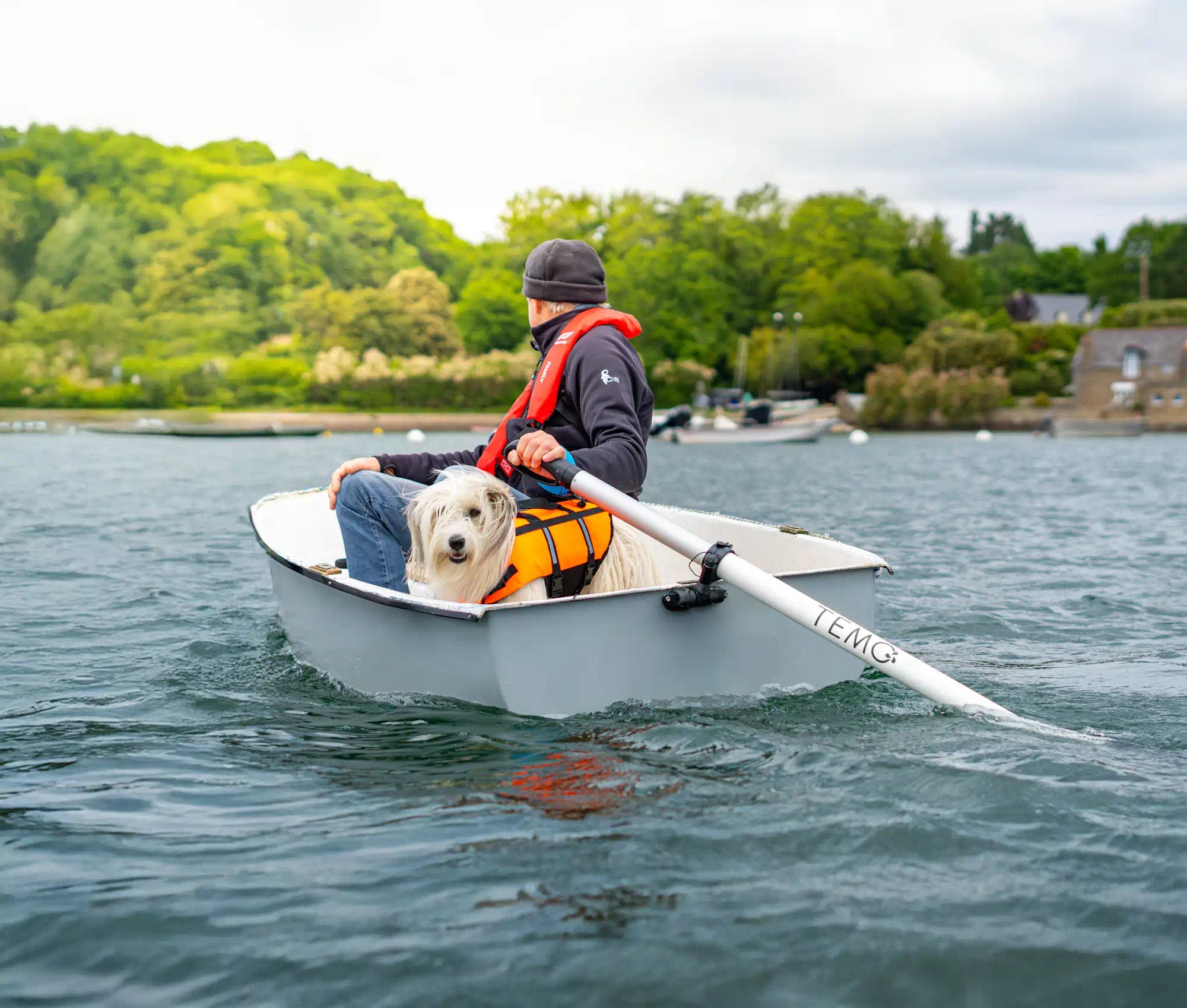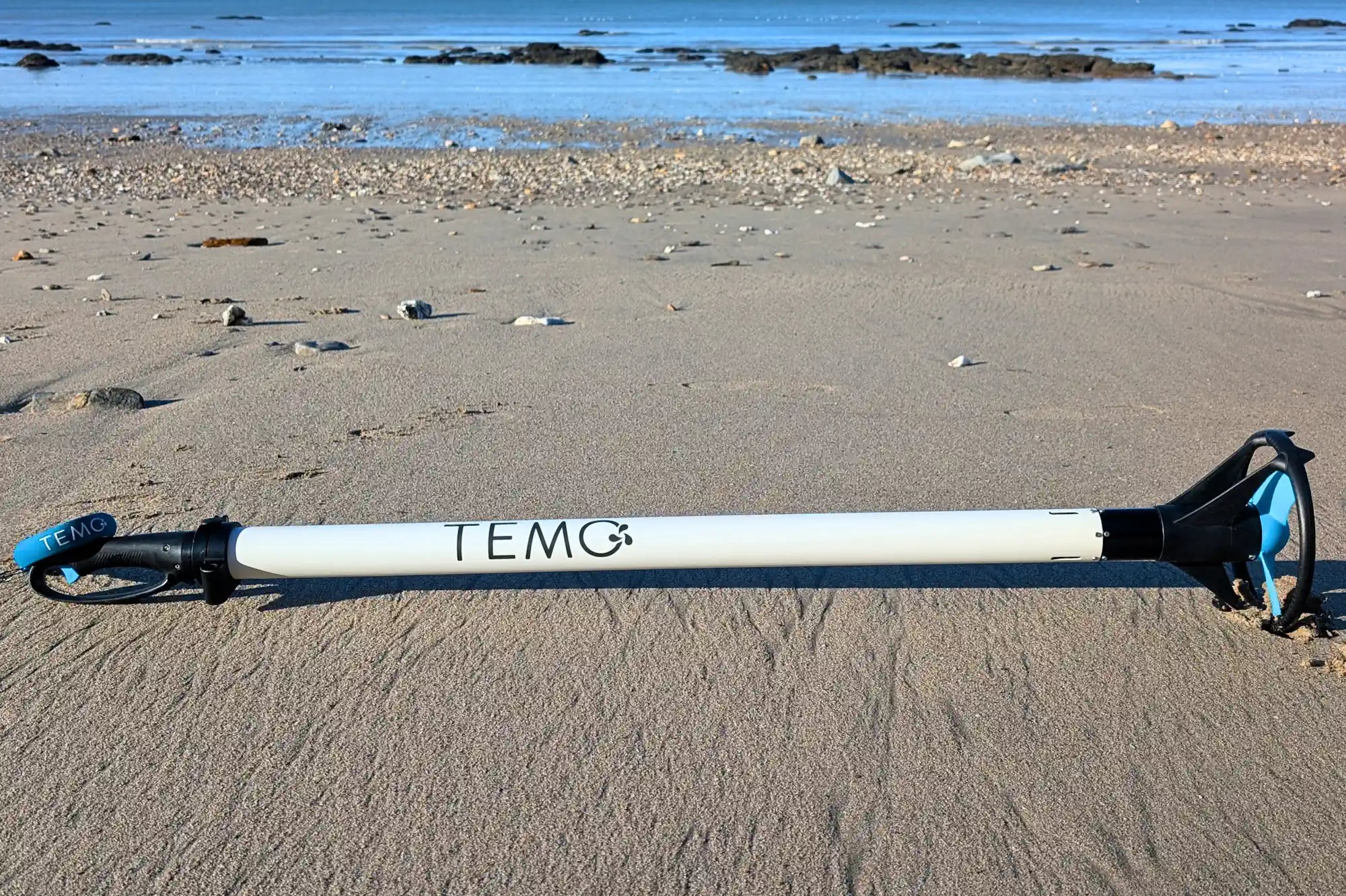
Did you think 1 horsepower was 735.5 watts? That's right. But if TEMO tells you that its 1000-watt electric motor is equivalent to a 3-horsepower thermal engine, it's not a conversion error — it's a field truth.
Welcome to the (electric) power essentials.
Horsepower, watts, efficiency: to each their own race.
One horsepower (HP) is an old unit of power, equivalent to 735.5 W.
One kilowatt (kW) is 1000 W, which mathematically equals ≈ 1.36 HP.
So, on paper: 1 kW = 1.36 HP.
But on the water, raw numbers are not enough.
Why does TEMO then announce an equivalence of 1 kW = 3 thermal HP for its TEMO·1000? Because on the water, it's not just about nominal power, but about useful power, available torque, and propeller efficiency.
|
Did you know? The history of mechanical power has its roots in the 18th century, when James Watt, a Scottish engineer, invented the "horsepower" to provide a concrete reference for the strength of his steam engines. A figurative unit, intended to convince a public still attached to their faithful draft horses, equivalent to 75 kilogram-meters per second (75 kgf.m/S), which is the power needed to lift a weight of 75 kg vertically by 1 meter in 1 second. In his honor, the International System later adopted the Watt (W) as the official unit of power. Since then, HP and W coexist... but beware: the conversion between these units is a simple and precise mathematical matter. Where it gets complicated is when comparing thermal engines to electric motors. For equal power, the feel and torque distribution are different. Clearly, yes, 1 HP = approximately 735.5 W. But the electric motor has that little "something" extra that makes all the difference when you take the helm. |
Two types of motors, two mechanical philosophies.
Before any comparison, it is essential to remember that thermal and electric motors are based on very different operating principles:
Thermal.
A thermal engine transforms the chemical energy contained in the fuel (gasoline, diesel, etc.) into mechanical energy. By burning this fuel, it mainly releases heat, and a fraction of this energy is converted into movement. This type of engine performs best at high RPMs.
Electric.
The electric motor, on the other hand, does not produce any power by itself. It receives electrical power, generally supplied by a battery, which it converts into mechanical energy. It offers its maximum torque from the lowest speeds, which allows for immediate efficiency, without a gradual power increase.
What does power mean and how is it measured?
Mechanical power.
|
The power of energy corresponds to the product of rotational speed and torque (expressed in Newton-meters (Nm)), which is the rotational force the motor can exert on the propeller shaft.
Formula: Power = Torque × Rotational Speed |
The higher the torque, the more capable the motor is of moving a heavy load, resisting effort, or – for our purposes – driving the propeller with force, especially at startup or low speeds.
Therefore, by multiplying this torque by the rotational speed of the shaft, we obtain the mechanical power actually available at the propeller. Beware, at equal power, how torque and speed combine can change actual performance.
Efficiency: what is produced vs. what is lost.
Raw power is not enough. One must also consider efficiency, i.e., the engine's ability to effectively convert the electrical energy supplied by the battery into useful mechanical energy, which propels a boat—and is therefore of interest to the boater.
|
Specifically, efficiency is calculated as follows:
Formula: Efficiency = Mechanical power out / Electrical power in |
Transmission, the key in electric motorization.
Let's take a thermal engine rated at 3 horsepower (3 HP). On paper, it can indeed produce this power, but only under very specific conditions: throttle wide open, high engine speed (often above 5000 rpm), properly sized propeller, boat at high speed. In other words, you have to push the machine to its limits to achieve these famous 3 HP. To put it another way: a rare scenario for boaters who maneuver at low speeds or enter and exit ports. Below this optimal speed, the power actually transmitted to the propeller is much lower, despite what the label promises.
Added to this are losses related to the engine's own efficiency, but also to the transmission chain: clutch, gearbox, shaft... all opportunities for energy dissipation as heat or friction.
Unlike a thermal engine, which needs to "rev up" to reach its maximum torque (and risks stalling below 1000 rpm), a TEMO electric motor delivers its torque from the lowest speeds, almost from a standstill. Thanks to a direct transmission between the motor and the propeller shaft, without clutch or gearbox, energy is transmitted almost entirely to the propeller, with no significant loss. Result: no need to rev up to be efficient.
|
Thermal Engine |
TEMO Electric Motor |
|
| Engine Torque | Available at high RPM | Maximum from start |
|
Useful Power |
between 30% and 40% of stated power |
85 to 90% used for propulsion |
|
Responsiveness |
Delay between acceleration and reaction |
Instantaneous |
|
Transmission |
Mechanical losses |
Direct, no gearbox |
The result? Most of the energy stored in the battery is actually used, which significantly optimizes autonomy. The TEMO·1000 can thus offer up to 4 hours of navigation with a 1000 W battery, in economical use, and deliver 27 kg of static thrust for 1 hour of autonomy, including 45 minutes at full power from the first turns thanks to the immediate availability of torque.
Autonomy of the TEMO·1000 electric outboard.
The impact of driving on energy consumption.
Electric navigation also means learning to navigate differently. Unlike thermal engines, which tend to "accelerate to move forward," electric motors prioritize fluidity.
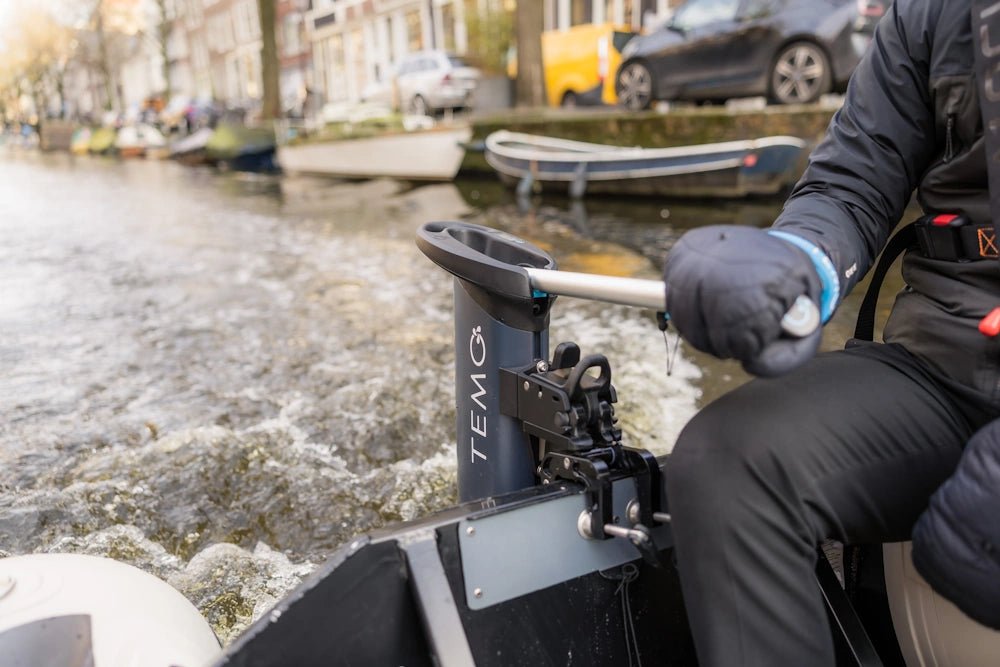
With a thermal engine, every restart, jolt, or restart requires revving up to reach the necessary torque – which is energy-intensive, noisy, and often imprecise at low speeds. Conversely, a TEMO electric motor instantly delivers its torque, even at very low speeds, allowing for smooth maneuvers, progressive acceleration, and naturally optimized consumption.
And most importantly, remember a simple rule: a boat's maximum speed depends much more on its hull than on its engine. Once hull speed is reached, any additional power no longer makes it go faster, but creates more waves. In other words: energy lost in the wake.
In this case, reducing the throttle a little (or rather the dial, here!) allows for less consumption... without losing speed. Cleaner, quieter, and more efficient navigation. Simply put.