REP KEZAKO?
Yet another unsightly acronym that masks a virtuous and essential approach. Extended Producer Responsibility (EPR) is a key mechanism that dates back to 1992 in France. At the time, local authorities were struggling with household packaging management. Faced with the exponential increase in waste, the idea of a circular economy emerged. The linear "extract-manufacture-consume-discard" model is not yet obsolete; we are only just beginning to move towards efficient resource management, from creation to end-of-life.
To implement this idea, eco-organizations have gradually emerged for each sector: textiles, buildings, packaging, etc. They allow producers to respond effectively to this responsibility by pooling their efforts: that is the role of the eco-contribution .
However, the increasing use of technological innovations regularly complicates the operational efficiency of each sector. This leads to the development of the eco-design principle , which integrates the end-of-life of the product (and its entire cycle) from the design stage.
The transformation of batteries into resources.
And so the circle is complete, since this is where we are in the history of batteries. Their increasing complexity – various chemistries (NiCd, Li-ion, etc.) – and their diverse uses (electric mobility, energy storage, telephony, etc.) have led to the creation of numerous categories to meet the needs of the battery market. specific to each sector.
For its part, the European Union has put in place a Specific and extremely ambitious regulations . These aim to transform our used batteries into valuable resources for those of tomorrow, among other things through very high recycling targets.
TEMO x Batribox: a sector for industrial batteries.
In the case of TEMO, we initially sought to collect our batteries ourselves and ship them to a professional for their processing: VoltR, a Start Up in our image, which makes battery remanufacturing its business model.
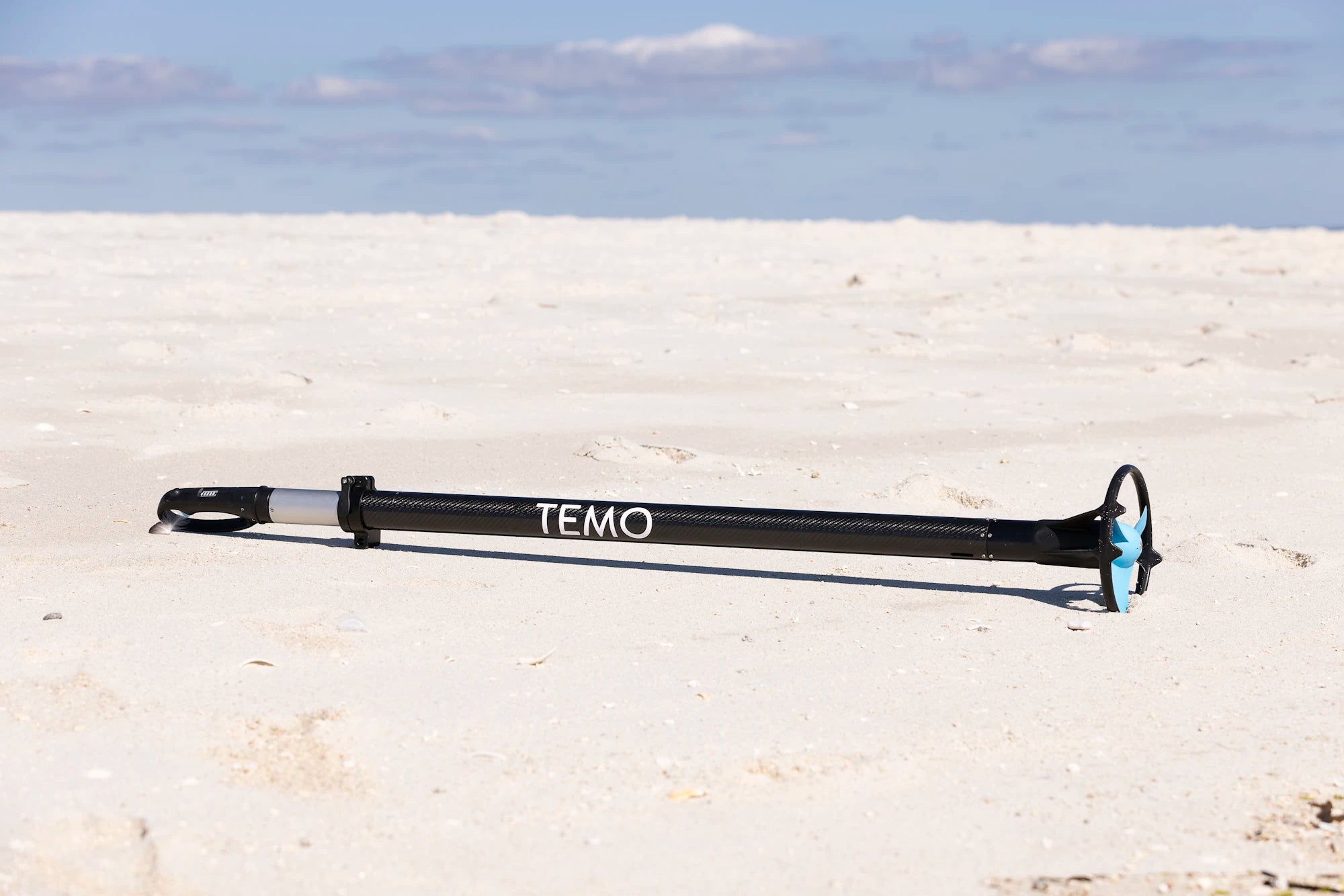
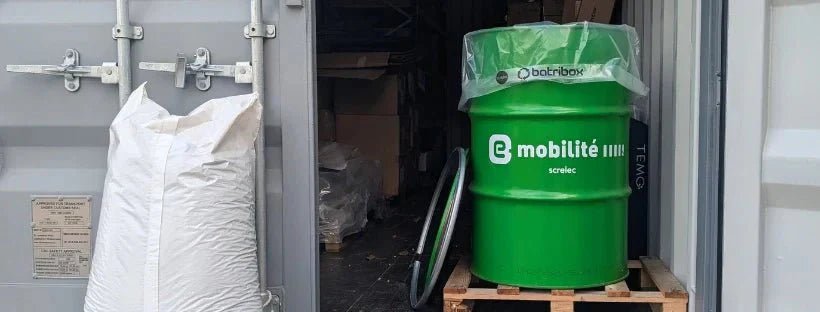
This is where the collaboration with Batribox, a key eco-organization in the sector, comes into play. Currently, industrial batteries, such as those in the TEMO·450 TEMO ·1000 , classified as "industrial," is not yet covered by national approval for collective management. Batribox has submitted an application to obtain this approval, and TEMO actively supports this initiative.