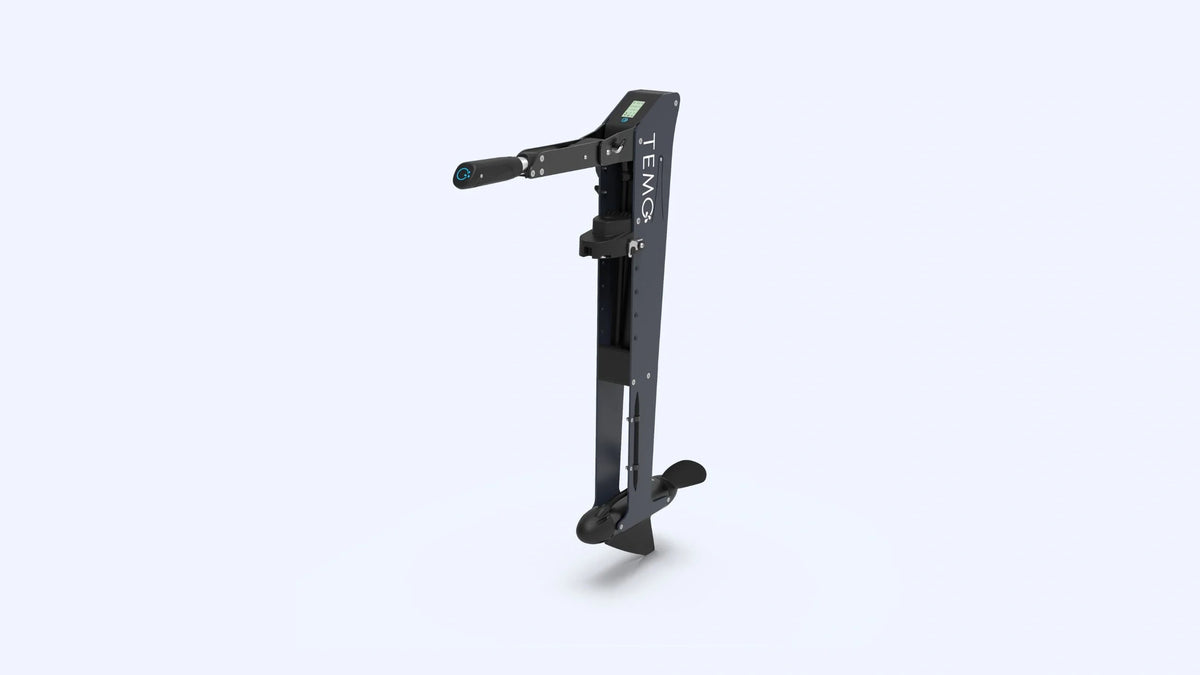
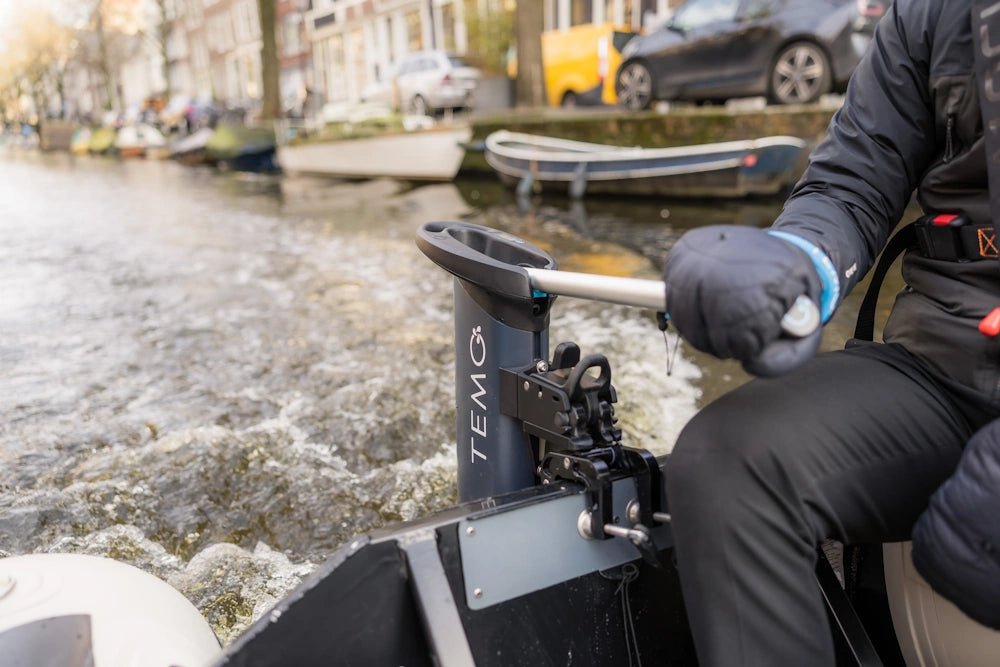
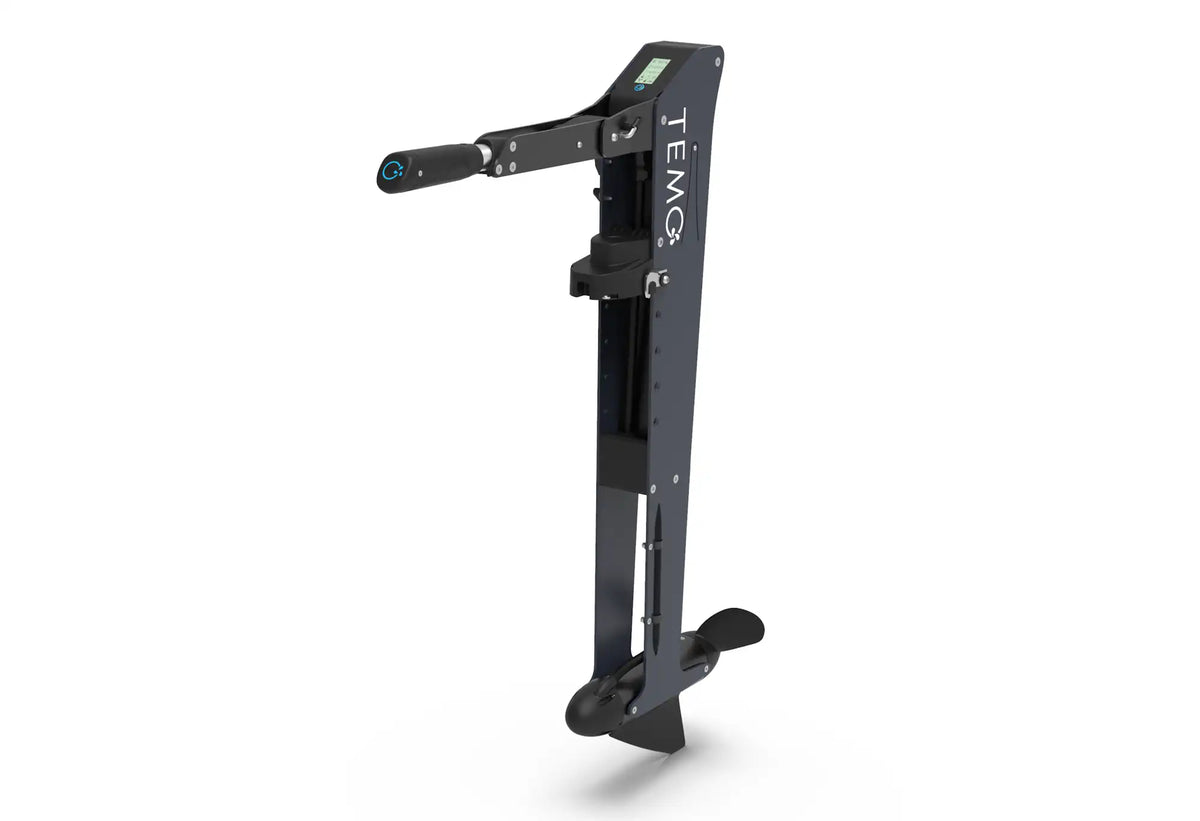
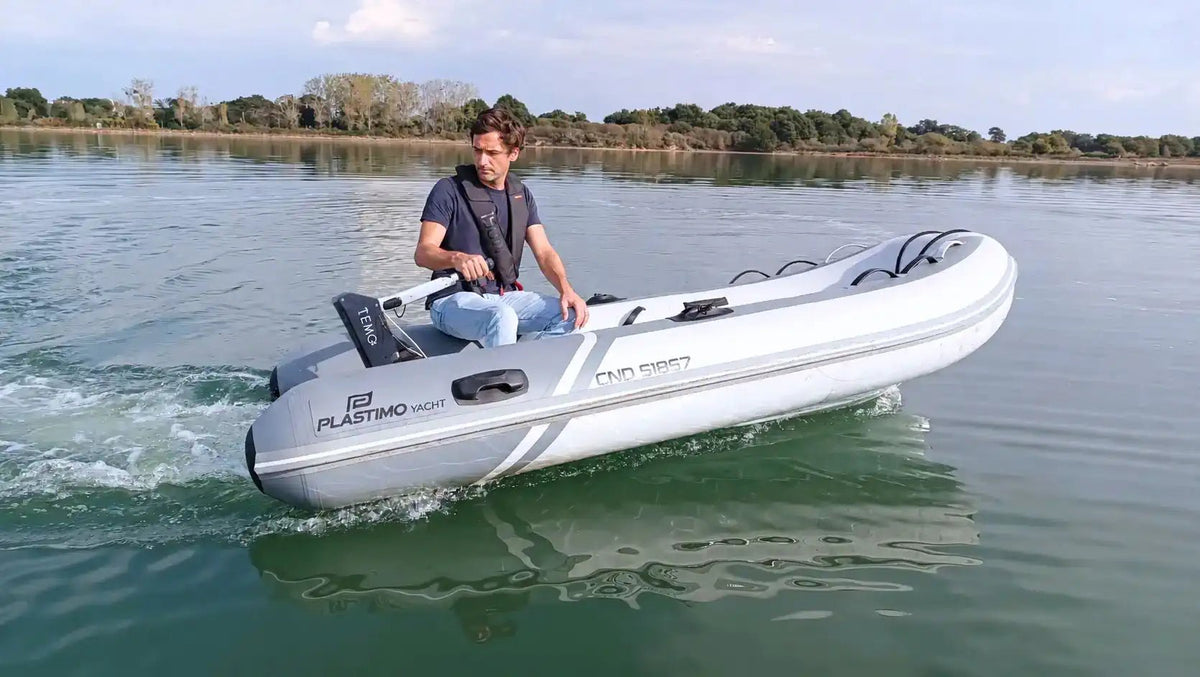
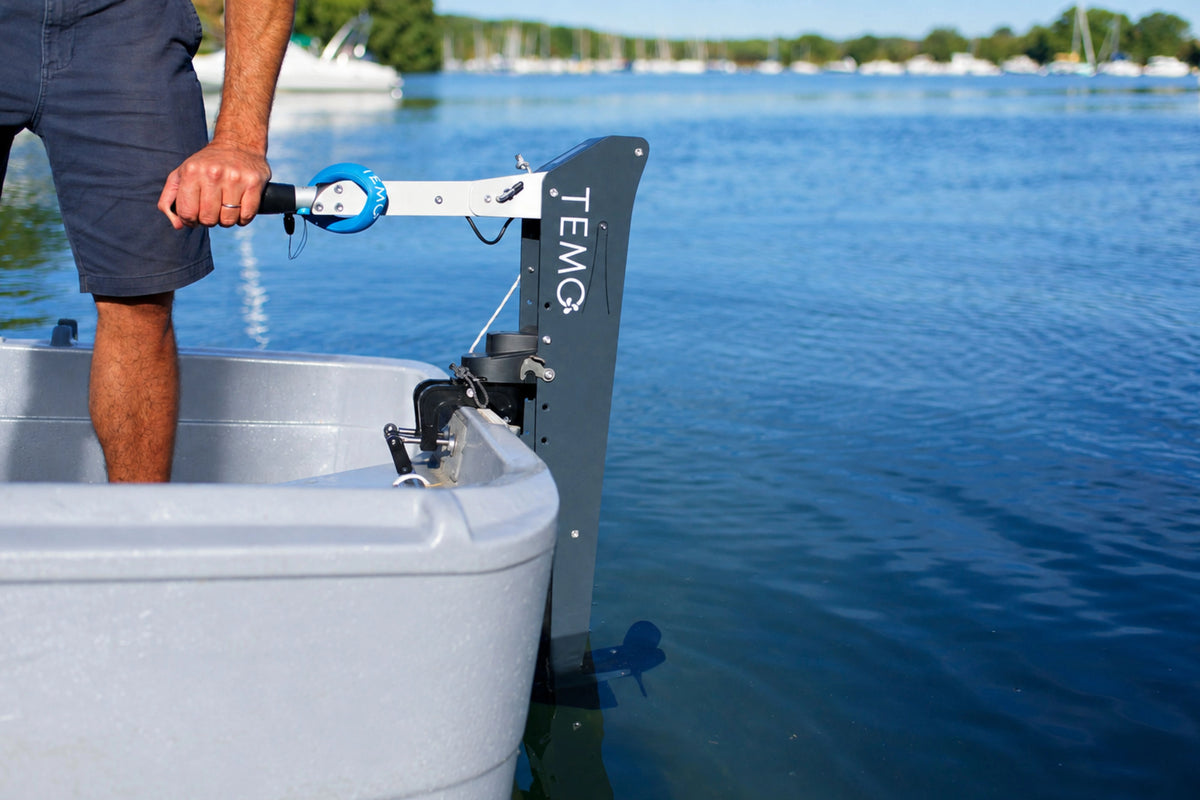
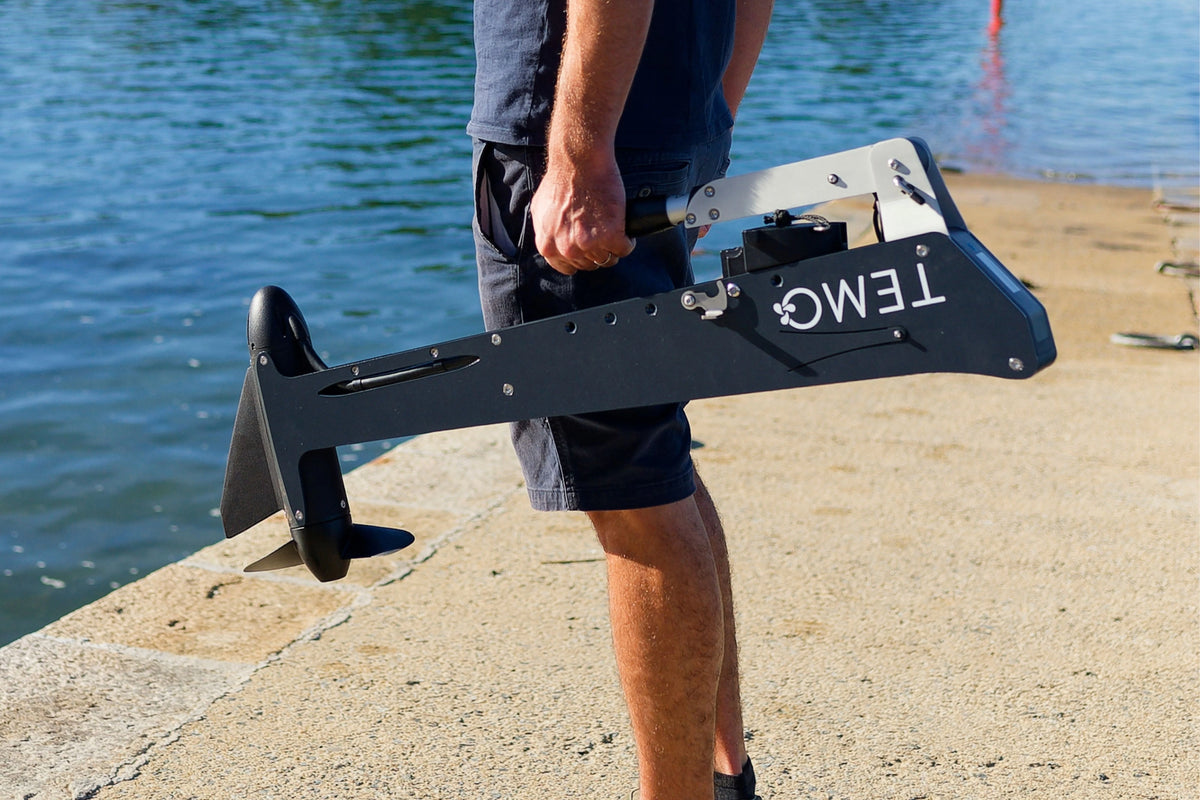
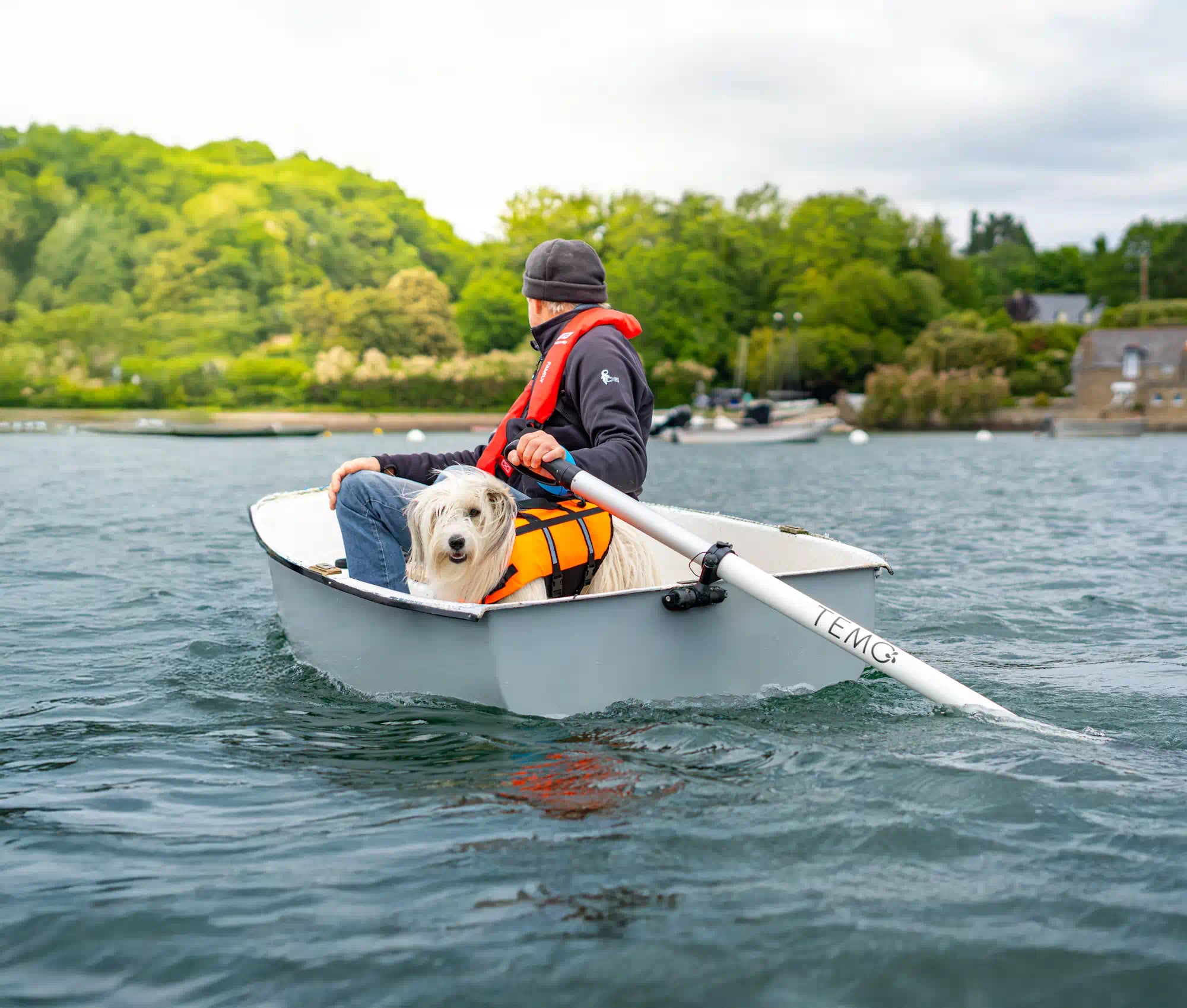
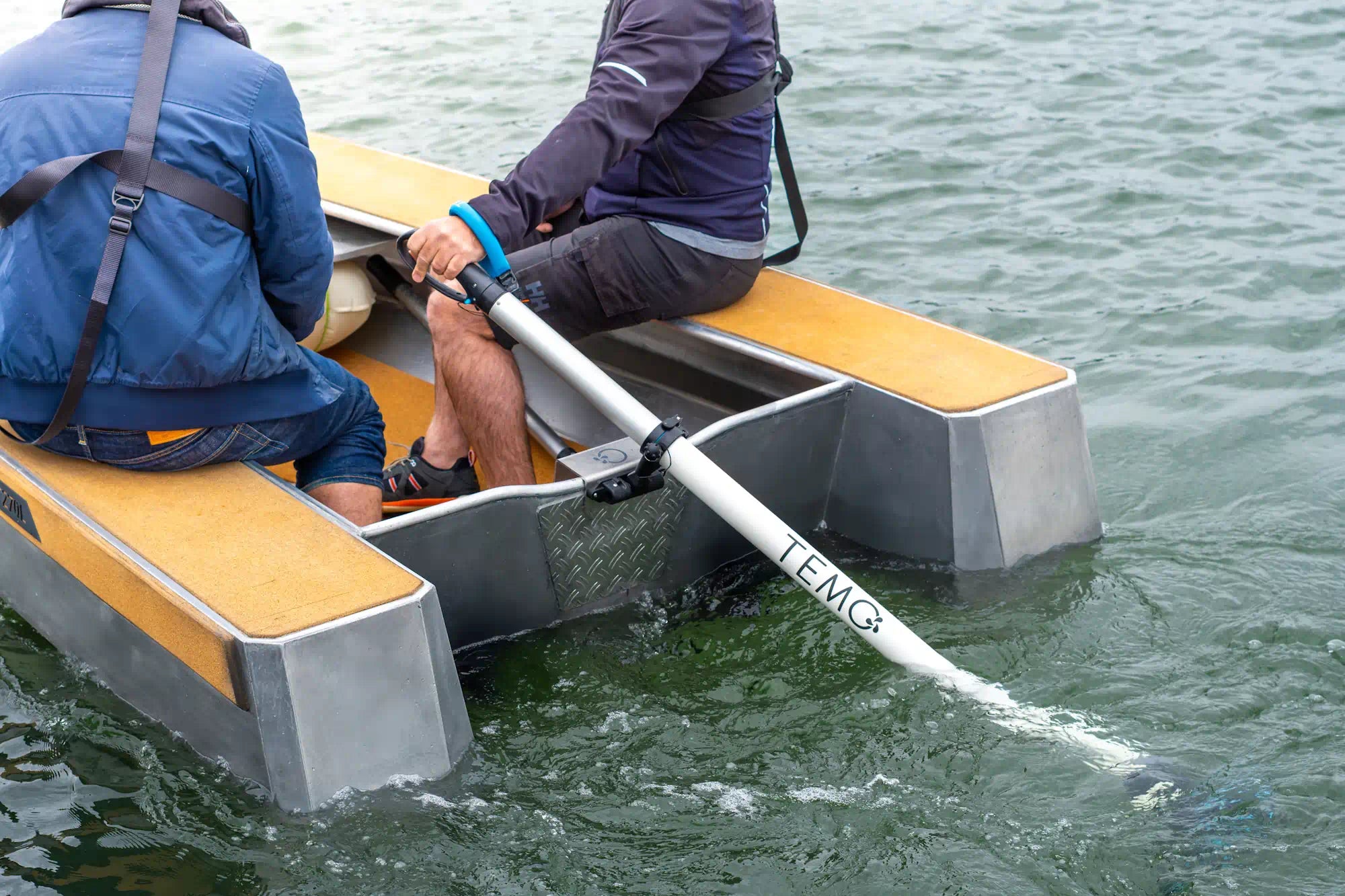
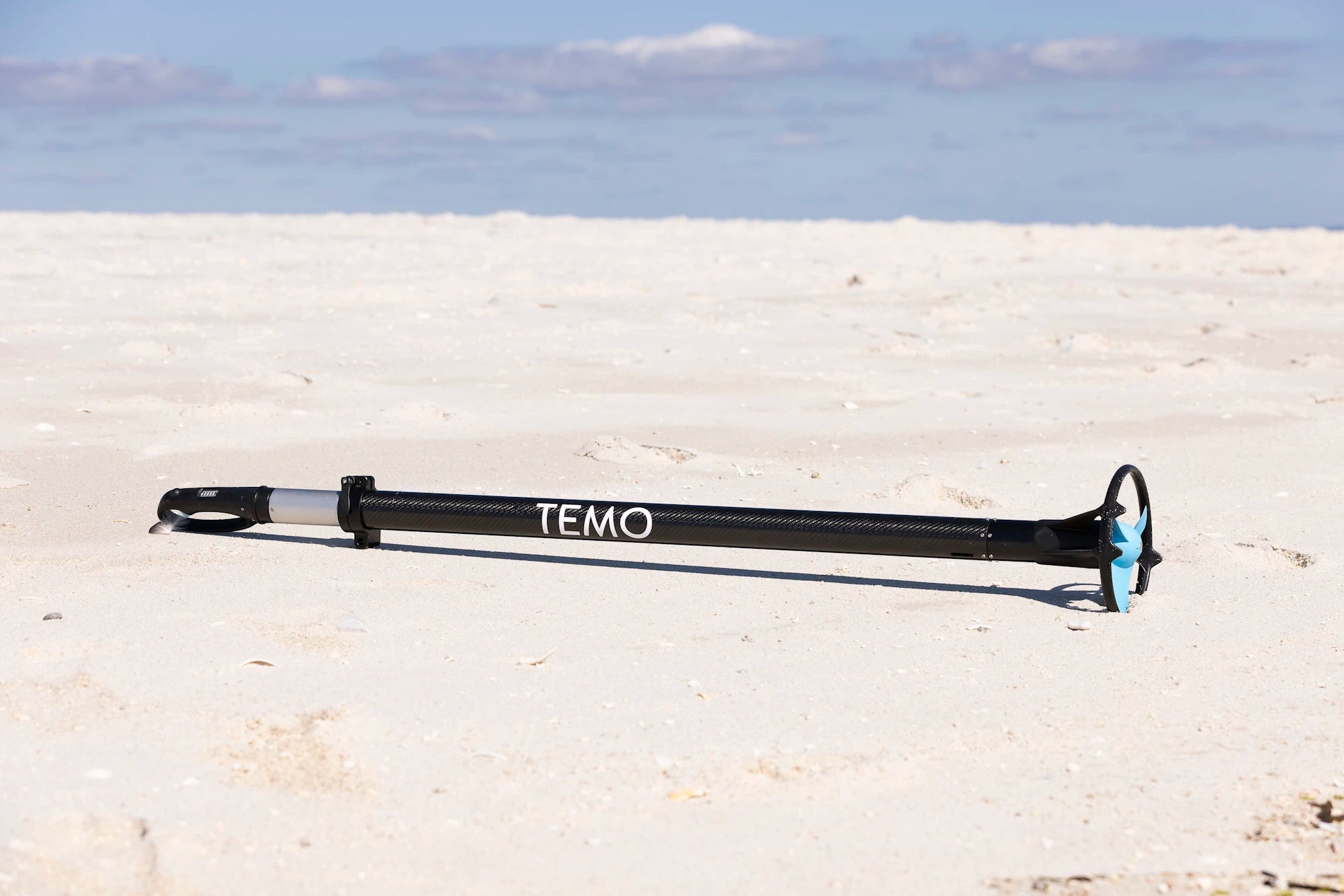
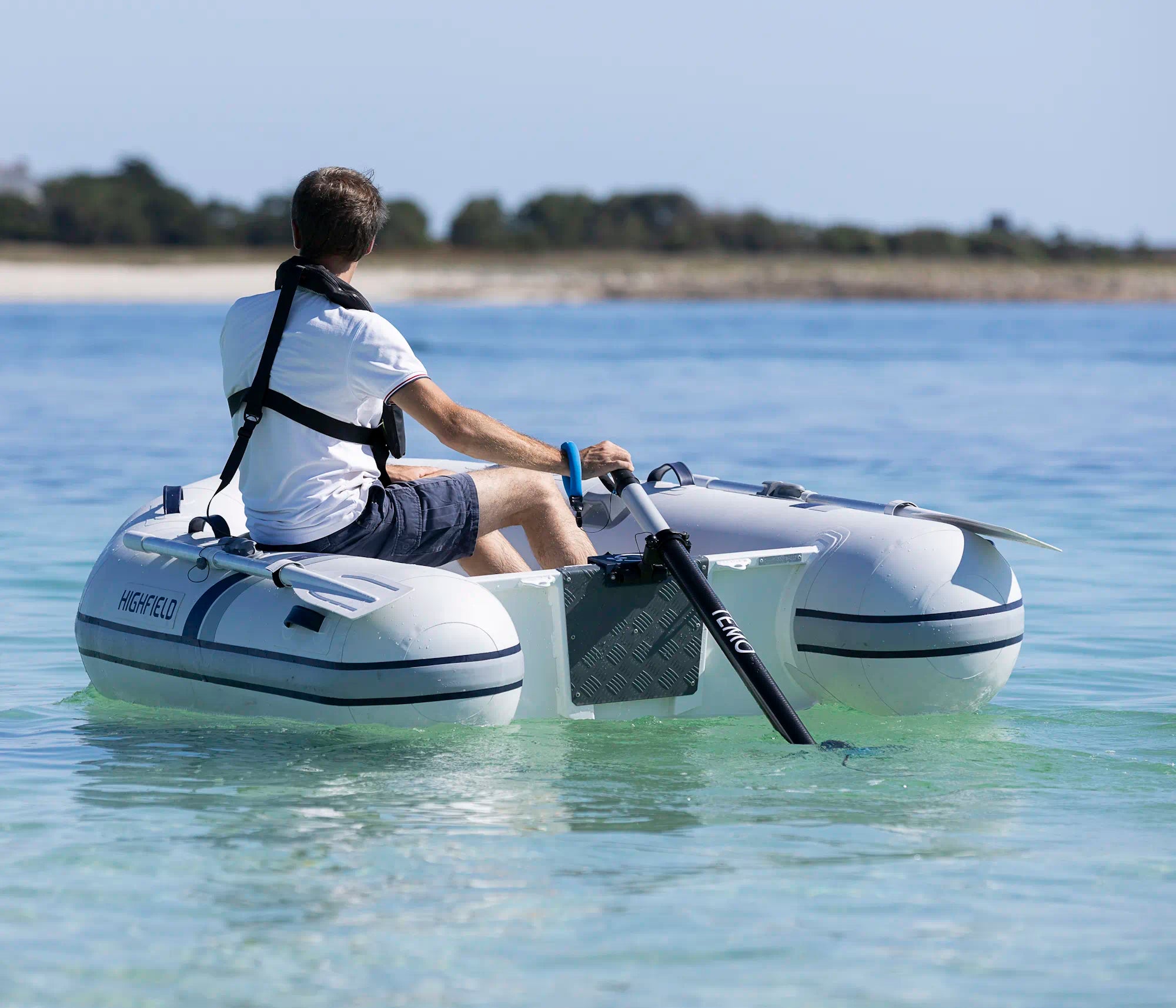
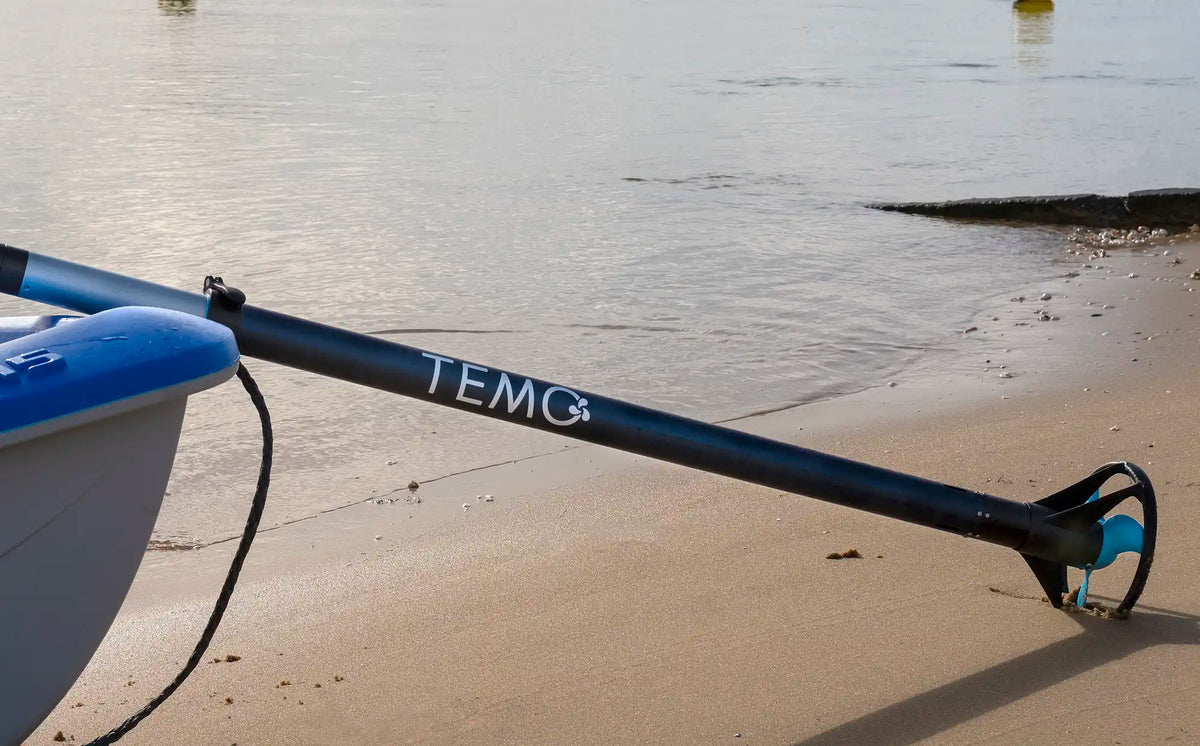
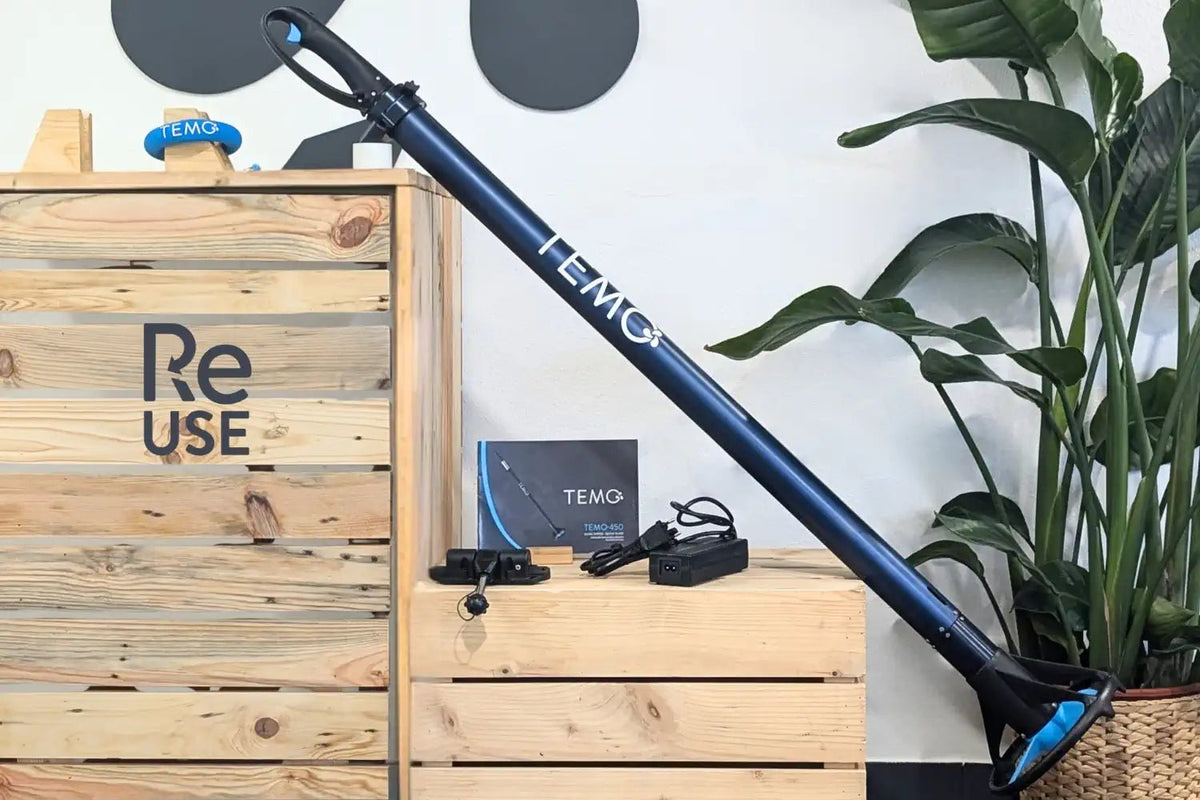
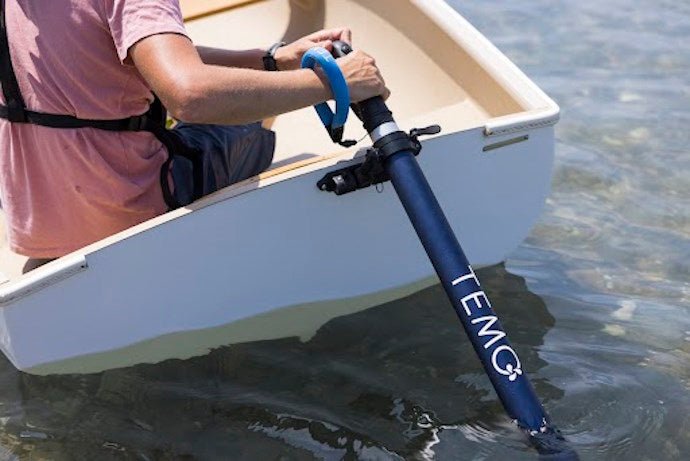
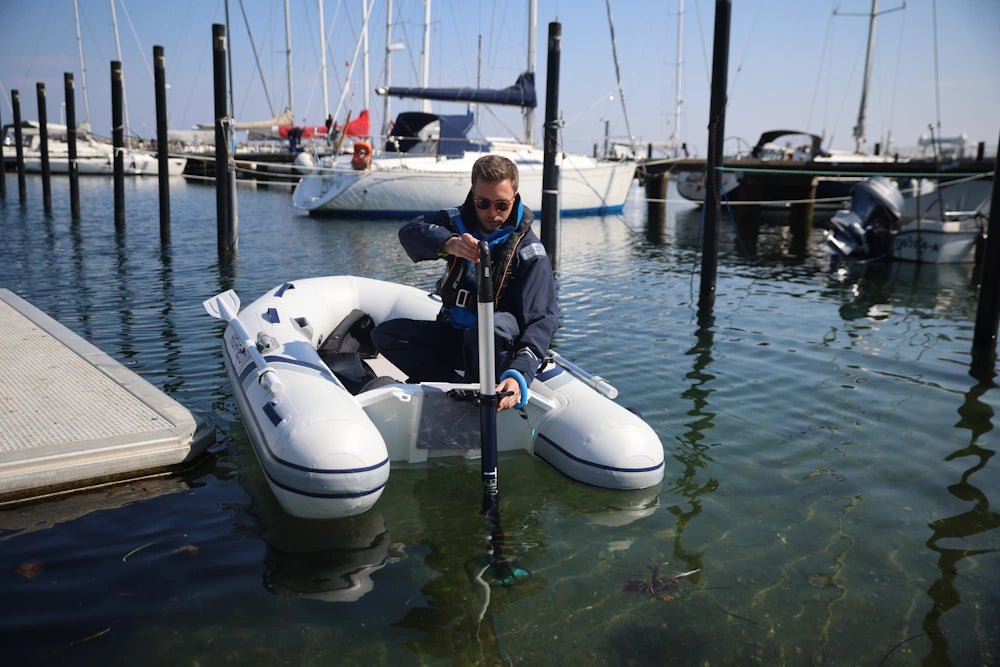
The TEMO·450 is an electric outboard motor for dinghies and small sailing boats. Given that our dinghy motor is electric, questions of battery and autonomy or range often come up, and rightly so!
Don't worry, we’ll explain everything in this article.
Electric boat motor with integrated battery.
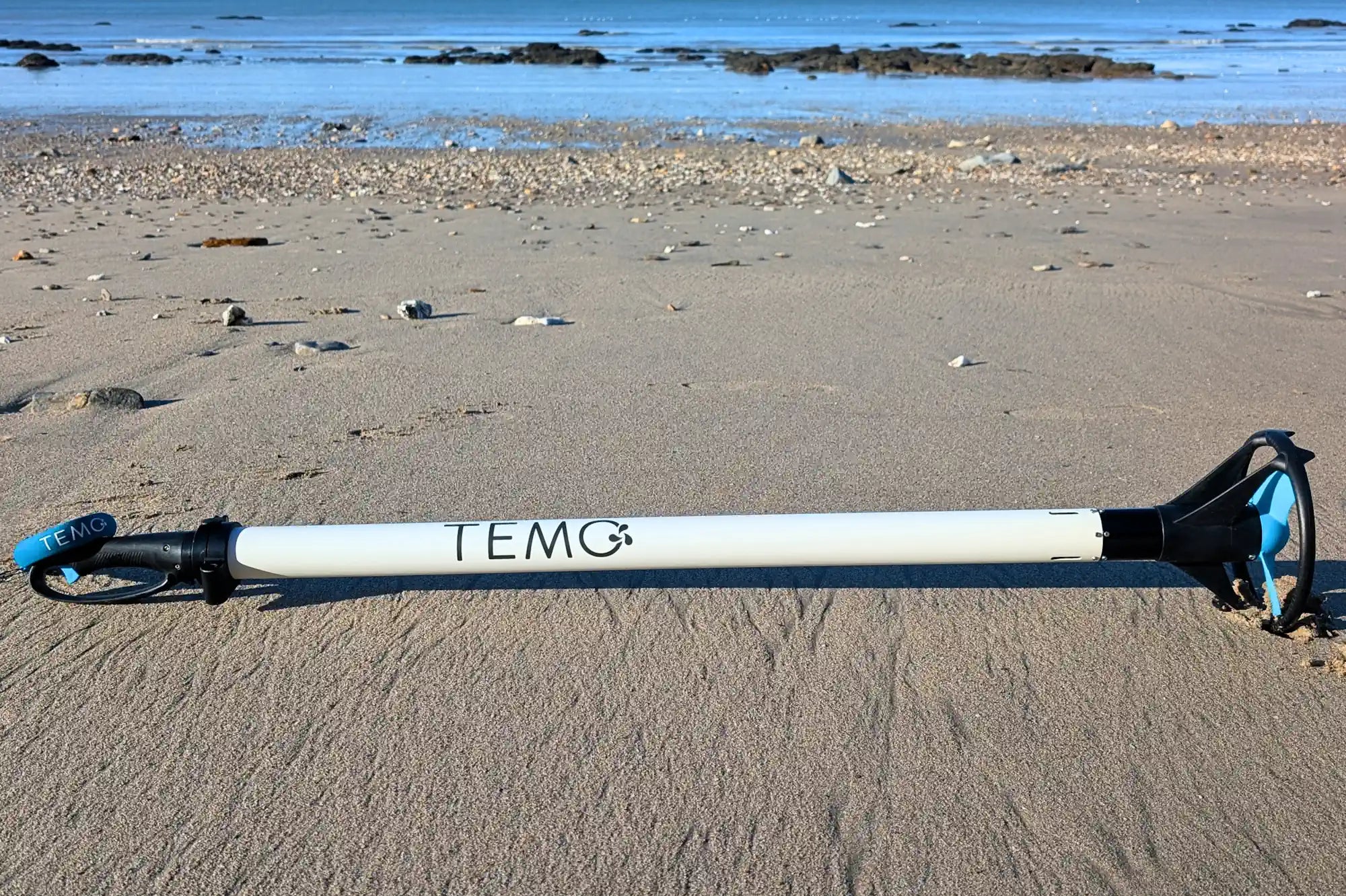
The battery of our electric boat motor is a 290 Wh lithium-ion battery which is located in the grey tube. This protects your battery by sealing it in. The battery on this model is not removable, it remains permanently fixed in the grey waterproof tube. This way, there’s no battery to change and you avoid any problems with connections!
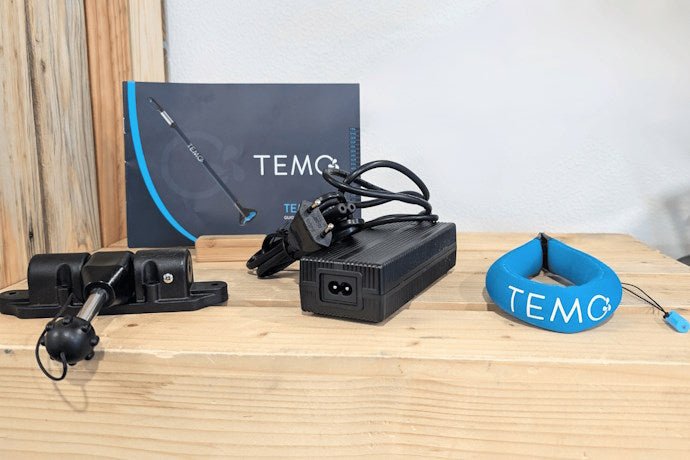
You can recharge the electric sculling oar using AC at 220 V or DC at 12 V in 3½ hours. However, do not try to extend the autonomy of the motor by charging it while you are using it: you will damage the battery. The use of solar panels is possible, but there needs to be an intermediate battery between the panel and the motor. Finally, as our portable electric motor is lightweight and compact, you can even take it to a restaurant with you to recharge it during a trip ashore. Not bad, eh?

The autonomy of our portable electric motor.
| As experience shows, while you haven’t got the possibility to change the battery, 1 hour of autonomy on average is enough to easily make several short trips in the dinghy. The autonomy will vary depending on the use you make of it. |  |
If you ever sail in poor conditions (current, wind, chop, loaded dinghy...) at full throttle, you'll be closer to 45 minutes of autonomy. If you ever sail at cruising speed, in good conditions and without being overloaded, you'll be running at around 1h15.
It is also possible to increase the range of the electric sculling oar by optimising battery use. It can propel light boats at an average hull speed of 3 knots. Since the trigger is progressive, running the motor between half and full power will allow you to reach an average speed of 2.5 knots. This way, you consume less power, and you get to enjoy the view a little more!
To make sure you don't have to get the paddles out, you’ve got a real time battery gauge on the handle. A blue bar means about 15 minutes of autonomy remaining. Just like on your car, you even know how much is left in the tank! When there’s only the red outline left, you’ve got about 12 minutes before your portable motor stops.