In boating, the dinghy is the indispensable shuttle that allows you to join your main boat at the mooring, disembark on a cruise or explore creeks. However, if you want to use it safely and easily, this small craft needs to be chosen with care. Size, type, materials, propulsion: what criteria should you take into account? TEMO guides you step by step to help you choose the dinghy best suited to your boating needs.
A never-ending puzzle: too small when you're using it, and too big when you're trying to fold it up to stow it in a locker. The right size of dinghy depends above all on the size of your main boat and the use you make of it.
Here are some useful guidelines.
Boat size, dinghy size and number of passengers.
- Boat from 6 to 12 m > dinghy from 1.80 to 2.50 m long (1 to 3 people)
- Boat from 12 to 15 m > dinghy from 2.60 to 3.50 m (3 to 4 people)
- Above 15 m > a dinghy of 3.80 m and over (4 or more people)
Understand your type of boating.
Take the time to ask yourself the right questions! If you opt more often for anchorages than for nights alongside a pontoon, if you are used to having many people on board and/or with young children, opt for the next size up. This avoids dangerous overloading and multiple return trips.
Choosing the type of dinghy: rigid, inflatable or a RIB?
To reach your mooring: a rigid dinghy.
Sturdy, equipped with wheels, it can easily be put it in a safe place ashore and can be left attached to your buoy awaiting your return. The rigid dinghy is essential for mooring areas not served by a water taxi.

For cruising: an inflatable dinghy or a RIB.
|
Inflatable dinghies with a slatted floor The most common models and offer a good price-quality ratio. Usage: Occasional or regular |
|
Inflatables with an inflatable floor Usage: Regular |
|
Inflatable dinghies with aluminum floors Usage: Intensive |
|
Semi-rigid tenders Usage: Intensive |
Other watercrafts such as kayak or SUP paddle can also be good alternatives for transfers between the shore and your boat.
PVC or Hypalon: the choice of material.
Inflatable dinghies are made of either PVC or Hypalon. While PVC offers excellent value for money in temperate zones, it is recommended to opt for Hypalon inflatables in tropical regions or the Mediterranean, for example. It is more expensive but offers better heat and UV resistance.
Choose a propulsion system suited to your tender.
| Important: please refer to the dinghy user manual for information on not exceeding the maximum authorized speed. |
Oars and sculls.
| Used alone, in pairs or for sculling, the oar is essential on board a dinghy, even one with an engine. It can be the main propulsion for small boats when conditions allow: light loads, calm and current-free water. |
 |
Petrol outboards.
When regularly serviced, the internal combustion engine is an efficient, reliable, and long-lasting solution. However, its significant weight makes installation risky.
| Internal combustion engines are prohibited in certain protected areas. |
 |
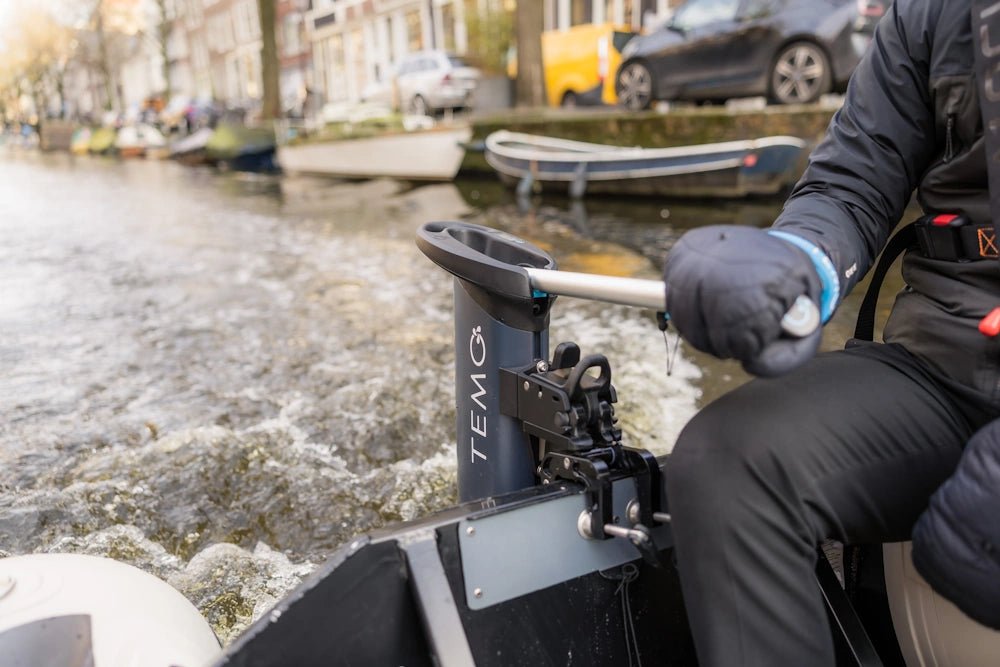
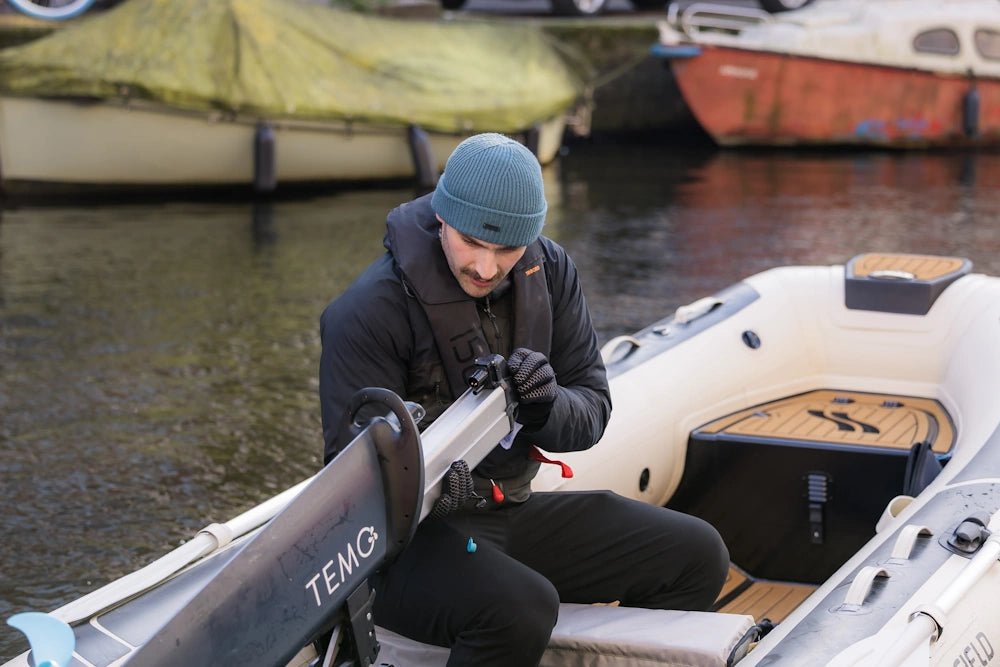
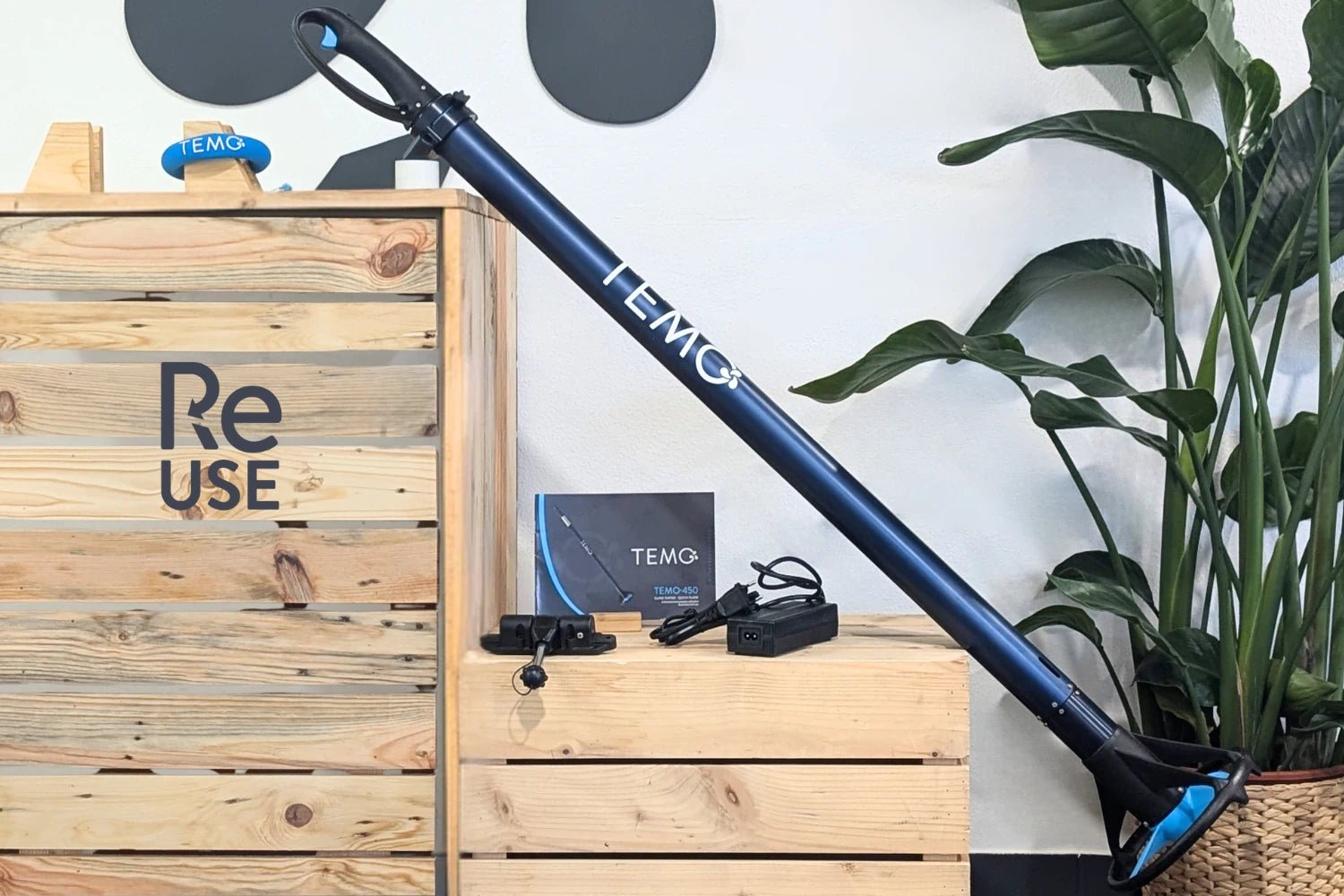
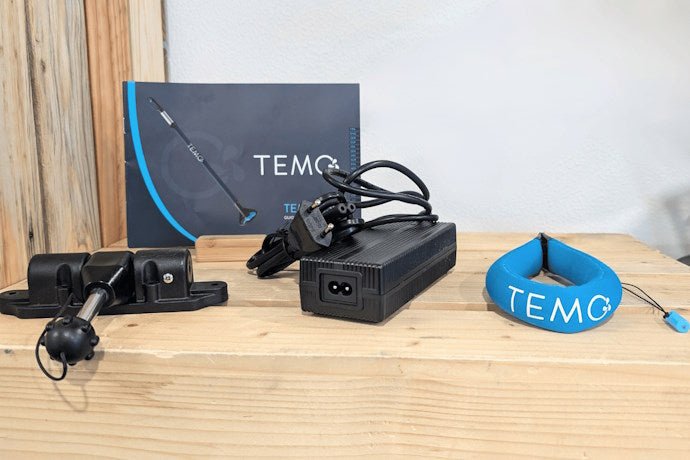
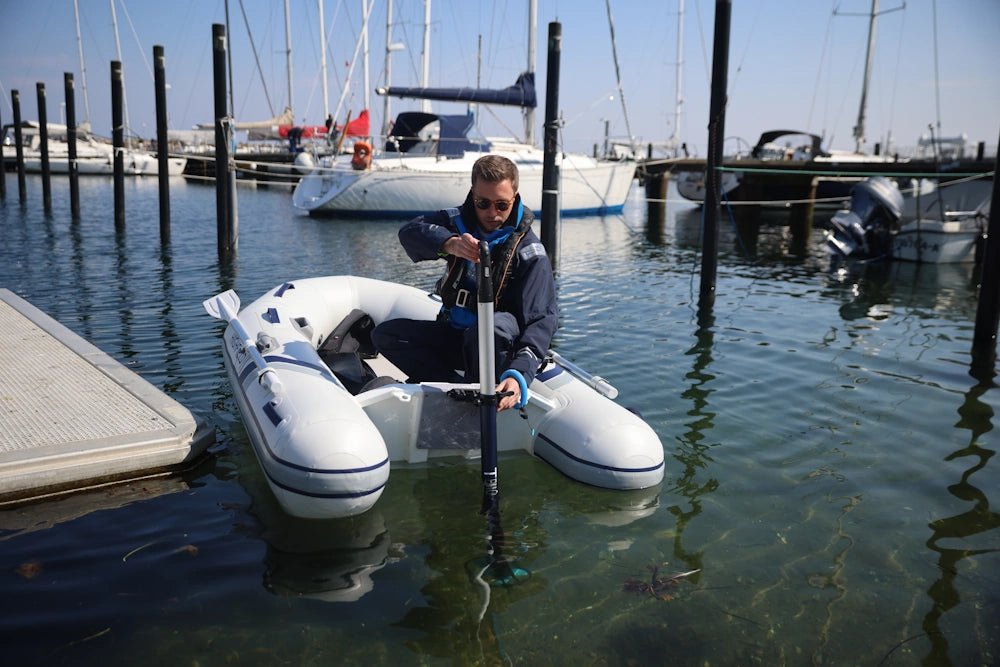
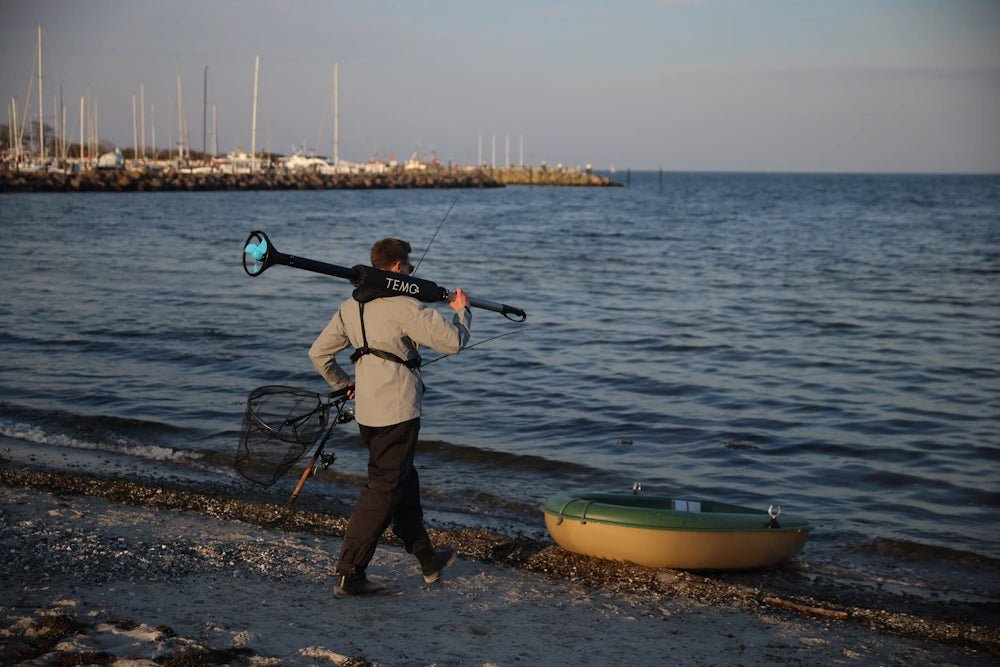
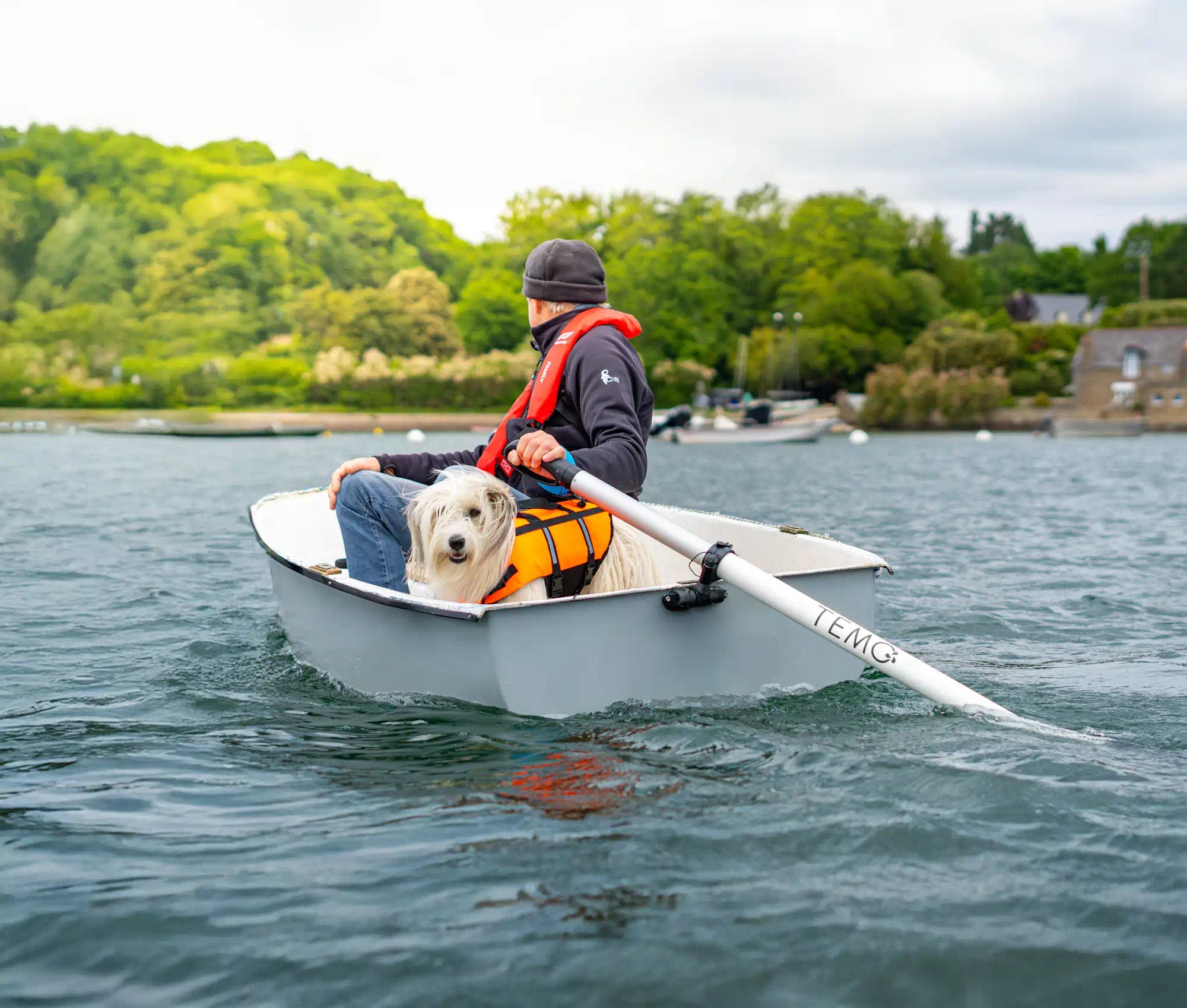
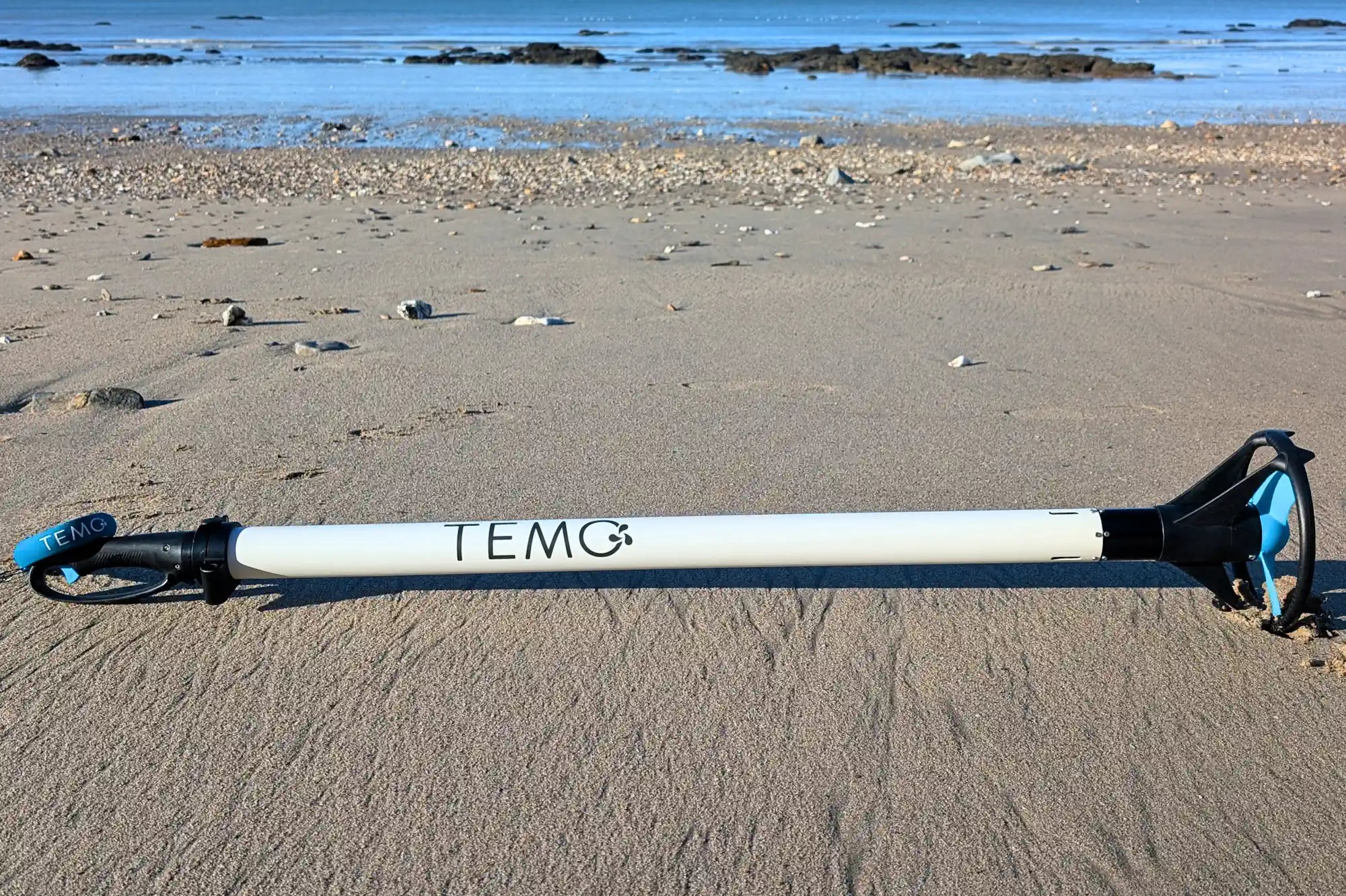
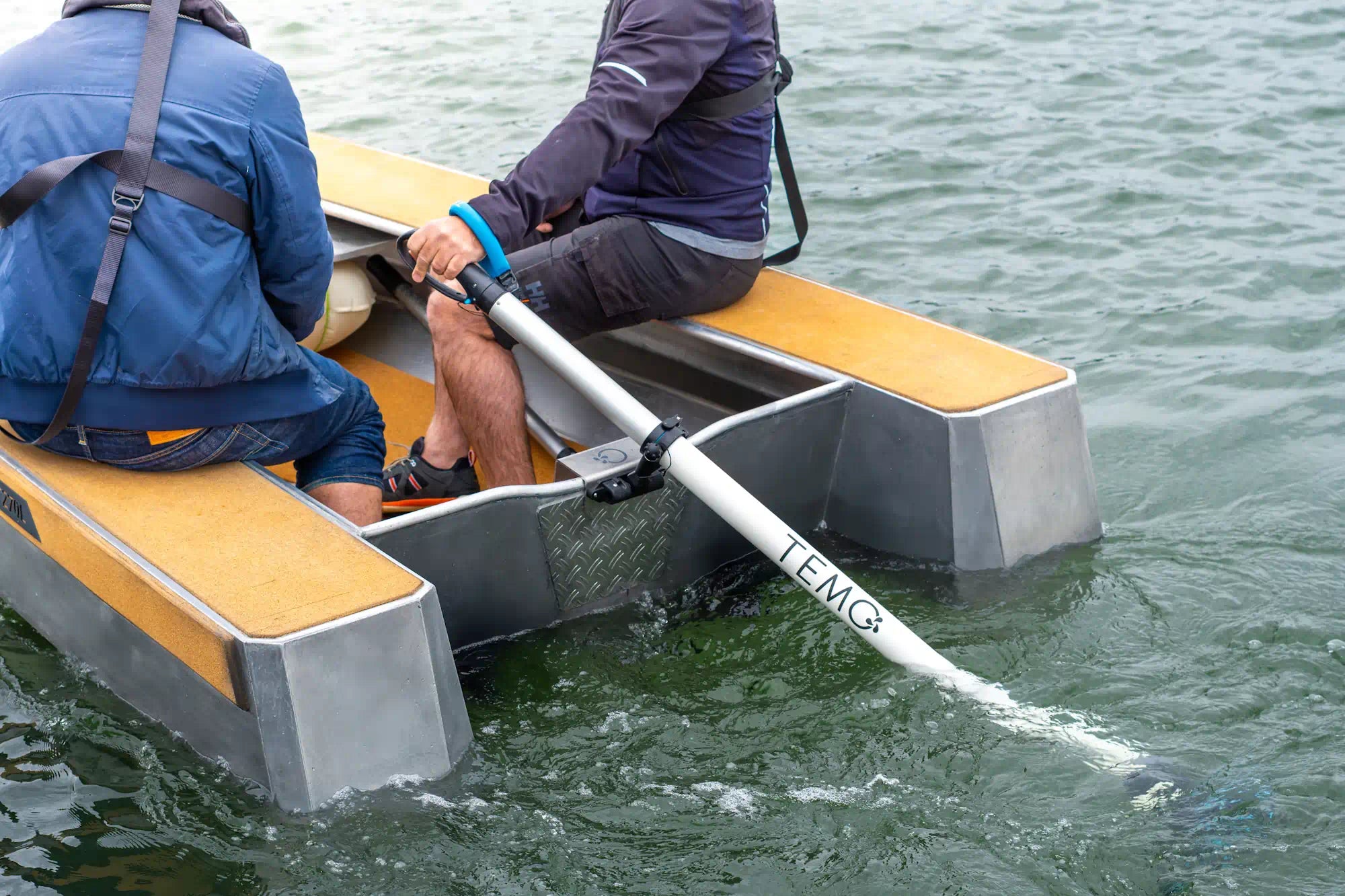
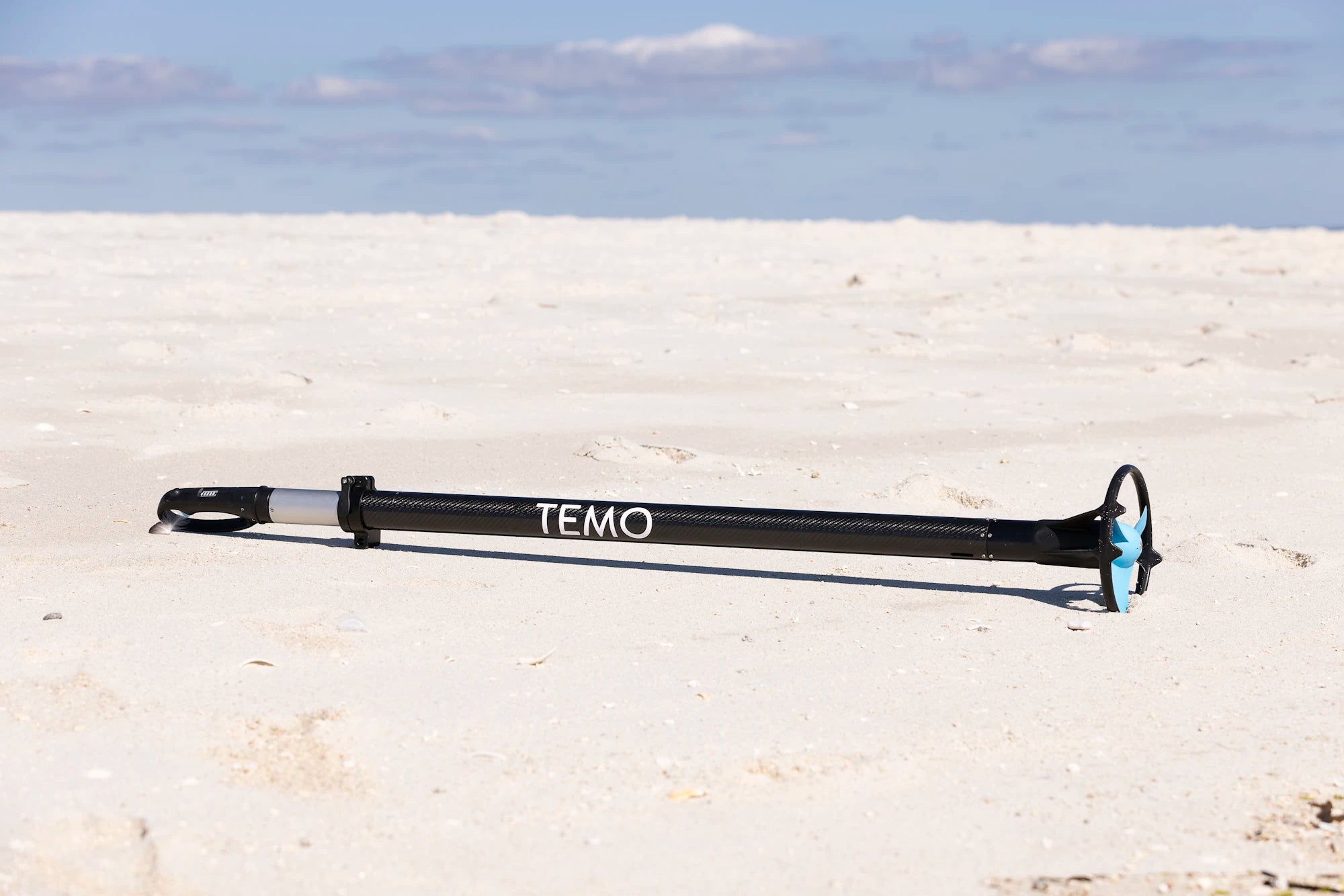
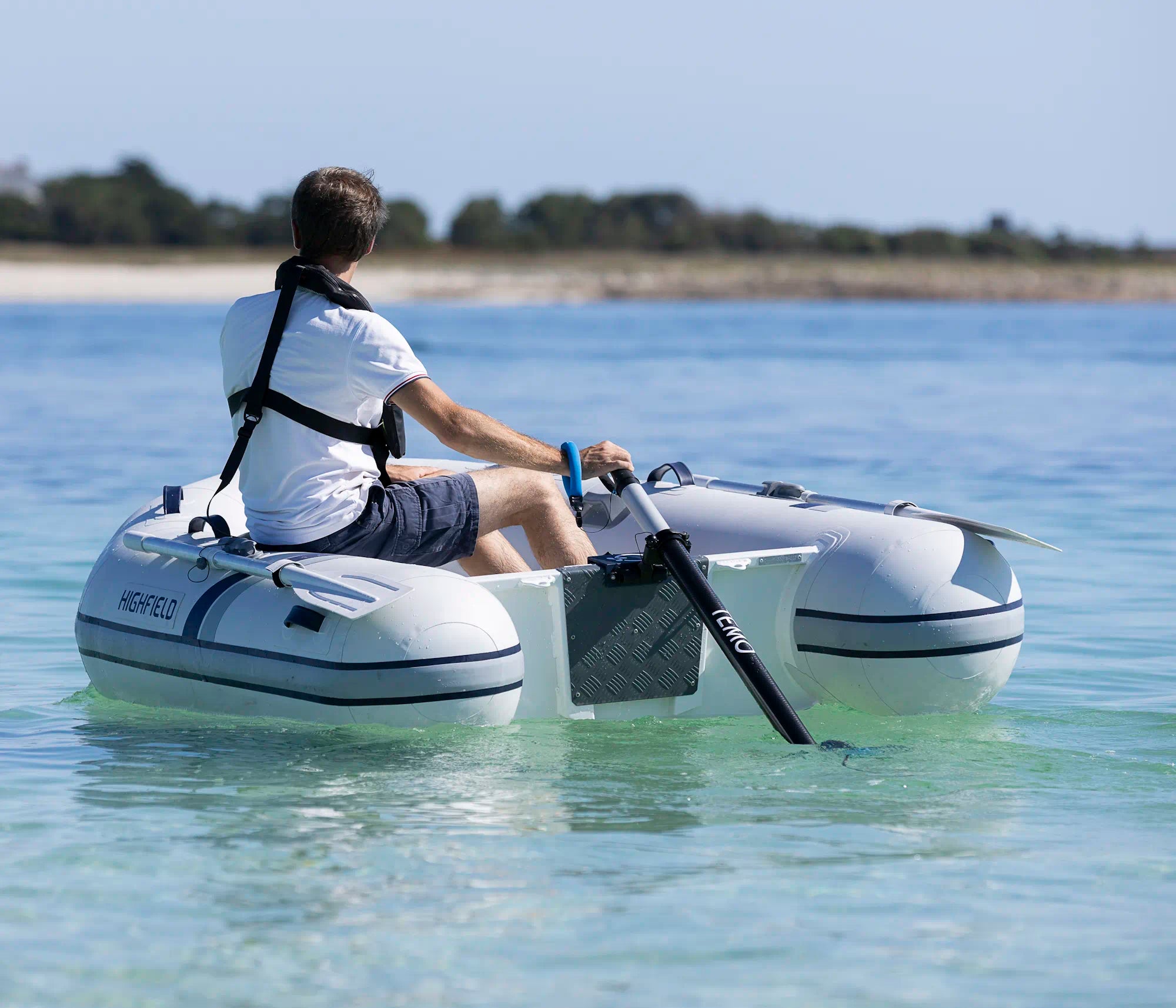
Today, electric motors offer propulsion that is perfectly suited to small boats and generate less maintenance and pollution than combustion engines. It is worth noting the arrival on the market of new formats that are more compact and suited to light boats such as the TEMO electric oar which differs from conventional motors and provides the TEMO.450 . Its light weight and easy to install design allows most tenders to be maneuvered efficiently and safely. With its one-hour range and an average speed of 3 knots, the TEMO offers sufficient power and ideal sailing comfort for a boat tender.
Make the right move! Now that you have made your choice, take a look at your equipment and the rules of good dinghy use. This is the best way to ensure that boating remains above all a pleasure.